Houston Rockets Trade Idea: Kyrie Irving, Kevin Durant, and Ime Udoka Reunion
The Houston Rockets spent last season stuck in mud when it came to dribble penetration. They ranked 26th in the league in drives per game, a damning number for a team that leans heavily on young guards like Amen Thompson and Reed Sheppard to crack defenses off the bounce. Too often, the paint stayed clean, the rim untouched, and the offense predictable.
Fred VanVleet’s return helps. He’s a stabilizer, a champion, a guard who can organize an attack. But in the Western Conference arms race, stability alone doesn’t scare anyone. Houston needs a jolt. A star who bends a defense before he even crosses half court.
That’s where this idea crashes through the door: Kyrie Irving to Houston, a reunion with Kevin Durant and Ime Udoka, and a seismic gamble on star power over patience.
The Trade Framework
Rockets receive:
- Kyrie Irving
Mavericks receive:
- Fred VanVleet
- Reed Sheppard (via NTMLE)
On paper, it’s simple. In reality, it’s loaded with history, risk and a very clear statement of intent from both sides.
Why Houston Swings Big
For the Rockets, this is not a gentle step forward. It’s a leap.
They’d be reuniting Durant and Irving, whose Brooklyn experiment never survived injuries, off-court turbulence and fractured chemistry. Back then, Udoka was just an assistant on Steve Nash’s staff, a voice in the room but not the one making the final calls. That group never found its rhythm, never became what it was supposed to be.
Houston offers a second draft of that story. Udoka is now the head coach, the central authority, with the power to shape the locker room and the pecking order. He’d walk into camp with a Big 3 of Alperen Şengun, Durant and Irving, flanked by Amen Thompson, Jabari Smith Jr. and Tari Eason. That’s not a rebuild. That’s a contender’s skeleton.
Irving brings exactly what last year’s Rockets lacked: elite dribble penetration, rim pressure and the kind of one-on-one shot creation that warps defensive schemes. When he’s on the floor, bigs have to step up, wings have to shade over, and suddenly Şengun’s playmaking and Thompson’s athleticism have space to breathe.
Durant, for his part, gets a running mate he knows, in a system that can still lean on youth and energy. Both stars have drifted out of the center of the title conversation in recent seasons. This kind of move drags them right back into it. For two aging greats, it might be the last clean shot at a ring on a roster with both talent and depth.
Houston would feel the sting of losing Sheppard. His shooting profile and skill set scream long-term value, the type of guard who can punish defenses for overloading on stars for a decade. Letting go of that kind of potential is never easy.
But the Rockets would keep most of their young core intact while adding a Hall of Fame-level creator. If the Durant-Irving pairing finally clicks under Udoka’s command, the upside is obvious. If it doesn’t, they still have Şengun, Thompson, Smith and Eason as a foundation. It’s a win-now swing with a safety net, not a total teardown of the future.
Why Dallas Considers the Reset
On the other side, Dallas faces a very different set of questions.
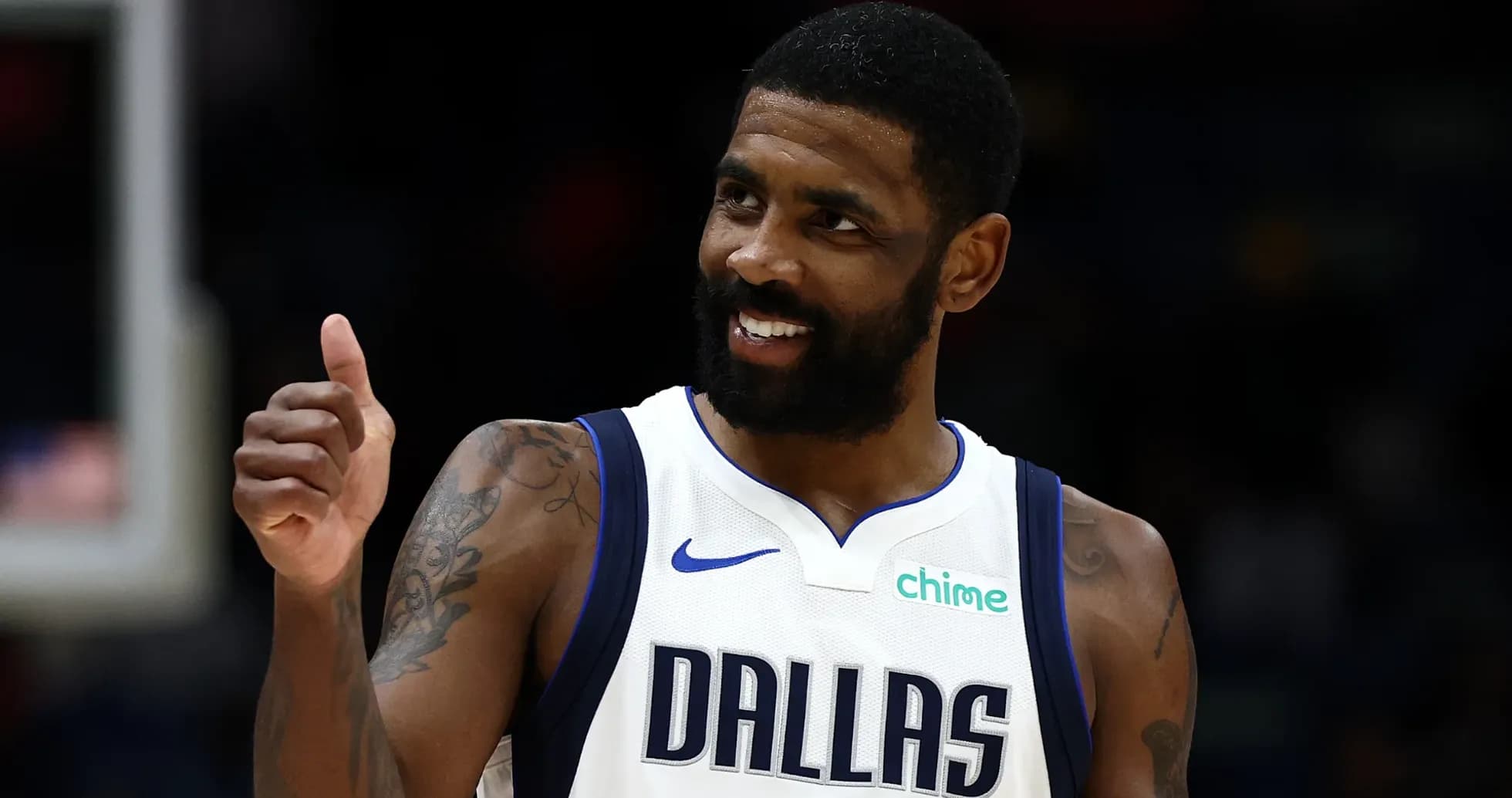
Kyrie Irving holds a $42 million player option next season and is reportedly hunting a lucrative long-term deal to close out his career in Dallas. Committing that kind of money to a 34-year-old guard with recent injury issues is the kind of decision that can define a franchise’s next five years — and not always in a good way.
Irving remains an All-NBA-level talent when healthy, but the Mavericks are building around a young core. Tying that future to a massive, long-term Kyrie contract is a high-wire act. One misstep, one bad injury, and the cap sheet locks up.
This trade offers a cleaner path.
VanVleet arrives on an expiring $25 million deal. He’s a proven veteran, a steady hand who can share the floor with their star guard, defend at the point of attack and run an offense without demanding the ball on every trip. If Dallas wants to keep him, they can negotiate from a position of control. If not, he becomes a valuable trade chip at the deadline, a plug-and-play guard contenders will chase.
Reed Sheppard sweetens the pot. As a young shooter with the tools to develop into a high-level marksman, he fits the timeline of a team trying to stay competitive now while planning for the next wave. He doesn’t need the ball to make an impact, which matters next to a dominant primary creator.
Dallas would lose Irving’s star power, but it would also sidestep the financial and medical gamble of a long-term max-level commitment. In return, it gains flexibility, a movable contract, and a potential shooting guard of the future.
One Last Run, or One Trade Too Late?
This proposal isn’t subtle. It asks Houston to bet that Durant, Irving and Udoka can finally deliver the version of their partnership that Brooklyn never saw. It asks Dallas to walk away from star wattage in favor of flexibility and long-term fit.
For the Rockets, it’s a chance to stop talking about potential and start living in contention. For the Mavericks, it’s an opportunity to reshape their backcourt future before a massive contract makes that choice for them.
If this kind of deal ever hits the table, the question won’t be about talent. It’ll be about nerve.