Historic Cricket Match: Vande Mataram and Jana Gana Mana
The noise at Arun Jaitley Stadium dipped, then rose in a way Delhi had never quite heard at a cricket match before.
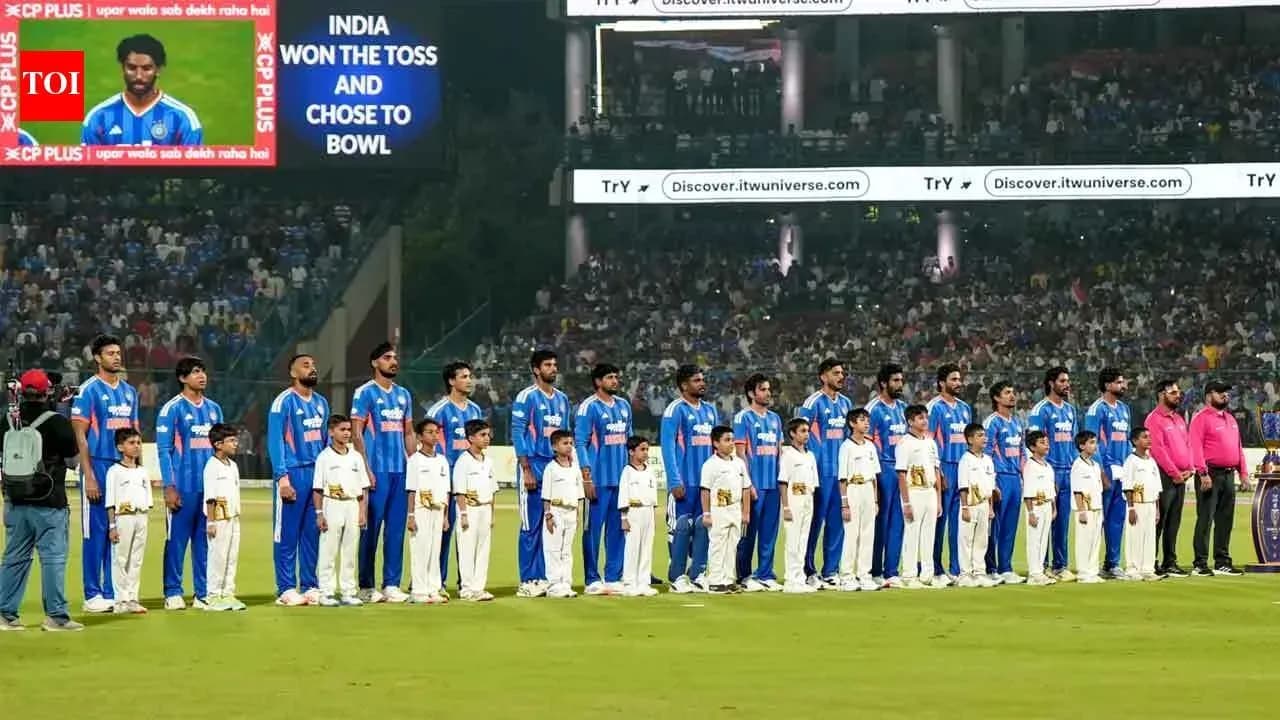
For the first time at an international fixture, Vande Mataram rang out before the start of play, setting an unusual, charged tone to India’s opening T20I against Afghanistan on Sunday. Players from both sides lined up on the outfield, facing the tricolour, as the National Song filled the evening air. Only after the final notes faded did the familiar strains of Jana Gana Mana begin.
Two anthems. One stage. A small but striking shift in cricket’s pre-match ritual.
This moment followed a Ministry of Home Affairs notification issued earlier in the year, which laid down formal protocols for the National Song. The directive, dated January 28, specified that all six stanzas of Vande Mataram should be sung at official functions, a rendition that runs for roughly 3 minutes and 10 seconds. It also detailed occasions where the National Song must be sung alongside the National Anthem.
Sporting events did not figure on that list. Yet here, in the heart of the capital, both were performed in full before the first ball of the series — echoing the precedent set on August 15, 2026, when Vande Mataram and Jana Gana Mana were sung together after Prime Minister Narendra Modi’s Independence Day address.
Once the ceremony ended and the crowd’s applause died down, the cricket took over.
India bowl first, Bumrah returns
Shreyas Iyer called correctly at the toss and wasted no time in his decision.
“We are going to bowl first,” he said, pointing straight to Delhi’s well-known T20 template. The surface at Arun Jaitley Stadium has long carried the reputation of favouring teams that chase, and India’s captain leaned into that history. “Whenever you come to Delhi, you know what the pitch has got to offer; it usually is a bowl-first wicket,” he added, referencing the conditions as the primary factor.
There was another, more significant headline tucked inside that toss call: Jasprit Bumrah’s name on the team sheet.
The spearhead of India’s attack walked back into the T20I XI for the first time since IPL 2026, instantly stiffening India’s new-ball threat. Iyer underlined exactly that. “We know Bumrah is a match-winner,” he said, summing up what his presence means in one crisp line.
India, designated the away side for this series despite playing in Delhi, also made a notable call at the top of the order. Sanju Samson came in, with Vaibhav Sooryavanshi missing out despite his strong run in the Zimbabwe T20I series. Iyer confirmed it bluntly at the toss: “Vaibhav is not playing, Washington is not playing, and two more.”
Selection, as always in Indian cricket, came with a hard edge. Sooryavanshi’s omission, after impressive recent form, underscored the competition for places in a format where one good series is no longer a guarantee of continuity.
XIs and early stakes
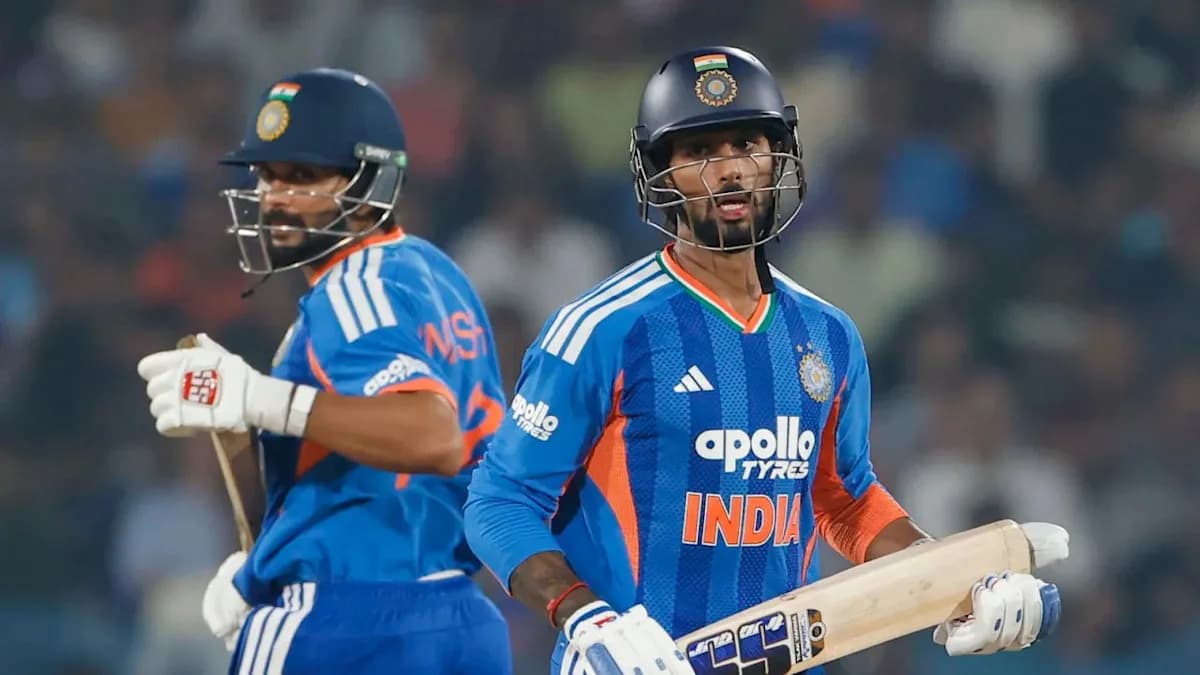
India’s line-up carried a mix of established names and rising faces. Samson took the gloves, while Abhishek Sharma and Ishan Kishan formed the top order around captain Iyer. Tilak Varma, Nitish Kumar Reddy and Shivam Dube stacked the middle, offering a blend of left-handed options and power hitting. Axar Patel’s all-round utility, Arshdeep Singh’s left-arm angle, Bumrah’s return, and Varun Chakaravarthy’s mystery spin rounded out a varied attack.
India XI: Sanju Samson (w), Abhishek Sharma, Ishan Kishan, Shreyas Iyer (c), Tilak Varma, Nitish Kumar Reddy, Shivam Dube, Axar Patel, Arshdeep Singh, Jasprit Bumrah, Varun Chakaravarthy.
Afghanistan, officially the home team for this series despite the Delhi venue, named a side heavy on spin and experience. Ibrahim Zadran led from the top, with Rahmanullah Gurbaz as the aggressive wicketkeeper-opener. Sediqullah Atal and Darwish Rasooli added depth to the batting, while Azmatullah Omarzai and Gulbadin Naib provided seam-bowling all-round options.
Behind them stood the familiar core: Mohammad Nabi, Rashid Khan, Mujeeb Ur Rahman and Noor Ahmad — a quartet of spin that no batting unit takes lightly — with Fazalhaq Farooqi spearheading the pace attack.
Afghanistan XI: Ibrahim Zadran (c), Rahmanullah Gurbaz (w), Sediqullah Atal, Darwish Rasooli, Azmatullah Omarzai, Gulbadin Naib, Mohammad Nabi, Rashid Khan, Mujeeb Ur Rahman, Noor Ahmad, Fazalhaq Farooqi.
So the stage was set: a series framed as Afghanistan’s “home” in India’s capital, a returning fast-bowling talisman, a young Indian core trying to extend the momentum from Zimbabwe, and a pre-match ceremony that had already broken new ground.
The first ball was always going to say something about the cricket. The prelude had already said plenty about the moment.