.svg&w=384&q=75 "logo")
Heinrich Malan Steps Down After Historic T20I Win Over India
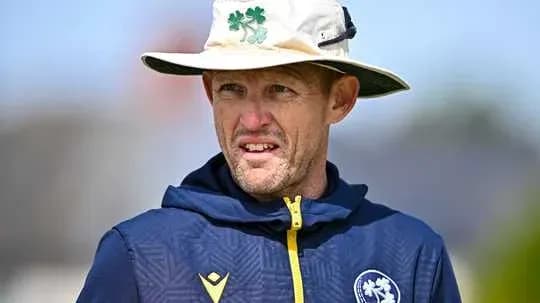
Heinrich Malan walked away at the moment most coaches would dig in.
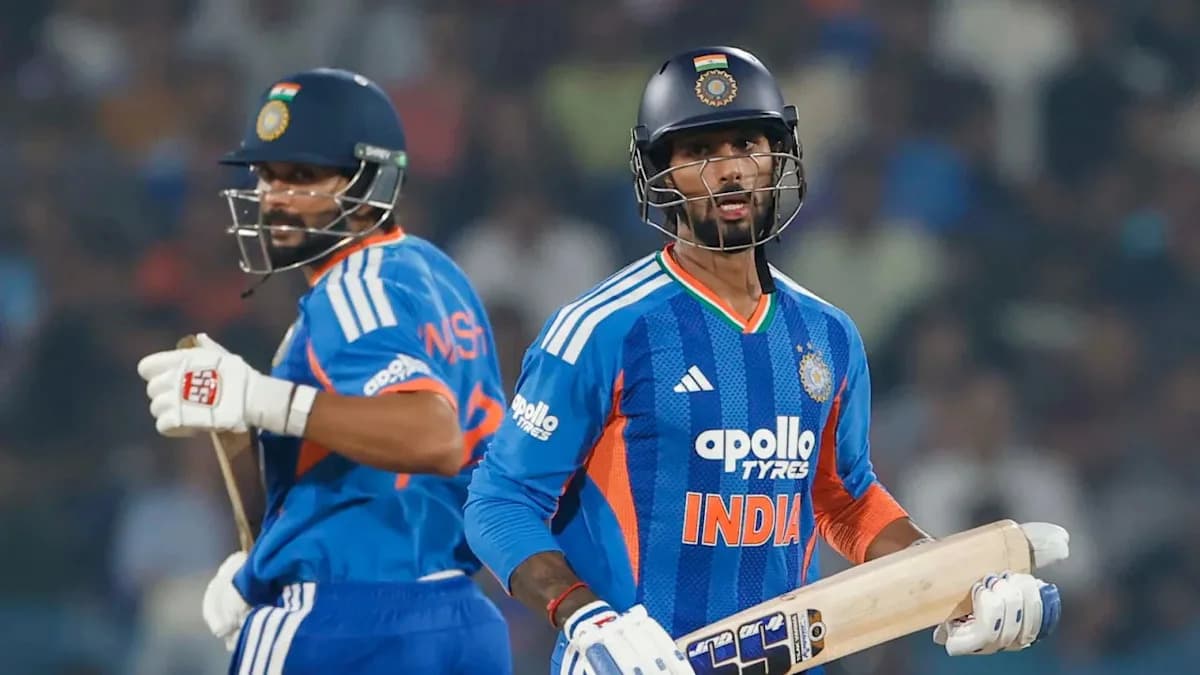
A 2-0 T20I series win over India, the reigning world champions, should have been a line on the CV that buys time, leverage, and security. For Malan, it became the full stop. One day after Ireland wrapped up that statement victory, he stepped down as head coach, ending a tenure that was supposed to run until 2027.
The decision stunned many around Irish cricket. Malan, back in New Zealand and now in charge of Central Stags, has finally laid out why. It wasn’t about results. It was about direction.
A high point… and a hard stop
“It was a fantastic series for us,” he told Cricbuzz, reflecting on the India win. Ireland’s players had done what every coach demands: they took the plans, absorbed the pressure, and delivered in real time. Beating the world champions 2-0 is no small feat for a side still fighting for regular fixtures, let alone global relevance.
“The timing in high performance sport is never just right,” he said, “but it worked out as best as you could have asked for with the 2-0 series win over the world champions as our last act.”
Yet even as Ireland were ticking off one of the biggest results in their limited-overs history, conversations in the background were pushing Malan towards the exit. Those talks started after Ireland’s Test against New Zealand and quickly moved from long-term planning to short-term reality.
“We had some conversations post the New Zealand Test match around what the future (post 2027) looks like and the timing was right from our perspective to make a very tough call and finish my time as Ireland head coach,” he explained.
New people had come into the system. New ideas followed. For Malan, that shift was natural, but it was also decisive.
“There has been some movement in that space and with new people comes new ideas and ways of doing things and that is just natural. We had some good conversations over a period of time and ultimately reached the conclusion that it was time for us to move on as our overall philosophies and direction didn't align moving forward.”
A coach leaving on the back of a marquee series win is rare. A coach leaving with the belief that the project is in good health, rarer still.
Progress, but not enough cricket
Malan’s four-and-a-half years with Ireland leave a clear footprint. There was the famous win over England at the 2022 T20 World Cup in Melbourne. The first-ever Test victory, against Afghanistan in 2024. A maiden home Test win, against Zimbabwe in Belfast. And now, a home T20I series win over India to close the chapter.
He is proud of all of it. But he is just as clear about the limiting factor that, in his eyes, never really went away.
“Very proud of what we achieved and how we went about our daily business but also very challenging as we didn't play enough cricket sadly,” he said. “We showed that we can compete with any team which means we have quality players but to be consistent you need to play day in and day out.”
That line cuts to the core of Ireland’s reality. They can land big punches. They just don’t get into the ring often enough.
“The lack of consistently playing cricket (domestically and internationally) is definitely the biggest challenge across the system,” Malan said. Training blocks came thick and fast. Matches did not. For a coach obsessed with testing ideas under pressure, the imbalance grated.
“There is a place for training (which we have done lots of) but ultimately it comes down to either getting better in training or exploring new methods and then being able to test or implement them in game situations. Hopefully in time the balance will be better and we will see these players go from strength to strength as they play more cricket,” he added.
Building an environment, not just a fixture list
Malan doesn’t talk about his tenure only in terms of upsets and milestones. He keeps circling back to the environment, to the daily grind that never makes a highlight reel.
“I honestly look back at all those ‘achievements’ with huge pride and gratitude,” he said. “But ultimately I am more proud of the daily work we did to ensure we put ourselves in these positions to compete and get across the line.”
He points to a shift in what it meant to be a professional cricketer in Ireland. Senior players taking ownership. Leaders driving standards. Behaviours, not just tactics.
“The environment we created around being professional cricketers and what that means – the senior leaders and players taking ownership of what our daily actions and behaviours look like and ultimately the individual ownership around the holistic programme – which I know have left this environment in a strong position for future Irish cricketers to thrive in,” he said.
For a country still solidifying its identity as a full-member nation, that cultural layer may prove as important as any result against England, Afghanistan, Zimbabwe or India.
Money, matches and the next step for Ireland
Malan is blunt about the biggest obstacle facing Irish cricket: money. Without it, the calendar stays thin, the domestic structure stays shallow, and the talent pool remains narrower than it should be.
“The biggest challenge, as we well know, is the financial side of things which impacts the whole structure and system,” he said. His hope is simple, but not easy to deliver: more cricket, everywhere.
“Hopefully the decision makers can find a way to ensure there is more cricket (domestically and internationally). Domestically which will ensure we create opportunities for exposure to the top youth players especially around red ball (first class cricket) and ultimately more international cricket to create a wider group of players to pick from and create healthy competition which is always a good sign of a healthy system.”
He sees promise in the expanding European cricket landscape, with more competitions and cross-border opportunities.
“It's a great addition to the European cricket landscape and creates more opportunities for players to get exposure at a higher playing level. The opportunity to mix with some of the best players and coaches from around the world will be hugely beneficial but most importantly the actual playing of more games will stand all the players and countries in good stead moving forward,” Malan said.
The message is consistent: Ireland’s ceiling won’t be set by talent or coaching alone, but by how often that talent is allowed to play meaningful cricket.
A coach moves on, but not away from the international game
At 38, Malan is far from the end of his coaching journey. Back in New Zealand, he has taken over as head coach of Central Stags, returning to the domestic circuit where many international ideas are forged.
The international arena, though, still tugs at him.
“I really enjoy international cricket and will definitely miss it,” he admitted. “Hopefully in time opportunities come up to work on the international stage and or T20 franchise leagues so that I can keep evolving as a coach to add value to the players and ultimately successful environments.”
Ireland now step into a new era without the coach who helped them topple England in a World Cup, win their first Test, and beat India in a series. The question is no longer whether they can compete with the best. It’s whether the structure around them will give those players enough cricket to make such results the norm, not the surprise.