Gerald Coetzee Returns to ODI Squad Against Australia
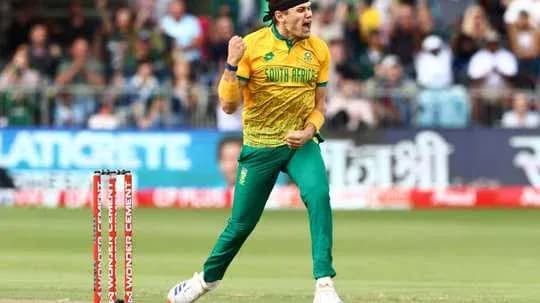
Gerald Coetzee’s stop-start ODI journey is about to roar back into life.
The 23-year-old quick, who hasn’t bowled a white ball for South Africa since the 2023 World Cup, has been recalled for the three-match series against Australia this month, a timely return for a side suddenly light on fast-bowling muscle.
Coetzee has spent much of the past year wrestling with injuries, his progress repeatedly stalled just as he threatened to become a permanent fixture. He eased his way back recently with a four-day outing against Bangladesh A, enough for the selectors to decide the time is right to bring his pace and aggression back into the national fold.
They need it.
Kagiso Rabada is out. Nandre Burger is out. Lutho Sipamla, initially picked for the tri-series in Namibia, has been withdrawn with a hamstring problem. South Africa’s pace reserves have been tested, and this squad reflects both the gaps and the opportunities.
From the group that last played ODI cricket for South Africa, Prenelan Subrayen, Rubin Hermann and Dewald Brevis miss out. In their place, the selectors have doubled down on experience, flexibility and raw pace.
Aiden Markram, juggling a heavy workload across formats, will only be available for the second and third ODIs. That forces some early reshuffling but also opens the door for others to make an impression in Durban.
There is a familiar anchor in the middle order. David Miller, the veteran finisher and one of South Africa’s most seasoned ODI hands, returns to the set-up. Tristan Stubbs, who sat out the December series against India, is back as well, a reminder that the selectors see him as a long-term piece in the white-ball puzzle.
The schedule is brisk and unforgiving. Australia arrive for three ODIs: Durban on September 24, followed by matches on September 27 and 30. These will be South Africa’s first home ODIs since they hosted Pakistan in December 2024, an unusually long gap for a team trying to shape a World Cup challenge.
Head coach Shukri Conrad made no attempt to hide the significance of this block of cricket. With the next World Cup just over a year away, every selection now carries a sharper edge.
“This series marks an important step in shaping the squad as we build towards the tournament, while also giving those players who are in the frame opportunities when we face Bangladesh and England later in the season," Conrad said. “We have a clear idea of the combinations we want and the roles we need players to fulfill.
“From a batting perspective, we’ve looked at making sure we have a middle order that can be explosive but have the ability to absorb pressure and take the innings quite deep. That balance is going to be important for us. Unfortunately, Kagiso will miss out on this series due to injury, but his absence creates an opportunity for the other players to step up. It’s great to see Gerald back in the fold and, by all accounts, he’s been bowling nice and quickly."
That line about the middle order is no accident. With Temba Bavuma leading the side, Quinton de Kock in the mix, and stroke-makers like Tony de Zorzi, Ryan Rickelton and Stubbs around Miller and Markram, South Africa are clearly building a core that can both absorb pressure and flip a game in a handful of overs.
On the bowling front, Coetzee’s return adds bite to a unit that also features Lungi Ngidi, Marco Jansen, Ottneil Baartman and Corbin Bosch, with Keshav Maharaj and Bjorn Fortuin offering control and variation in the spin department. Young quick Kwena Maphaka’s inclusion underlines the longer view: South Africa want options now, but they also want to know who will still be standing when the World Cup squad is named.
The ODI squad reads: Temba Bavuma (C), Matthew Breetzke, Aiden Markram, Quinton de Kock, Tony de Zorzi, David Miller, Ryan Rickelton, Tristan Stubbs, Ottneil Baartman, Gerald Coetzee, Bjorn Fortuin, Kwena Maphaka, Lungi Ngidi, Corbin Bosch, Marco Jansen, Keshav Maharaj.
Injuries have forced Conrad’s hand in places, but they’ve also accelerated decisions that might otherwise have been delayed. Rabada’s absence hurts. It always does. Yet it hands Coetzee and the rest of the seam attack a clear message: the shirts are there to be claimed.
Australia in late September, Bangladesh and England later in the season, a World Cup looming just over the horizon — this is no gentle reintroduction for Coetzee.
It is an invitation to seize the moment and change the shape of South Africa’s attack for the next year.