
Gambhir's Strategy for Hardik Pandya and India's All-Rounders
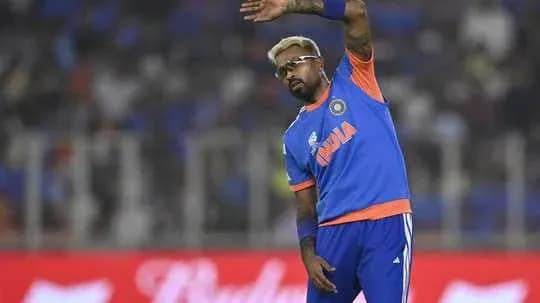
Gautam Gambhir has made one thing clear: India will not rush Hardik Pandya back just because the calendar says a World Cup is around the corner.
The India head coach, speaking after the third T20I win over Afghanistan, laid out the most detailed update yet on where his premier all-rounder stands. Hardik has not played international cricket since the T20 World Cup final in March. He has been picked for India A’s series against Australia A, but the gap between that and full ODI workload remains significant.
“Hardik at the moment, yes, he cannot bowl 10 overs and he hasn't played a lot of cricket since the IPL. So we don't want to push him into international cricket because international cricket can be extremely tough on your body as well,” Gambhir said.
That line set the tone. No shortcuts, no sentimental selections, even with the 2027 ODI World Cup less than a year away.
The plan is simple: India A first, India later.
“So if he plays that India A series, obviously he'll get some game time as well. And that was the clear message to him that if he can play that 'A' series and then if everything goes well, he can come back and be part of the T20s and the One Day squad as well."
In other words, Hardik returns when he is ready to be Hardik again — not a part-time version who can’t deliver 10 overs.
Nitish Reddy steps into the gap
Hardik’s delayed return has already shaped another key storyline: the fast-tracking of Nitish Reddy.
Nitish, himself coming off an injury, quietly put together a compelling Afghanistan T20I series, picking up six wickets and showing the kind of seam-bowling, middle-order profile India simply doesn’t have in abundance. India then made a decisive call: pull him out of the Asian Games T20 squad and give him a run in ODI cricket instead.
From Gambhir’s point of view, that’s not a demotion. It’s an investment.
“From Nitish's point of view, it's actually a great thing that he's been withdrawn from a T20 format and he'll get game time against West Indies as well. We know how important seam bowling all-rounders will be probably in a year's time when we go to South Africa and once Hardik comes back, obviously he's going to be good. Sometimes we could even go on to play both of them in the playing 11," he said.
That last line is where the vision really sharpens. Gambhir isn’t just patching a hole until Hardik returns. He’s building a future where India can field two seam-bowling all-rounders in the same XI in a World Cup in South African conditions.
Nitish has done his part in the audition so far.
"It's been a huge plus for us because we want to expose him to most of the international game because we know how important he is, whether it's in 50-over format or going forward in T20s as well because, you know, there are not many going around guys who can bowl and who can bat at the middle order. So it's a massive positive that the way he's bowled in this series."
For now, Nitish will get exactly what Gambhir wants for him: overs, time in the middle, and the rhythm of 50-over cricket.
World Cup prep meets Asian Games reality
All of this, though, is happening against a backdrop that Gambhir openly admits is far from ideal.
India will not be able to field their strongest possible ODI side against West Indies because of a scheduling clash with the Asian Games in Japan. Several regulars will be at the continental event, leaving the ODI group short of first-choice names at a time when every series should, in theory, be sharpening a settled core for a World Cup.
"Look, it's not ideal. Obviously, we know that it's not ideal when we are preparing for a World Cup, which is in years' time. But again, the Asian Games squad was selected long back," Gambhir said.
The concern isn’t only about the team. It’s also about the captain leading it.
"You want your best players to play as much as possible because the next World Cup is a 50-over World Cup. And more importantly, it's not fair on a young captain as well if he doesn't get the best team, playing consistently and regularly and not being on the path consistently.
"That's why I have to be dead honest. I think it is important for Shubman [Gill] to get the best team as many times as he can in red ball and in white ball formats as well."
For a young leader trying to shape a group in his own image, chopping and changing forced by multi-event commitments is hardly the smoothest runway to a World Cup.
Compromise, opportunity, and a wider pool
Gambhir didn’t hide from the word that every coach dreads in a World Cup cycle: compromise.
"Sometimes it's difficult for the selectors when they have to put the best squad in place. So, we always knew that if the best team goes to the best, the front-line players go to the Asian Games.
"Obviously, we will have to probably compromise a bit in this one-day series against West Indies. But again, it gives other people the opportunity as well."
That’s where the tone shifts. If the ideal XI can’t always play, the next best solution is to expand the group of players who can be trusted when the stakes rise.
"And obviously, in a series like this, we've got young guys like Naman Dhir, Auqib [Nabi], getting those opportunities in this squad. So, they can also show what they bring in white ball format."
So the picture that emerges is layered. Hardik Pandya, the proven match-winner, is being carefully held back until he can shoulder a full all-round burden again. Nitish Reddy is being accelerated into the role of long-term seam-bowling foil. Shubman Gill is navigating leadership without always having his best men around him. And on the fringes, names like Naman Dhir and Auqib Nabi are being nudged towards the spotlight.
It’s not smooth, it’s not seamless, and Gambhir isn’t pretending otherwise. But if India can come out of this stretch with a fully fit Hardik, a battle-tested Nitish, and a broader, braver white-ball pool, the compromises of this year might just decide how far they go in Africa next year.





