Stephen Fleming's Obsession with the Ashes as England's Test Coach
Stephen Fleming leans back, smiles and says it out loud: he shares English cricket’s “obsession” with the Ashes. Then he sharpens the point.
“We want to beat the Aussies.”
England’s new Test coach has barely taken the job and already has his eyes fixed on next summer, when Australia arrive to defend a dominance that stretches back to 2015 and a bruising 4-1 hammering in the last series down under. For Fleming, a proud New Zealander who calls his country the “little cousin” to Australia, the rivalry is personal and generational.
“New Zealand has an obsession with it, we love it,” he told BBC Sport. “We have a deep desire to beat Australia in everything, as the little cousin. We are linked, and I'm incredibly excited about being part of it.”
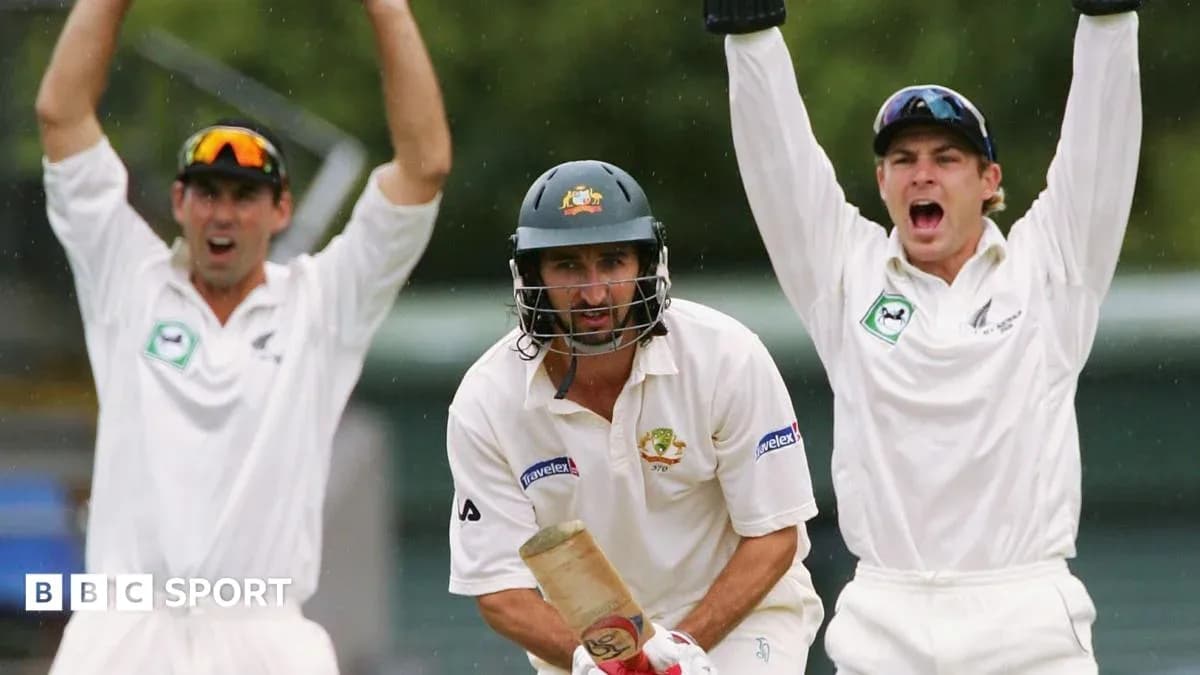
He never managed it as a player. Fourteen Tests against Australia, no wins. The scars are there, but so is the hunger.
Now, as England’s Test coach, he finally has the platform he never thought would come.
“You don't think you're ever going to get that opportunity,” he said. “To have that opportunity and be part of it, I can't wait.”
From McCullum’s chaos to Fleming’s control
Fleming’s first full media outing since his July appointment felt very different from the era he replaces.
Brendon McCullum’s tenure ended with only two wins in his final 10 Tests, a thrashing in Australia and an England side accused of stubbornly clinging to one high-risk style regardless of conditions or context. The cricket was wild, often thrilling, but increasingly naive. Off the field, late-night drinking controversies chipped away at credibility.
Fleming, a long-time friend and business partner of McCullum, walked in sounding like the grown-up in the room.
Calm. Detailed. Deliberate.
He even framed the contrast between the pair with a gambler’s metaphor: “I'll bet on the favourite and he'll bet on the longest odds possible.”
There were plenty of those long-odds punts in McCullum’s reign. Fleming looks far more inclined to play percentages, to build plans that survive more than one bad session.
On the question of “brand” cricket, he cut straight through the buzzwords that have dominated England’s recent discourse.
“I don't think so,” he said when asked if a Test team needs a brand. “The greatest thing for a team to do is to be able to play conditions and situations.
“I'd love people to say we are well-planned, there's a discipline and a really strong basic structure to what we're doing, but there's also a bit of flair.”
That line matters. Not no flair. Controlled flair. A team that can accelerate when the moment is right, but also leave the ball on a gray morning in Johannesburg or grind through 70 overs in the dirt at Lord’s.
The age of “Bazball” slogans may be over. “Flemball”, he joked, is “a medical condition”.
Standards, not just stats
If McCullum’s England were accused of blurring the line between hard-earned freedom and lax discipline, Fleming made it clear he intends to redraw it.
“There are standards,” he said. “We pick on runs and wickets primarily, but I think it's foolish not to also say there are standards that need to be set.
“You need to behave in accordance with your position. We're in a very privileged position, and it's understanding that privilege and what goes along with it. It can't be convenient.”
The timing was pointed. Only a day earlier, Derbyshire Police confirmed they had closed an investigation into England fast bowler Brydon Carse following allegations of an assault last month. Carse faces no police action but will now be investigated by the Cricket Regulator. He remains technically available for selection, though he has not featured in any squad since the incident.
Fleming’s message was clear enough without naming names.
“You can't be when it suits you to do the right things, then when you don't want it to suit you, not,” he said. “You've got to live it every day. If we can create something when you want to live it every day and better, then that's really powerful.”
For players on the fringes, especially those with recent off-field issues, that line may be as important as any selection briefing.
A different kind of leader
Fleming has spent the past week on the road, doing the unglamorous groundwork. County visits. Conversations. Quiet assessments.
He watched England beat Sri Lanka in the third T20 at Old Trafford. He dropped in on Durham’s draw with Worcestershire, where he met Ben Stokes, the former Test captain who abruptly retired from international cricket in July.
They know each other well from their time together at Chennai Super Kings in the IPL. If anyone could have tried to twist Stokes’ arm, it was Fleming. He refused.
“He was in a great space, really happy, enjoying his time with Durham,” Fleming said. “He's got a good winter planned with the family and is very much at peace with his decision.
“When a player makes that decision to retire, I respect that decision 100%. To try to turn that around and question that is wrong. I know how much goes into that type of decision, and I respect that.”
No emotional tug, no grand rescue mission. Just respect for a line drawn by a player who has given almost everything.
It fits with the persona that emerged over the course of his media session: measured but not dull, serious but not joyless. He joked about having a “stress fracture of the left ear” from the sheer volume of calls with people around the England set-up. He laughed about occasionally turning up in fancy dress at Chennai to loosen the mood.
Yet beneath the humour was a coach who talked repeatedly about planning, structure and responsibility. Someone who spoke of giving the World Test Championship the respect previous England sides have not always shown. Someone who admitted missing the Pakistan series for family and commercial reasons, and did so without spin.
The split-coaching dynamic that once looked awkward for England – with McCullum staying on as white-ball boss – may now work more smoothly. The two men are close. “Big brother” was one description floated for the Fleming–McCullum relationship. If that holds, England could finally find coherence across formats instead of clashing philosophies.
Eyes on South Africa, heart on the Ashes
Strip it all back and Fleming’s England will be judged on one thing: wins.
The first examination comes in South Africa in December, a brutal place to start for any new Test coach. Pace, hostility, unforgiving conditions. It is exactly the sort of tour that will reveal whether his talk of adaptability and discipline has sunk in.
On this evidence, England under Fleming will be less impulsive than under McCullum, more adult, more controlled. Perhaps less intoxicating at times. Perhaps more effective.
And looming just beyond that, in the English summer, the series that has shaped his cricketing life from the outside.
He never beat Australia as a player. Now he carries the obsession of two nations into an Ashes he will finally help shape from the dressing room.
If he can turn that long-standing hurt into a hardened, smarter England, the “little cousin” might yet have the loudest say in the biggest fight.