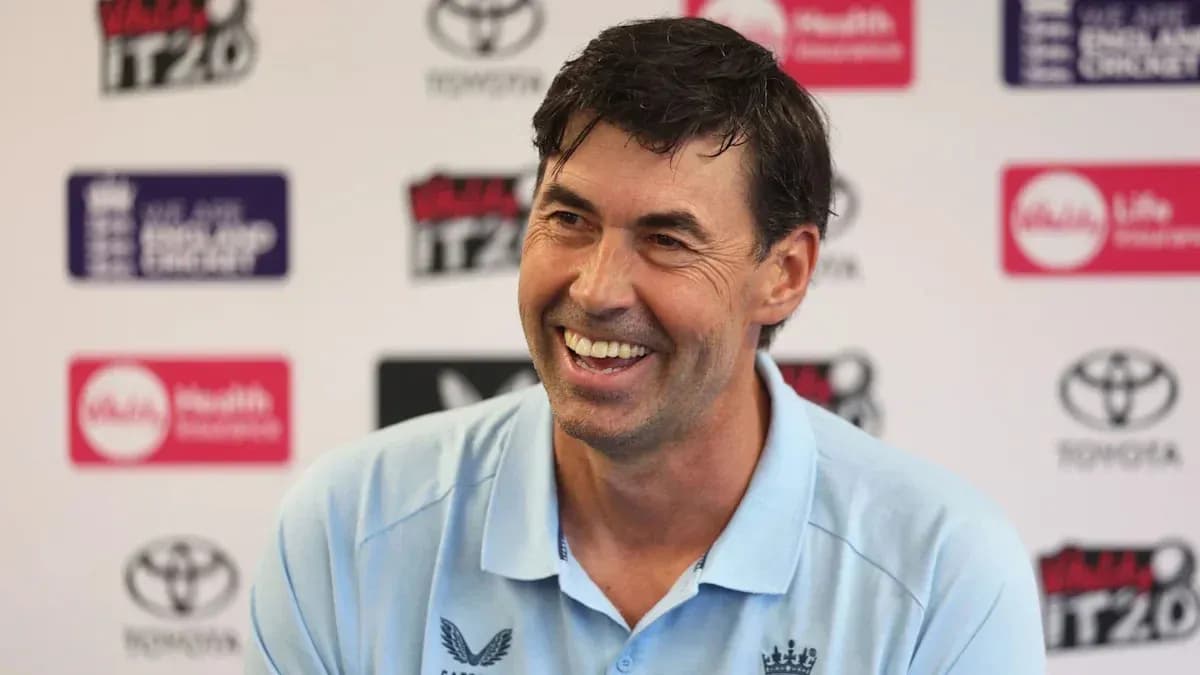
Stephen Fleming's Obsession with the Ashes: Aiming to Beat Australia
Stephen Fleming has been in the England job barely two months, but he already speaks the language that matters most in these parts: the Ashes.
The new Test coach sat down with the media for the first time since his July appointment and made his priority brutally clear. He doesn’t want to manage the Ashes. He wants to win them.
“New Zealand has an obsession with it, we love it,” he told BBC Sport. “We want to beat the Aussies.”
England’s new man is from the “little cousin” across the Tasman, as he put it. The cousin who has spent a lifetime watching Australia strut. The cousin who rarely gets the last word.
Fleming never beat Australia in 14 Tests as New Zealand captain. Now he walks into a job where the Ashes define legacies and where the next series, in the UK next summer, offers England the chance to end a winless run against Australia stretching back to 2015 and wash away the stain of last winter’s 4-1 hammering.
Asked whether England are too consumed by Australia, Fleming didn’t flinch.
No, because I have an obsession with it as well.
That line will play well in dressing rooms from Durham to Taunton. It will also sharpen the focus on what comes next.
From McCullum’s chaos to Fleming’s control
Fleming replaces his old team-mate and close friend Brendon McCullum, whose reign veered from exhilarating to erratic and finally to exhausted. England won only two of McCullum’s last 10 Tests, a run capped by that thrashing in Australia.
The two men are tight. Business partners. Confidants. Philosophical opposites.
“I’ll bet on the favourite and he’ll bet on the longest odds possible,” Fleming said with a smile.
That line cut to the heart of England’s recent Test cricket. Under McCullum and Ben Stokes, England often chased the unlikely and ignored the obvious. It was thrilling until it wasn’t. When conditions demanded subtlety, they often got bravado. When games needed patience, they got a charge to the boundary rope.
Fleming has no interest in a slogan or a brand.
“I don’t think so,” he said when asked if a Test team needs a defined style. “The greatest thing for a team to do is to be able to play conditions and situations.
“I’d love people to say we are well-planned, there’s a discipline and a really strong basic structure to what we’re doing, but there’s also a bit of flair.”
So not Bazball. Not Flemball either.
He dismissed that label as “a medical condition” in a nod to his own dry humour, but the message was clear: less marketing, more method.
Those inside the game who wanted a grown-up in the room after the freewheeling McCullum era will have listened closely. Calm. Measured. Authoritative. That was the tone. The risk-taking remains, but the odds will be shorter.
Standards, late nights and Brydon Carse
Fleming arrives after a turbulent year off the field as well as on it. England’s Test environment has been dogged by late-night drinking stories and questions about discipline that outlasted McCullum’s tenure.
On Friday, Derbyshire Police confirmed they had closed their investigation into England fast bowler Brydon Carse after an allegation of assault last month. No police action will follow, but Carse now faces an investigation from the Cricket Regulator. He remains eligible for England selection, though he has not featured in any squad since the incident.
Fleming didn’t name names. He didn’t need to.
“There are standards,” he said. “We pick on runs and wickets primarily, but I think it’s foolish not to also say there are standards that need to be set.
“You need to behave in accordance with your position. We’re in a very privileged position, and it’s understanding that privilege and what goes along with it. It can’t be convenient.”
The key line came next.
“You’ve got to live it every day. If we can create something when you want to live it every day and better, then that’s really powerful.”
For some on the fringes, that will sound like a warning as much as a philosophy.
Stokes, respect and a door that stays closed
Fleming has already started his quiet tour of English cricket. He watched England beat Sri Lanka in the third T20 at Old Trafford on Saturday. Earlier in the week he visited several counties and met Ben Stokes during Durham’s draw with Worcestershire.
Stokes, who retired from international cricket in July, is the great “what if” of any new England Test regime. Fleming knows him well from their time together at Chennai Super Kings in the IPL. If anyone could make the call, it would be him.
He won’t.
“He was in a great space, really happy, enjoying his time with Durham,” Fleming said. “He’s got a good winter planned with the family and is very much at peace with his decision.
“When a player makes that decision to retire, I respect that decision 100%. To try to turn that around and question that is wrong. I know how much goes into that type of decision, and I respect that.”
No pressure, no public campaign, no emotional pitch. For a coach stepping into a febrile environment, it was a notable act of restraint.
A different kind of leader
Almost two months after his appointment, this was the first real glimpse of what Stephen Fleming’s England might look like.
He joked he has a “stress fracture of the left ear” from the volume of phone calls with players and staff. He laughed about occasionally turning up in fancy dress with Chennai Super Kings to ease the mood. There is warmth there, and a sense of timing.
Yet beneath the humour sits a coach who will play the percentages, respect the World Test Championship – something previous England teams have been accused of neglecting – and demand structure without suffocating flair.
The split-coaching model, with McCullum continuing as white-ball boss, has burned England before. This time, the dynamic is different. Fleming spoke of the “big brother” feel between the two New Zealanders. One chases the long odds. The other keeps the family accounts in order.
On this evidence, Fleming’s England will be more assured, more mature, less inclined to gamble for the sake of it. Maybe not as wild. Maybe not as fun.
But if the obsession is to “beat the Aussies”, the only currency that matters now is wins – starting in South Africa in December, and peaking next summer when Australia walk back into an English summer that suddenly feels a lot more serious.