.svg&w=384&q=75 "logo")

The Fight Beyond the Battlefield: Episode 25 of ALL CAPS
Some battles are fought with rifles and tanks. Others play out under fluorescent lights in courtrooms, in the roar and poison of social media, under TV spotlights, or on a wave that threatens to swallow you whole.
Episode 25 of ALL CAPS, ynet Global’s weekly current affairs show, moved across all those fronts in under an hour — from Washington politics and Latin American diplomacy to Hollywood activism — before settling on two Israelis who have turned personal determination into a very public statement.
This week, the weapons of choice ranged from microphones to gloves to a surfboard.
Washington’s hearing, and an empty side of the room
The show opened in the U.S. Senate, where Sen. Ted Cruz chaired a hearing on the Muslim Brotherhood’s alleged network of influence in the United States. One detail stood out: Democratic senators chose not to attend.
The panel dug into that absence, not as a procedural quirk but as a symptom. If one side refuses to even enter the room, they asked, how do Western democracies confront extremist movements at all? The conversation quickly turned from the Brotherhood itself to something broader — whether deepening polarization is stripping Western states of the political will to face down radical groups when doing so carries a domestic political price.
From there, the cameras shifted south.
Colombia’s turn, and the reminder that allies are never guaranteed
Colombia, once a steady friend of Israel, now looks very different under new leadership. The panel examined how Bogotá’s sharp change of tone and policy has rattled Jerusalem and what it might signal across Latin America.
Could a single election in one country trigger a wider regional shift away from Israel and the West? Or, just as easily, could a future vote swing things back again?
For the panel, Colombia served as a blunt reminder: in diplomacy, nothing is permanent. Governments change, ideologies come and go, and the map of friends and critics can be redrawn in a single term. A country drifting away today can be shaking hands again tomorrow.
Just as that point landed, the show jumped to Hollywood.
Hollywood, Barghouti, and a fight over memory
In Los Angeles, a group of actors has been campaigning for the release of imprisoned Palestinian leader Marwan Barghouti. Their pitch: Barghouti as a Palestinian Nelson Mandela.
The panel did not buy it.
They pushed back hard against the comparison, pointing to Barghouti’s convictions in Israel for involvement in attacks that killed civilians. To them, this was not simply a disagreement over one man’s legacy. It was a battle over language, history, and the power of celebrity to reframe both.
“Read the indictment, read the verdict, see who you're dealing with,” host Nitsana Darshan-Leitner urged, accusing Barghouti’s supporters of trying to “whitewash terrorism with stardust” by casting him as a symbol of nonviolent resistance.
From the red carpet, the show moved to the ring.
Nili Block: a fighter with more than one opponent
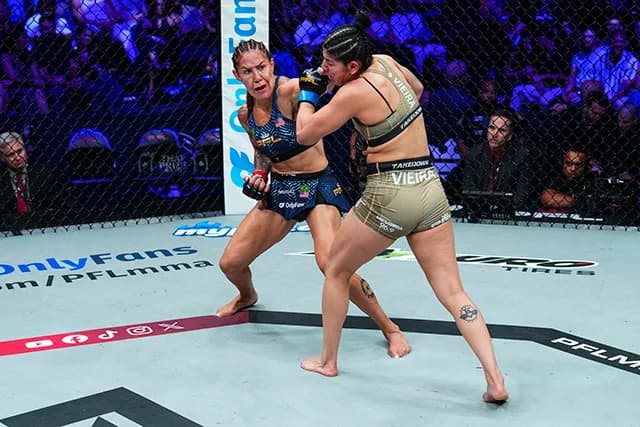
The most personal turn came with Nili Block, a world champion in kickboxing and Muay Thai who has spent years walking into arenas with the Israeli flag on her shoulders.
Block started training at 10. She already knew she wanted to be a professional athlete. Being a world champion? That part she did not dare to script. It happened anyway. More than once.
Her story, though, is not just about belts and medals. Block spoke about stepping into a sport still widely seen as a man’s world, about being underestimated, about the sideways glances and outright doubt. She learned to turn all of it into fuel.
“You say I can't do it, I'm going to prove you wrong,” she said. It sounded less like a slogan and more like a rule she has been living by since childhood.
That mentality followed her far beyond the ropes.
Competing as an Israeli abroad has changed in recent years. Anti-Israel protests, hostility in the stands, tension in the streets — all of it has become part of the backdrop. Block recalled French Jews approaching her at events, thanking her simply for standing there, visibly and unapologetically Israeli.
“They were scared,” she said. For communities facing antisemitism daily, watching an Israeli athlete refuse to shrink or hide offered something more than entertainment. “Me coming out there and just standing strong, I think it gave them a lot of hope.”
The titles matter to her. Of course they do. But they have not altered how she carries herself. Being a champion, she told the panel, is not a license to stop learning, to ease off the work, or to treat anyone with less respect.
For Block, the fight is never just the three rounds in front of the judges.
A new front line: the courtroom
From the ring, the episode jumped to a very different arena.
Since October 7, Israeli soldiers and reservists traveling abroad have increasingly run into legal complaints, investigations, and attempts to detain them under universal-jurisdiction laws. The battlefield, it seems, now stretches into foreign airports and police stations.
The show highlighted organizations that track Israeli soldiers through social media, monitor their movements, and then seek legal action in countries around the world. In response, Shurat HaDin has launched Shakpatz — described on air as a “legal flak jacket” for those same soldiers.
The idea is straightforward. Before reservists and veterans book a flight, they can access country-specific guidance, legal alerts, and clear instructions on what to do if they are stopped or questioned. Behind that, a network of lawyers stands ready to step in when an Israeli faces detention or the threat of arrest.
The logic mirrors their time in uniform. Soldiers wore physical protection while defending Israel. Now, back in civilian clothes, they may need legal armor.
“You protected us. Now we are protecting you,” the segment declared.
For Israeli servicemen and women, the message was stark: stepping off the battlefield no longer guarantees that the fight is over.
From Jabalia to the waves
The final story belonged to someone who decided that his fight would not end where most people assumed it must.
Tamir Dudi, 26, was seriously wounded in combat in Jabalia. Seventeen surgeries followed. He lost his right arm.
For many, that would have been the moment that defined the rest of their life. The line where everything splits into “before” and “after.”
Dudi drew a different line. He went back to surfing.
Today, the IDF officer is training for the World Adaptive Surfing Championship in California. His goal is not poetic or complicated. He wants to stand on the podium. He wants a medal.
The ALL CAPS panel looked genuinely stunned by the footage and the story behind it. Surfing is unforgiving even with two arms. With one, every paddle, every attempt to stand, every second of balance becomes a test. Dudi has chosen to take that test again and again.
It was a fitting way to close what the panel called an “episode of champions” — an hour that linked people fighting on wildly different stages.
For Nili Block, the contest is inside the ring and in the way she walks into foreign arenas draped in her country’s flag. For IDF reservists, a war they thought they had left behind can reappear at a border control desk thousands of miles away. For Tamir Dudi, the real battle began after the gunfire stopped, when he had to decide what kind of life he wanted to live with one arm and a long scar of memory.
His answer was simple. He got back on the board.