FIBA Women's World Cup Semifinals: France vs Germany, Spain vs USA
The 2026 FIBA Women's World Cup has boiled down to four heavyweights and one unforgiving weekend in Berlin. The United States, France, Spain, and Germany all crushed their quarterfinal opponents. No late escapes. No nervy finishes. Just four teams kicking the door down to reach the semifinals.
Now comes the hard part.
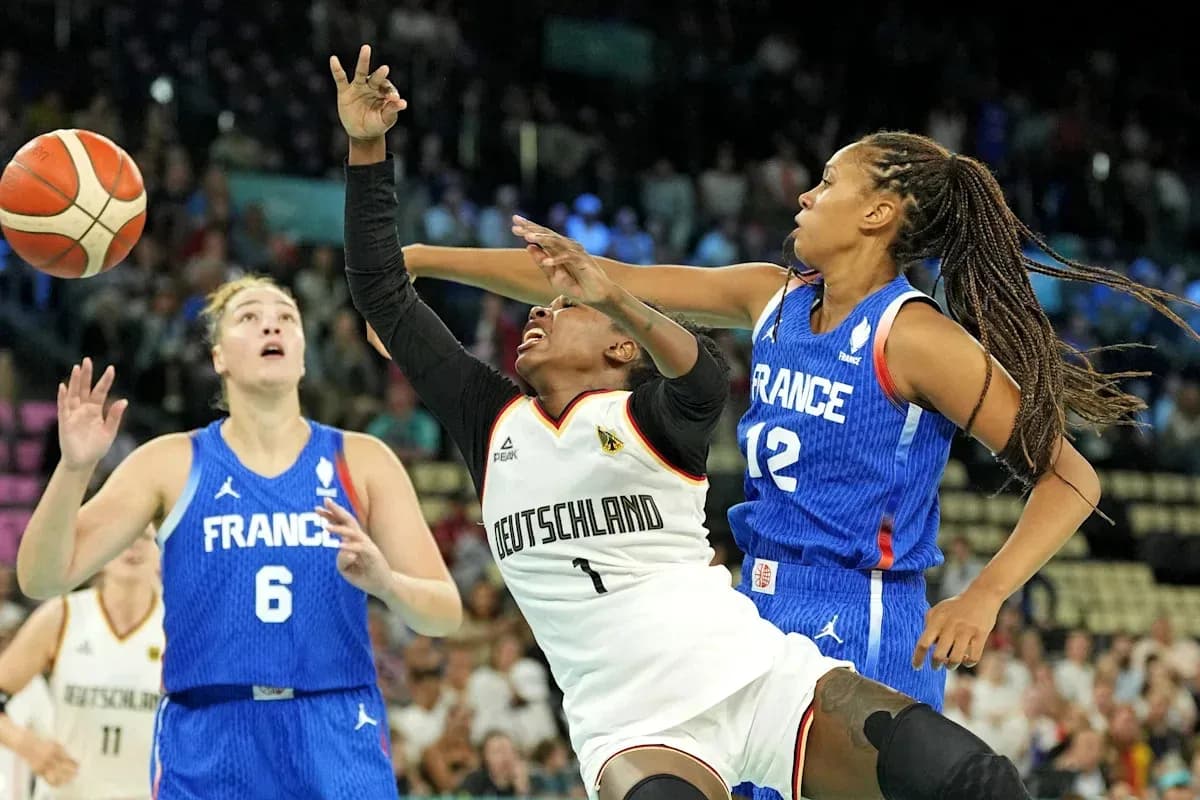
France vs Germany: The Juggernaut Meets the Host Nation
France have spent this tournament playing like a team with a score to settle. Their shooting has ripped up the record books, their margins of victory have looked like mismatches, and every game has carried the same message: they are here to dominate.
They even broke the single-game three-point record along the way. When France get rolling from deep, games end early.
The most striking part? It’s not just the starting five doing the damage.
Marine Johannès has turned the bench into a weapon. She’s eighth in the tournament in scoring at 16.5 points per game and leads all players with 16 made threes. She doesn’t start. She doesn’t need to. Every time she checks in, the rhythm of the game changes. Defenses stretch, closeouts get desperate, and France’s spacing becomes almost impossible to manage.
On the wing, Gabby Williams has been playing some of the best basketball of her World Cup career. Her two-way impact has underpinned France’s surge. If she sustains this level, France’s path to the final stays wide open.
Yet this is not a neutral-court test. It’s Berlin. It’s Germany’s home floor. And that changes the feel of everything.
Germany have ridden the energy of a home World Cup all the way to the last four. Marie Gülich has been the heartbeat of the run, averaging 11.8 points per game and providing the interior presence this team needed to believe it belonged on this stage.
As the tournament has gone on, Leonie Fiebich and Nyara Sabally have grown with it. Their quarterfinal win over Belgium showed just how dangerous they can be when both click at once. Fiebich poured in a team-high 17 points and grabbed 10 rebounds. Sabally matched her with a double-double of her own: 16 points and 12 boards. Those numbers weren’t empty. They broke Belgium’s resistance.
If that frontcourt duo maintains this form, Germany have a real shot at rattling France.
The bench has contributed, but this is where the comparison bites. Germany’s depth doesn’t stretch as far or as fearlessly as France’s. For the hosts, the margins are smaller. They cannot afford long scoring droughts or foul trouble against a side that can send quality in waves.
So the equation is clear. Germany must defend at a level that erases the memory of the 2024 Olympics quarterfinal, when France beat them 84–71. They need to turn this semifinal into a grind, not a shootout. They need the crowd to live inside every French possession, to lift their own intensity and unsettle the tournament’s most explosive offense.
Prediction: France Wins.
France are playing like a team still haunted by that crushing loss to the USA at the 2024 Paris Olympics. They have not eased off once in this World Cup. Germany will push, the arena will roar, and there will be moments when the upset feels possible. But unless the hosts can smother France’s three-point barrage for 40 minutes, the depth and firepower of the French side should carry them into the final.
Spain vs United States: Style, Firepower, and a Clash of Systems
The second semifinal brings a different kind of tension. Spain arrive with rhythm and confidence. The United States arrive with power and history.
Spain topped Group A and earned themselves a bye straight into the quarterfinals. They looked fresh and ruthless when they got there, dismantling Australia 89–66 to book their place in the last four.
Megan DiLeo (née Gustafson) led that charge with 16 points on 7-of-11 shooting. Her work with the Portland Fire in the WNBA has clearly sharpened her game. She looks assured, decisive, and ready for this stage. She has elevated her play in this World Cup, and Spain have fed off that assurance.
Alongside her, Iyana Martín has become one of the standout scorers of the tournament. She’s averaging 16.5 points per game, seventh among all players, and gives Spain a go-to option when possessions slow down. She can bend a defense, get to her spots, and punish any lapse in focus.
Spain’s numbers back up the eye test. They’re averaging 81.0 points per game, moving the ball, finding shooters, and punishing mistakes.
The problem? The team on the other side of the bracket scores even more.
The United States are averaging 90.5 points per game and look like they’ve finally hit their stride after an early scare. A shaky group-stage outing against Italy raised a few eyebrows, but since then the Americans have snapped back into their usual tournament mode.
Their quarterfinal win over Hungary was brutal: 108–56. Napheesa Collier led with 19 points, and the former WNBA Defensive Player of the Year has been the model of consistency throughout the tournament. Her blend of scoring and defensive presence gives the U.S. a stabilizing star in every phase of the game.
Rhyne Howard added 15 points and went 3-for-5 from beyond the arc against Hungary, another reminder of how many different ways this roster can hurt you.
Then there’s the bench, which most teams would happily start.
Caitlin Clark, Paige Bueckers, and Angel Reese—names usually at the center of WNBA MVP conversations—are coming in as impact reserves. Each has stepped up when called upon, whether the game demanded shot creation, playmaking, or a surge on the glass. That kind of depth doesn’t just keep the level high. It breaks opponents’ resistance over time.
Defensively, the United States have been just as imposing. Through four games, they’ve allowed only 58.3 points per outing. Their rebounding edge is stark as well: 31.5 defensive rebounds per game, compared with Spain’s 26.3. That gap tells its own story. One team usually finishes possessions. The other will need to fight to keep theirs alive.
For Spain, the path is narrow but not invisible. They must find a way to disrupt the American rhythm, drag the tempo into their comfort zone, and turn this into a game of precision rather than power. Their offense has the quality to score. The question is whether their defense can withstand the waves of pressure and whether they can keep the rebounding battle close enough to give their scorers repeated chances.
Prediction: USA Wins.
Spain’s run has been impressive, and their offense will not go quietly. But the United States carry a different kind of weight in these moments: experience, depth, and a roster built for exactly this stage. With their balance of scoring, rebounding dominance, defensive control, and star power off the bench, the Americans should have too much over 40 minutes.
So Berlin gets what every major tournament craves: a host with a puncher’s chance, a juggernaut on a mission, and a United States team that rarely lets go once it smells another world title.