Fantasy Hoops 2023: RotoWire’s Top 150 Rankings and NBA Preview
Two weeks out from preseason, the NBA board is already set for fantasy managers. RotoWire’s top-150 for category leagues doesn’t just rank players; it sketches out an entirely new landscape shaped by superstar relocations, rookie breakouts and shifting usage across the league.
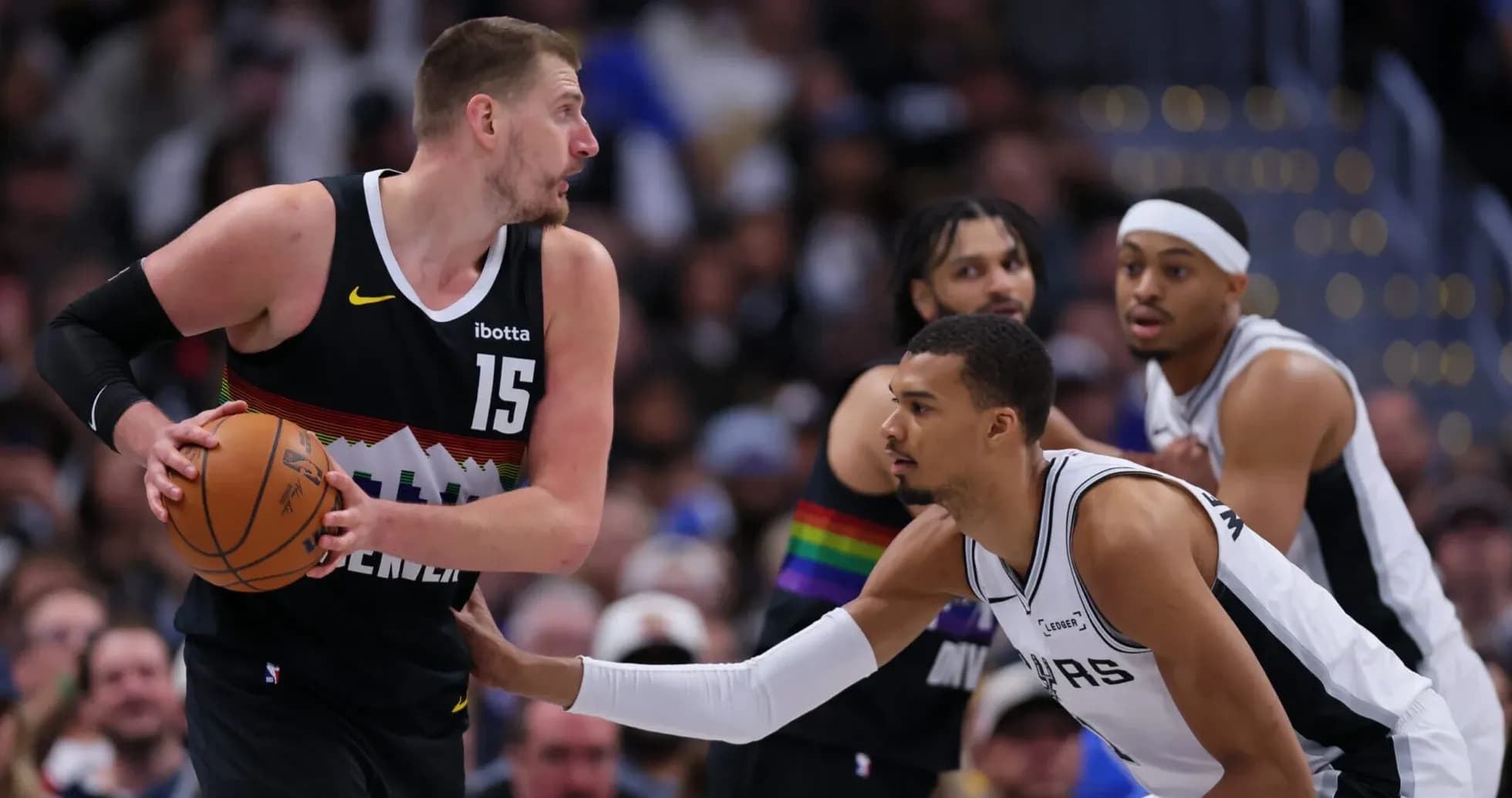
At the top, nothing moves Nikola Jokić. He’s still the cheat code. Elite field-goal percentage on heavy volume, plus assists, rebounds, steals and even helpful free throws. No weak category. No debate.
Victor Wembanyama sits right on his shoulder. In category formats, those blocks are gold bullion, and he wraps them in 3s and boards from a forward spot that almost breaks the game. Shai Gilgeous-Alexander rounds out the early elite, built for this format with outrageous efficiency for a guard, a pristine free-throw profile and a steal rate that wins weeks.
Then the board starts to bend.
New roles, new monsters
Luka Dončić now runs the Los Angeles Lakers without LeBron James. The usage spike is baked in: points, assists, rebounds, 3s – all first-round caliber. The catch is familiar: field-goal drag and brutal turnovers. In category leagues, that’s the tax.
Cade Cunningham pushes into the first round on volume playmaking and guard rebounding, even as his field-goal percentage and turnovers still sting. Jayson Tatum, a year removed from his Achilles tear and now the clear alpha again in Boston with Jaylen Brown gone, reclaims his spot as one of the most flexible first-round anchors.
Anthony Edwards’ rise continues in Minnesota. His 3-point volume and free-throw accuracy from a high-usage scoring role translate cleanly, with steals padding the line. LaMelo Ball’s arrival should smooth his looks but trim the assists.
Giannis Antetokounmpo’s move to Miami throws drafters back into the classic puzzle: crushing field-goal percentage, rebounds, steals and blocks, wrapped in punishing free throws and 3s. You either build your roster around that punt or you don’t take him.
Jalen Johnson’s all-court game in Atlanta – 20/10/6 with stocks – holds first-round weight when he’s on the floor, but free throws, turnovers and availability keep a lid on his rank. Tyrese Maxey, now sharing the ball with Jaylen Brown and LeBron in Philadelphia, trades some usage for cleaner looks and efficiency. Cooper Flagg in Dallas, off an excellent rookie campaign, carries the profile fantasy managers crave: steals, blocks and improving efficiency next to Kyrie Irving. Tyrese Haliburton, still the engine in Indiana, keeps his value through elite assists, 3s and free throws, though the Achilles history hangs over his ceiling.
Second-round tension: upside vs. stability
Round 2 leans heavily into wings and guards who fit category formats like a glove. Scottie Barnes remains a dream build piece with steals, blocks, rebounds and assists from the forward spot, even if Kawhi Leonard’s arrival in Toronto eats into touches and his free throws lag.
Donovan Mitchell offers predictable 3s, free throws and steals in Cleveland, with James Harden handling most of the table-setting. Karl-Anthony Towns shifts to New York and still brings elite free throws for a big, boards and 3s, but the lack of blocks forces managers to plan around that hole.
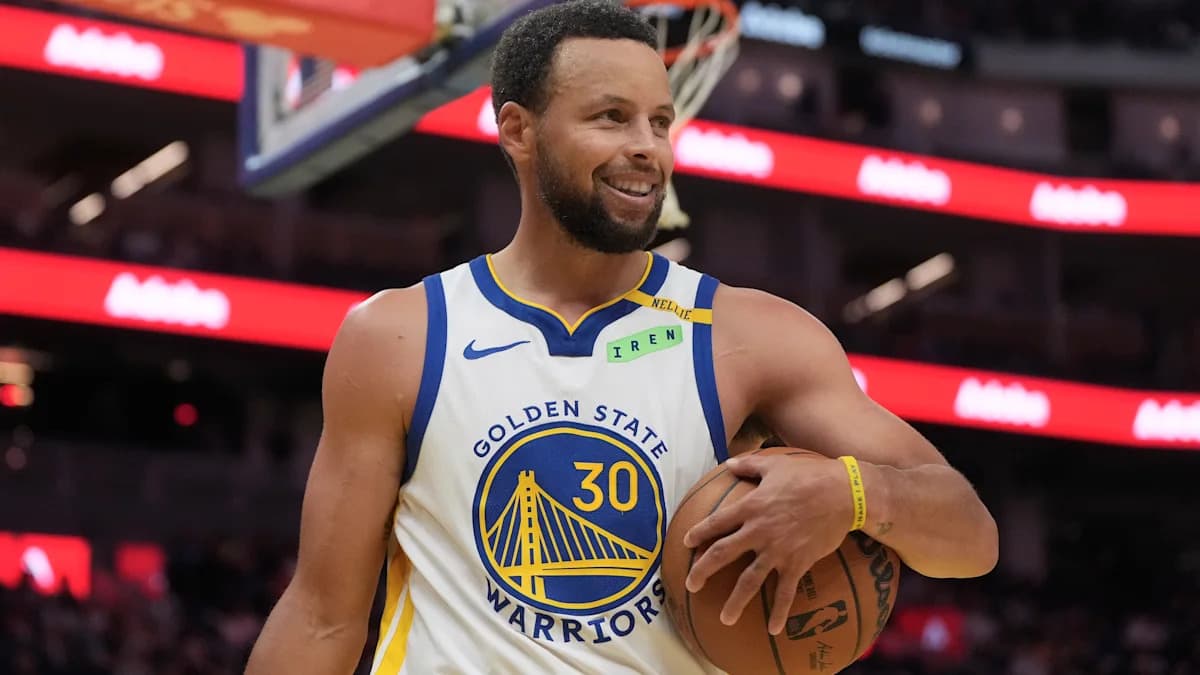
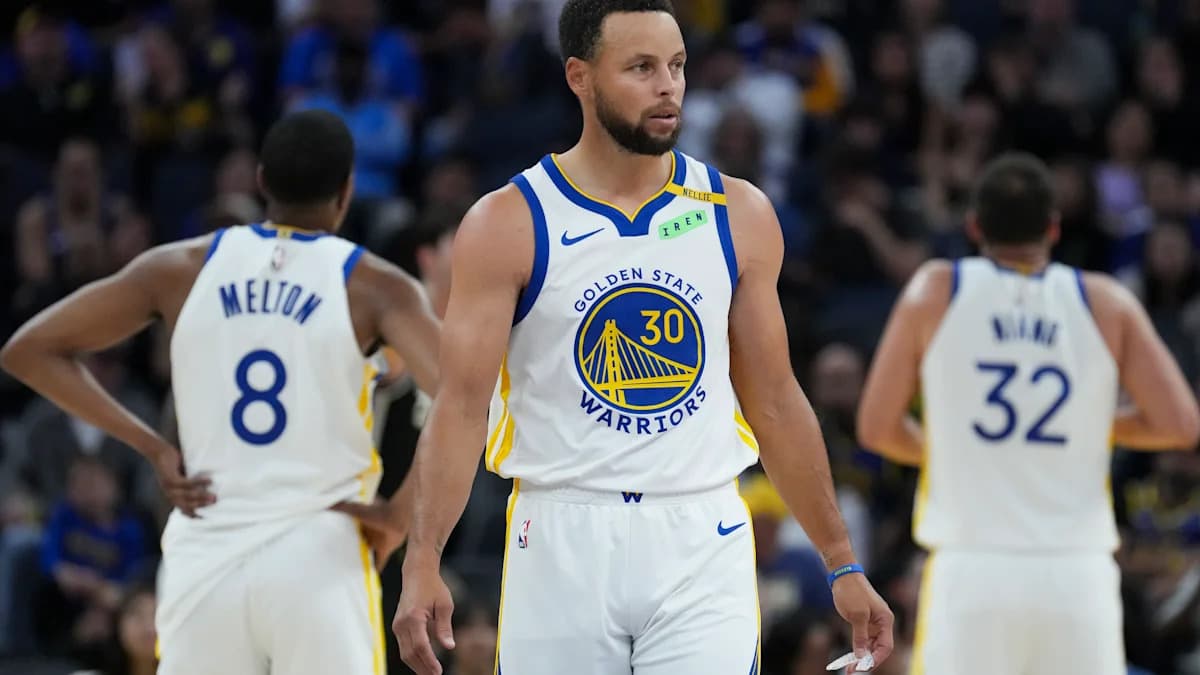
Kevin Durant, now in Houston, remains one of the cleanest efficiency lines in basketball. His age and likely rest days are the only real concerns; per game, he still screams first-round. Stephen Curry’s profile is similar: historic 3-point volume, elite free throws and steals, balanced against age and games played.
Jamal Murray is the picture of role security in Denver, supplying 3s, assists and strong percentages. Alperen Sengun and Amen Thompson, both in Houston, highlight the extremes: Sengun as a playmaking big with field-goal percentage, boards, assists and steals but no 3s and heavy turnovers; Thompson as a defensive stat machine whose poor free throws and lack of 3s demand a punt build.
Trae Young in Washington remains a classic category swing: elite assists, 3s and free throws, with turnovers and field-goal percentage you must either embrace or cover. Austin Reaves, freed by LeBron’s exit in Los Angeles, climbs on the back of elite free throws, 3s and secondary playmaking, even as turnovers rise.
LaMelo Ball’s move to Minnesota complicates the offense around Edwards, but his 3s, assists and steals still play, if you can stomach the efficiency. Chet Holmgren, meanwhile, is the archetypal category big in Oklahoma City – blocks, 3s, good percentages – even if his raw counting stats look ordinary in points formats.
Third and fourth rounds: risk, reward and specialists
By Round 3, managers face sharper choices. Josh Giddey in Chicago offers rebounds, assists and steals from the guard spot, with turnovers as the cost of his triple-double flirtations. James Harden, now in Cleveland, remains a build-around piece: 3s, free throws, assists and steals, but harsh on field-goal percentage and turnovers.
Devin Booker, discounted after a down shooting year, still runs Phoenix’s offense with strong free throws, 3s and assists, with positive regression on his field-goal percentage as the hook. Anthony Davis in Washington is the ultimate health gamble: 20 games last year, but a first-round category line whenever he suits up.
Kawhi Leonard, now in Toronto, still has MVP-level two-way upside on a per-game basis, though his long injury history and a deep Raptors rotation threaten his volume. Trey Murphy III rises on elite 3-point volume, good free throws and low turnovers, the exact profile that shines in this format.
Evan Mobley’s blocks, steals and boards in Cleveland keep him anchored despite last year’s shooting slump. Jalen Brunson in New York brings efficient scoring, 3s and assists, but light defensive stats. Domantas Sabonis, with Sacramento reshaping its offense, offers field-goal percentage, huge rebounding and assists from center, weighed down by turnovers and no blocks.
Derrick White remains one of the format’s quiet stars: 3s, blocks, steals, good free throws and low turnovers, largely immune to Boston’s scoring hierarchy. Lauri Markkanen in Utah provides 3s, free throws and boards, though his low defensive stats cap his ceiling. Bam Adebayo in Miami stays steady, with Giannis’ arrival likely shifting his mix of boards and 3s rather than erasing his value.
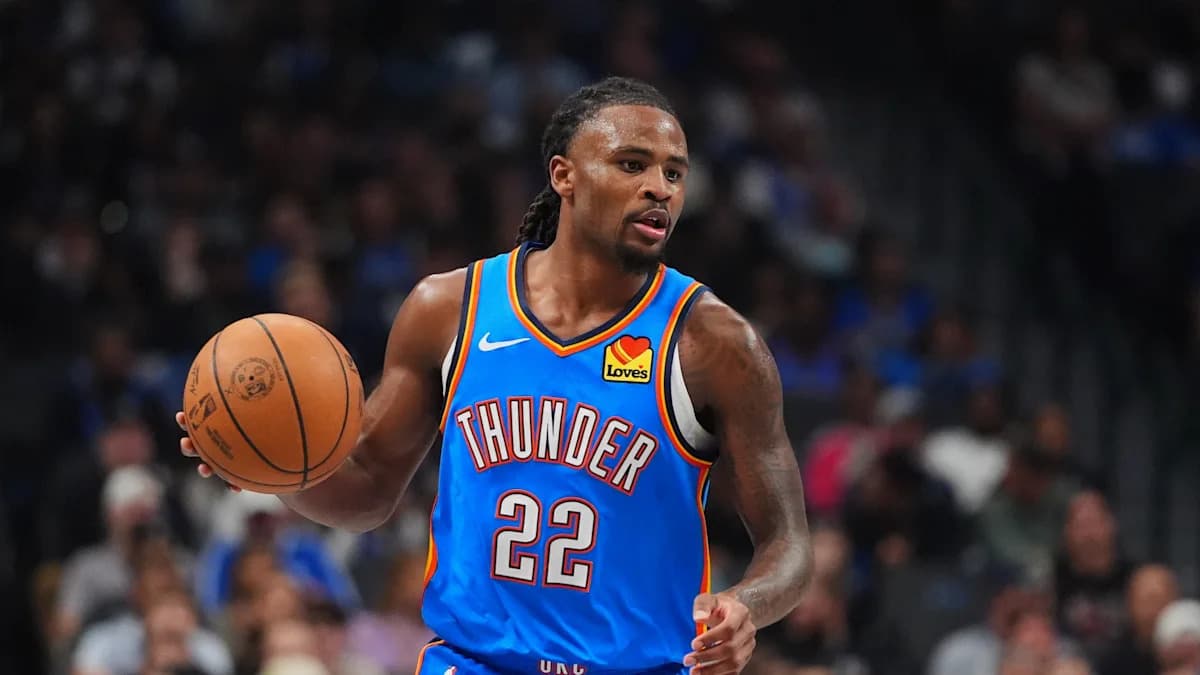
Round 4 brings a wave of intriguing pivots. Jalen Williams, Oklahoma City’s two-way glue, returns from wrist and hamstring issues as the Thunder’s No. 2 option, with a balanced line that fits almost any build. Walker Kessler’s move to the Lakers locks in traditional big-man stats, boosted by easy lobs from Dončić.
Deni Avdija’s All-Star breakout in Portland delivered 3s, boards and playmaking, but the arrivals of Ja Morant and Damian Lillard threaten his touches. Kyrie Irving, coming off an ACL tear at 34, becomes a category riser in Dallas with elite efficiency, 3s, steals and unusually low turnovers for a high-usage guard.
Jaren Jackson Jr. offers the precious blocks-and-3s combo with strong free throws, offset by field-goal issues and fouls. Jalen Duren in Detroit delivers a high field-goal percentage and a nightly double-double with limited upside in blocks and 3s. Brandon Miller steps into a likely usage bump in Charlotte after LaMelo’s departure, with 3s as his main calling card, provided the efficiency holds.
Jaylen Brown, now in Philadelphia, projects as the secondary scorer behind Joel Embiid when healthy and ahead of a load-managed LeBron, but his profile still leans more toward points leagues. Kon Knueppel, a second-year leap candidate in Charlotte, offers exactly what category managers crave: efficient shooting, 3s and a share of the Hornets’ vacated usage.
Onyeka Okongwu’s move into a 32-minute starting role in Atlanta brings field-goal percentage, boards, blocks and emerging 3-point range. Desmond Bane in Orlando locks in high-volume 3s, good free throws, steals and low turnovers as the Magic’s No. 3 option. Paolo Banchero stuffs the box score, but middling field-goal percentage, shaky free throws, thin stocks and heavy turnovers make him a more complicated fit.
Middle rounds: hunting edges
From Round 5 onward, the board turns into a hunt for specialists, breakout bets and structural anchors.
Donovan Clingan in Portland offers blocks, field-goal percentage and a double-double baseline with room for more minutes. Nickeil Alexander-Walker’s Most Improved season in Atlanta came on a clean 3-and-D line that fits category leagues perfectly. Darius Garland, now leading the Clippers’ offense, brings elite free throws, 3s and assists, with injuries as the main concern.
Dejounte Murray returns from an Achilles tear in New Orleans with his trademark steals, boards and assists from the guard spot. LeBron James in Philadelphia remains a nightly triple-double threat, but his minutes, role and games played are the great unknown.
Pascal Siakam stays steady in Indiana with good field-goal percentage, low turnovers and reliable steals, even as Haliburton’s return trims his possessions. Keyonte George in Utah comes off an All-Star level season, now battling for usage with a wave of new arrivals.
Dyson Daniels in Atlanta still sells himself on steals and solid field-goal percentage, while offering little from 3 and a weak free-throw line. OG Anunoby, now in New York, is the archetypal mid-round 3-and-D pick: 3s, steals, blocks, good field-goal percentage and almost no turnovers.
Cameron Boozer in Memphis emerges as the best-positioned rookie, with opportunity on his side but the usual rookie penalties in efficiency and turnovers. Kel’el Ware in Milwaukee and Matas Buzelis in Chicago both profile as young bigs with blocks, boards and stretch elements, slotted into rebuilding teams that can afford to play them.
By Round 6, Joel Embiid’s presence this low underlines the risk-reward tension. When he plays, he wins categories outright with elite free throws, blocks and field-goal percentage. The concern is simple: how often will he play on a strengthened Philadelphia roster?
Franz Wagner in Orlando carries 22/5/5 potential but has yet to stabilize his free throws and 3s. Stephon Castle in San Antonio slides because his weaknesses – efficiency and turnovers – are punished more harshly here, even as his steals and assists remain appealing.
Tyler Herro in Milwaukee gets his highest career usage as a lead playmaker, promising 3s and free throws but also career-high turnovers and almost no defensive stats. Michael Porter Jr., now in Brooklyn, offers 3s, efficiency, boards and low turnovers, with Julius Randle’s arrival trimming shots but not his category shape.
Ivica Zubac in Indiana brings classic center stats without elite shot-blocking. Randle himself arrives in Brooklyn as a high-usage source of boards, assists and free throws, light on defensive production. Ryan Rollins, Zach Edey, De’Aaron Fox, Damian Lillard and Rudy Gobert round out a tier of players whose value hinges on role clarity, health and whether their traditional strengths – blocks, free throws, 3s or steals – still hold up under changing circumstances.
Late rounds: durability, roles and quiet wins
From Round 7 down, the rankings become a test of projection and tolerance for risk.
Alex Sarr in Washington, Naz Reid in Charlotte and Mikal Bridges in New York headline bigs and wings whose 3s, blocks, steals and durability can swing seasons. Paul George in Boston and Brandon Ingram with the Clippers bring proven production but mounting absences and modest defensive stat lines.
Jaden McDaniels, Payton Pritchard and Ausar Thompson offer very different paths to value – defensive stocks and efficiency for McDaniels, 3s and low turnovers for Pritchard, and explosive per-minute steals and blocks for Thompson if his role grows in Detroit.
Ja Morant’s move to Portland strips away his franchise-player status and adds fresh uncertainty to an already fragile health record. Immanuel Quickley, Jarrett Allen and Zion Williamson sit in that mid-late cluster where secure roles clash with glaring category flaws, especially free throws and turnovers in Williamson’s case.
By Round 8 and beyond, managers are chasing specific category boosts. VJ Edgecombe, Coby White and Myles Turner supply 3s, steals, blocks and free throws in different mixes. Dylan Harper, Ty Jerome and Jalen Suggs carry varying degrees of health and minutes risk, but their efficiency and defensive stats make them attractive stashes.
Derik Queen, Norman Powell, Caleb Wilson, Josh Hart, Isaiah Hartenstein and Nicolas Claxton offer everything from all-around lines to hyper-focused strengths like elite field-goal percentage and stocks, with free throws and minutes as the main red flags.
Rounds 9 through 13 are where fantasy seasons quietly turn. Jabari Smith Jr., AJ Dybantsa, Day’Ron Sharpe and Miles Bridges fight for shots behind star-heavy rosters. Ayo Dosunmu, Andrew Wiggins and Collin Murray-Boyles bring efficient supporting lines that play better over 82 games than in highlight reels.
Veterans like Fred VanVleet, Kristaps Porziņģis, Zach LaVine, Jrue Holiday and DeMar DeRozan cling to relevance through 3s, free throws, steals and low turnovers, even as injuries and age bite. Young bigs and wings such as Cedric Coward, Neemias Queta, Khaman Maluach, Toumani Camara, Cason Wallace and Peyton Watson sit poised for minutes spikes that could turn late-round darts into league-winners.
Rookies and fringe starters – Darius Acuff Jr., Jeremiah Fears, Ace Bailey, Tari Eason, Tre Jones, Devin Vassell, Christian Braun, Quentin Grimes, Yaxel Lendeborg and others – round out the top 150 as bets on opportunity, system fit and incremental improvement.
The board is set. The roles are shifting. In a season where LeBron James changes coasts, Giannis Antetokounmpo lands in Miami and multiple young cores hard-reset around new stars, the sharper question for fantasy managers isn’t who to draft first.
It’s this: which categories are you willing to sacrifice to win the rest?