.svg&w=384&q=75 "logo")
Ernest Udeh Jr.: Cleveland's New Hope at Center
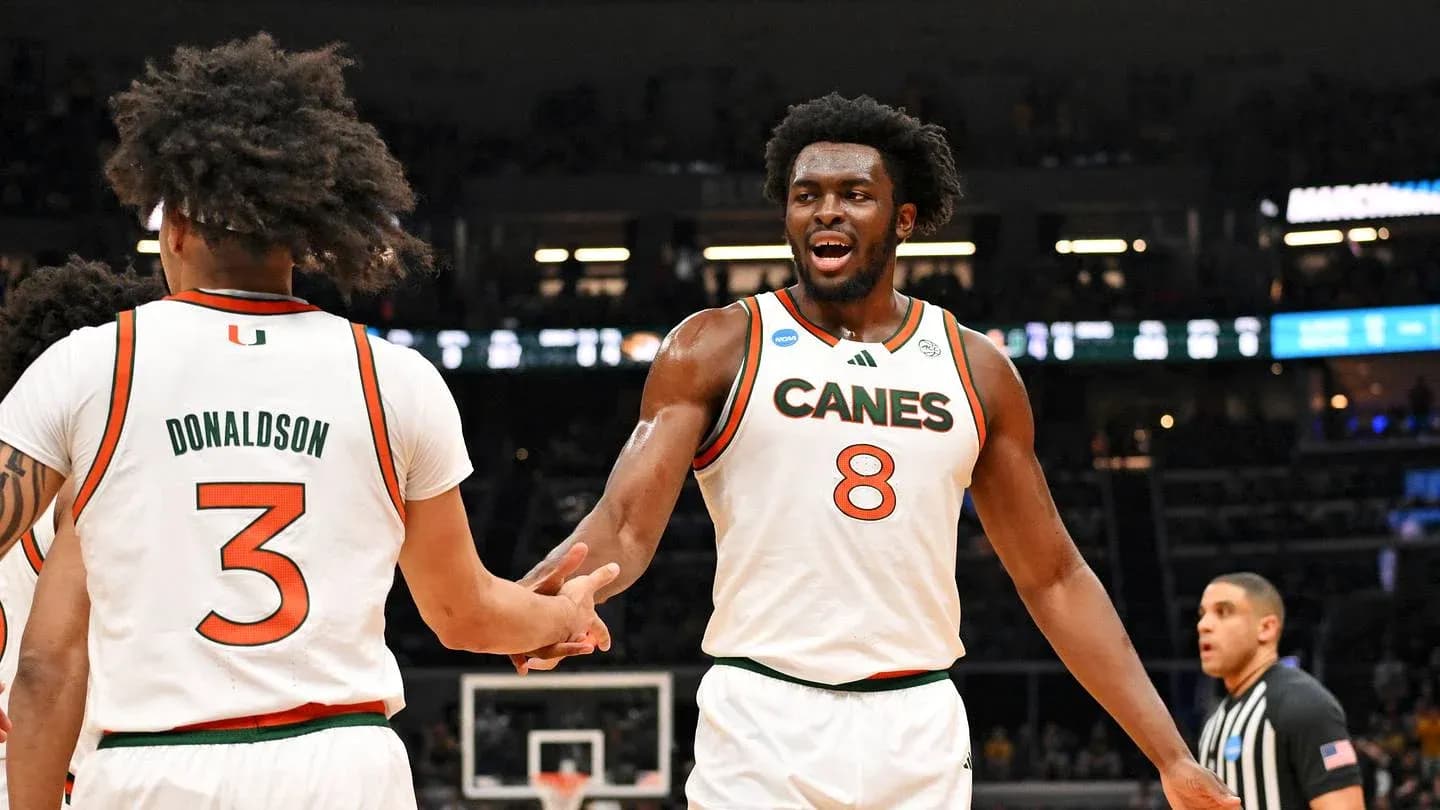
Ernest Udeh Jr. arrived in Cleveland the hard way. Three schools in four college seasons, a final stop at Miami (FL), a modest NCAA Tournament run, undrafted in 2026, then a two-way deal with the Cavaliers that barely made a ripple on draft night.
Las Vegas changed that.
The 22-year-old big man used Summer League to announce himself as something more than a camp body. He looked like a blueprint: a low-usage, high-impact center built for the dirty work that wins games in the margins.
Now the question for Cleveland is simple: does that blueprint earn him a standard NBA contract this season?
An Old-School Big in a Modern Game
Udeh is a throwback. He is not a stretch five. He is not a hub at the elbow. He is not asking for post touches or isolations.
He is a rim runner and a finisher. You throw it near the cup, and he finishes with violence.
- Alley-oops.
- Drop-offs.
- Put-backs.
- Posters.
That’s his menu.
The numbers tell you he isn’t chasing points. He averaged just four points per game in Summer League and six as a senior at Miami. On paper, that’s background noise on a scouting report.
The rest of the stat line is where his case starts.
Udeh pulled down nine rebounds per game in college over 28 minutes a night. Stretch that to a per-36 projection at the NBA level and you’re talking double-digit rebounding potential. He hunts the ball off the glass, and he does it without needing plays run for him.
The real jolt, though, came at the defensive end in Vegas: 2.8 blocks per game.
That’s not a fluke number. At Miami, he averaged 1.4 blocks across the full season and showed consistent timing and discipline as a back-line anchor. Summer League simply magnified what he already was — a shot deterrent who changes how opponents attack the paint.
Put that profile in the G-League, and he walks in as one of the best shot-blockers in the competition to start 2026-27. Put it on an NBA bench, and he becomes the kind of situational big who can swing second units with energy and rim protection.
Cleveland’s depth chart only sharpens the argument. Behind Thomas Bryant, there is no clear, established interior presence. That gap is exactly where Udeh’s opportunity lives.
A Big Man, a Budget Play, and a Roster Decision
The Cavs still have decisions to make with their final roster spots as free agency winds down. If they chase another veteran big, they’ll find options — but they’ll also be paying veteran-minimum money for someone with limited upside and no internal track record.
Udeh offers a different path.
On his current two-way deal, he can be active for up to 50 regular-season games. With the G-League schedule starting after the NBA season tips off, Cleveland can open the year with Ernest Udeh, Tristan Enaruna, and Riley Minix all available and in uniform if they choose.
That gives the coaching staff a built-in audition window. Real minutes. Real opponents. Real data.
If Udeh turns those chances into reliable rim protection, hard screens, offensive rebounds, and vertical spacing, the front office has a ready-made, cost-controlled solution. Upgrading him from a two-way to a standard contract would come in cheaper than bringing in an outside veteran on the minimum, while rewarding a player developed inside their own system.
The Cavs have walked this road before. Dean Wade, Lamar Stevens, Craig Porter Jr., Nae’Qwan Tomlin — all started on two-way deals, all converted once they proved they could translate their niche into nightly value. Those weren’t splashy moves. They were smart ones.
Udeh is lining up as the next test case.
He doesn’t need plays drawn for him. He doesn’t need the ball to be effective. He just needs a lane to the rim and a paint to protect.
If Cleveland’s front office believes that kind of old-school center still has a place on a modern roster — and at a discount price — the decision on Ernest Udeh Jr. might be less about “if” and more about “when.”