
England's Test Summer: Chaos and Change
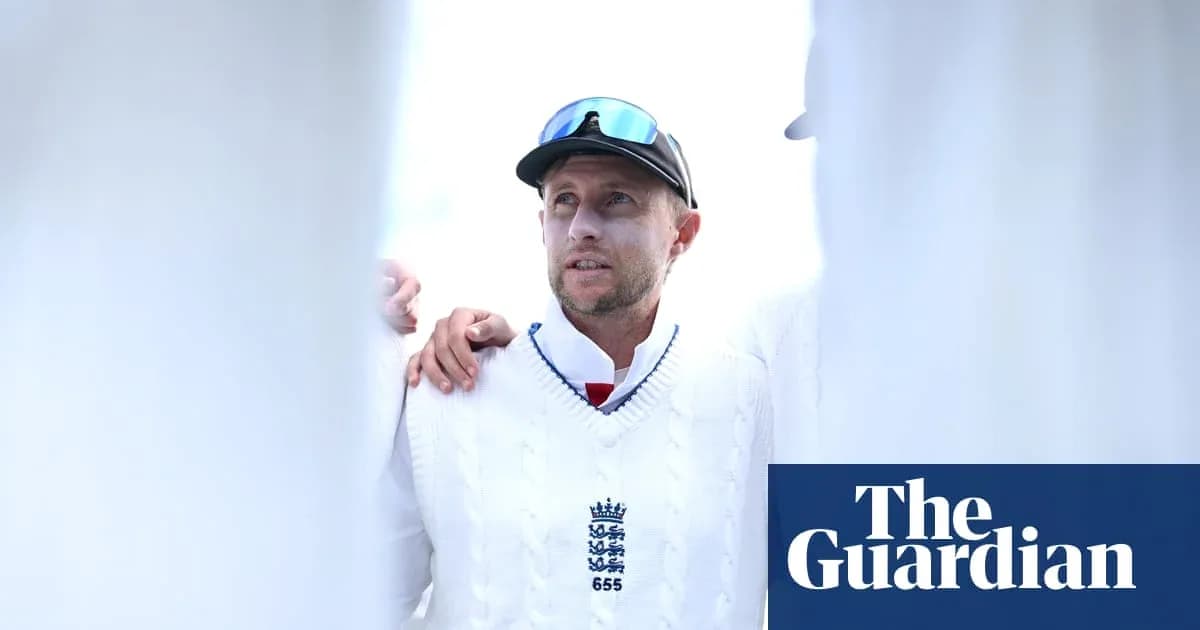
Joe Root stood in the late-summer quiet and called it what it was: “chaos”, “unusual”, “unsettling”. England’s Test summer had been all of that, and the moment that summed it up arrived before a ball had even gone dead. Ben Stokes, the totem of an era, walked away from international cricket mid-series, mid-match, while the contest with New Zealand still had a pulse.
Cricket has seen mid-game farewells before. Heather Knight did the same at Lord’s a fortnight later in the women’s Test. But Stokes’s exit at Trent Bridge, just before New Zealand closed out a landmark series win, cut deeper. Four years on from his rallying cry for “selfless cricketers”, the sight of him stepping off the stage as England were unravelling jarred with the message, even if Root, fiercely loyal, will never say so out loud.
That week was the nadir. England’s first home series defeat in a three-Test (or more) campaign for 14 years, and one that ended with the Black Caps laughing openly in their faces as the final wickets fell. Around it, there were drink-fuelled flashpoints and off-field noise. The sense was of a team spinning off its axis.
Only once the emotional umbilical cord to Stokes was cut, and once it became clear that the “Bazball” tag would cling to them until Brendon McCullum was removed as Test head coach, did the temperature begin to drop. Not entirely – the image of Brydon Carse in handcuffs in Derby, with Stokes hovering on the periphery, lingers – but enough for England to start resembling a functioning outfit again.
They also got a taste of an odd modern phenomenon: winning the cricket while losing the narrative. New Zealand felt it in June. Australia felt it during the Ashes last winter. England felt it against Pakistan. The series was theirs, yet much of the spotlight swung elsewhere – to a 21-year-old called Razaullah and to a visiting side in open meltdown.
Pakistan arrived and promptly showed what real dysfunction looks like. While England were dealing with curfews and a skirmish involving Saracens players, Pakistan were expelling seven players, sending home their head coach and bowling coach, confiscating mobile phones and dragging their own board – run by the government and desperate to deflect attention from the treatment of the country’s greatest captain – into the light.
Saj Sadiq, the long-time editor of PakPassion.net and a man not easily shocked, did not sugar-coat it: “As an entire series, this has been the most embarrassing and difficult to watch. On and off the field Pakistan have been an absolute shambles.”
It was brutal, and accurate.
Yet to write off England’s summer as a missed opportunity would be lazy. Stephen Fleming has not even landed in the UK yet – Root is itching to meet his new head coach properly after a long-distance courtship – but the New Zealander will already have a decent feel for his inheritance, gleaned from highlight reels over breakfast in Canterbury.
One thing stands out: a fast-bowling group with teeth. Ollie Robinson has come back snarling and effective. Jofra Archer’s hunger for Test cricket, often assumed to have faded with Stokes’s departure, clearly has not. Josh Tongue looks tougher, more durable, and increasingly dangerous. Gus Atkinson’s numbers dipped after a night at the Rex Rooms and a shift in role, yet this was still the fastest he has bowled over a season. England’s “quiet man” suddenly has pace that makes people sit up.
There are asterisks. The ball ruled the bat to an almost absurd degree: a wicket every 41 deliveries, the lowest strike-rate for a home summer in England since the 1880s. Pakistan’s batting was flimsy, more wet tissue than wet paper. On the one pitch that truly eased – Edgbaston, flat and fair, with a ball that went soft after getting damp the previous evening – England’s attack lost its edge and found wickets hard to come by.
Root’s old problem resurfaced too: the tail. Razaullah’s astonishing 81 at Edgbaston, in keeping with south Birmingham’s fondness for unexpected pyrotechnics, shredded England late on. Root had similar troubles when deputising for Stokes at the Oval in June. Marcus Trescothick, the interim head coach for the Pakistan series and uncertain of his longer-term role, believes Fleming is well equipped to help here – a sharp tactical mind, a cool former captain and the most decorated coach in the pressure cooker of the IPL.
Beyond the front-line four quicks lies a blur. South Africa in December looms, and depth will matter. On form, Olly Stone’s late-summer surge for Nottinghamshire should propel him ahead of the younger hopefuls waiting in line. The absence of a genuine, trusted frontline spinner is still glaring. Fleming, schooled alongside Daniel Vettori, may crave a similar multifunctional option. Liam Patterson-White fits that mould more than most.
Fleming’s own batting journey could be instructive, too. This England lineup piled up 23 half-centuries over the summer but only one man, Ben Duckett, went on to a hundred. Fleming himself made 10 fifties before his first Test century. He knows what it is to live in that limbo, to feel the weight of expectation grow heavier with each missed landmark. Dan Lawrence, forever on the cusp, could use that voice in his ear.
Every coach talks about stability. Every selector dreams of a settled XI. Fleming may not rush to that ideal. The current tension for places has an edge he might enjoy, especially once Jacob Bethell is fit. Someone will have to make way. Emilio Gay, almost certain to tour yet already facing questions about his ceiling, looks the most vulnerable in the current side. That, in turn, throws up a fresh problem: who opens with Duckett?
Duckett himself, aside from his excellent 113 at Trent Bridge, has often looked caught between the old Bazball aggression and a more nuanced tempo. If Fleming wants a retooled top order, Jordan Cox may be nudged up to open. Given that England’s No 3 did not appear before the ninth over in any innings against Pakistan, it is hardly a radical shift.
Cox did not land the defining score either, settling for three half-centuries. But he left a mark. There was something about the way he stood at the crease – almost cocksure, unfazed, intent on imposing himself. Root admitted: “I didn’t really know what to make of him when I first met him.” That uncertainty has quickly turned into intrigue.
Cox has said openly that he is trying to outdo Root. On paper, it borders on absurd. The captain sits on more than 14,000 Test runs. Yet buried in that ambition is the blueprint for this new England. With Stokes gone, they cannot lean on miracles or aura. They have to look at Root not as a superhero, but as the quiet standard: method, consistency, resilience.
If Fleming can align that mindset with a sharper attack and a braver, more ruthless batting unit, this chaotic summer might yet be remembered not for the mid-series farewell of a giant, but for the moment England finally learned how to live without him.





