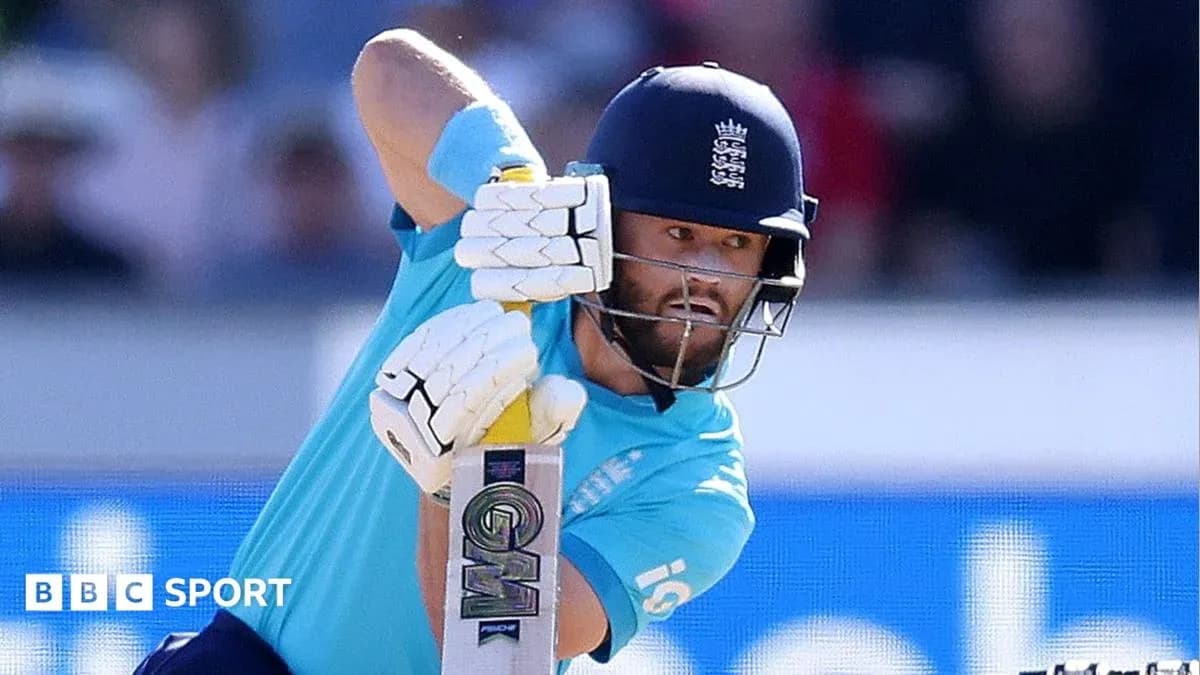
England's New Top Order Faces Sri Lanka's Challenge
On a strip that looks like camouflage from the stands – green blotches, brown scars, nothing uniform – England’s new-look top order went to work with the sense that every ball might be a landmine.
One of them was. It spat, stayed low, and thudded into the slip fielder’s knee. Kamindu Mendis went down in real pain, a reminder that this pitch has teeth and no intention of playing the polite, modern one-day role.
Sri Lanka’s seamers tried to bare those teeth early. Asitha Fernando produced the ball of the opening exchanges, one that honed in on Tom Banton’s pads and then straightened late, snapping him upright and drawing admiration from Russel Arnold on BBC Test Match Special. It was the sort of delivery coaches dream about: hitting that top-of-off channel, making a batter who has lived on a T20 diet suddenly remember the old rhythms of 50-over cricket.
Banton needs those rhythms badly. At 27, he is only now making his 26th List A appearance, a startlingly low number for a player of his talent and profile. One List A game since 2020, and now thrust in at the top of the order in place of the injured Jacob Bethell. By comparison, Joe Root had already logged 186 List A matches before turning 28. Different eras, different priorities – but the contrast is brutal.
This is not just another cap for Banton; it feels like a crossroads. Dawid Malan, watching on, framed the challenge neatly: Harry Brook might see ODI cricket as a “longer T20,” but the reality is harsher. Fifty-over batting demands a different tempo, a different patience. You can’t just swipe your way through 10 overs and hope the rest takes care of itself. You have to settle, build, then burn.
At the other end, Ben Duckett has his own battle. England’s left-hander has had a carousel of opening partners in recent ODIs – Jamie Smith, Zak Crawley, Phil Salt, Bethell, even Rehan Ahmed. Today it’s Banton, towering over him at the non-striker’s end, a throwback to that “little and large” vibe of Crawley and Duckett in the Test side.
Duckett, short on runs and shorter still on confidence, got the gift every out-of-form batter craves: a full toss early, something to free the hands and quiet the noise. He took it, easing England from 1-0 to 5-0 and giving the scoreboard, and his own heartbeat, a gentler look.
Not that Sri Lanka helped themselves. Dilshan Madushanka’s first over was ragged, wayward lines and lengths that betrayed nerves and muddled plans. Arnold did not sugar-coat it: Madushanka was “getting it wrong,” and this, he suggested, is the weight Sri Lanka carry – the burden of form, of expectation, of knowing they need to start fast against an England side that can bury you in an hour if you let them.
The conditions offered no excuses. With the sun beating down, whatever early moisture there was in the surface began to vanish. Sri Lanka, Arnold hinted, may have tweaked their XI late once they realised the pitch would harden quickly under that heat. On this ground, history backs that call: in each of the last six 50-over matches at Chester-le-Street, across domestic and international cricket, teams batting first have gone past 300. Once the ball softens and the grass bakes, it can become a road.
That’s the theory. The reality, at 17-1 with Duckett on 5 and Root yet to score, felt more nuanced. The pitch still misbehaved just enough. The odd ball gripped, another skidded, and fielders wore blows they never saw coming. Root, England’s old master of this format, walked in with the calm of a man who has seen every kind of surface, every kind of pressure. He has built a career on turning tricky starts into inevitable hundreds. Today, he began again from zero.
Across the line, Sri Lanka arrived with a new captain and a familiar ambition. Kusal Mendis, leading a side ranked above England in ODIs, spoke with quiet conviction before play. He admitted he’d have liked to bat first but accepted the flip of the coin. The T20s had been bruising – a 3-0 hammering by England – yet he pointed to a more balanced one-day unit, a top six he trusts, five bowlers he believes can hold their own away from home.
“We did really well in the last tournament,” he said. “I have confidence in my team.”
It was not bluster. Earlier this year, England had edged a 2-1 ODI series in Sri Lanka; this is no mismatch, whatever the T20 scoreline suggested.
So it began: England 1-0, then 5-0, then 12-0, and on to 17-1. Small numbers, but layered with meaning. A batter searching for his place in the format. Another trying to remember the feel of runs after a lean spell. A captain across the way gambling that his bowlers can punch above the scars of last week.
On a pitch dressed like camouflage, nothing is quite as it seems. The question now is simple: who adapts first – England’s rebooted top order, or a Sri Lanka side desperate to prove that their ranking, and their captain’s faith, actually count for something?