.svg&w=384&q=75 "logo")
England Struggle to 248-9 at Lord's in Gloomy Conditions
Lord’s never quite woke up on day one. The sky stayed low, the floodlights stayed on, and England and Pakistan spent 76 attritional overs locked in a contest that never fully tilted either way.
By the close, England’s 248-9 felt neither commanding nor careless. Just hard-earned. Just enough to keep the second Rothesay Test on a knife-edge.
Smith and Cox steady a shaken week
This has been a fraught week for English cricket. Brydon Carse’s removal from the squad after a night out in Derby, and the police investigation that followed, dragged the focus away from Joe Root’s bid to clinch a first Test series win since 2024. England needed something calmer, something controlled.
Jamie Smith and Jordan Cox gave them exactly that.
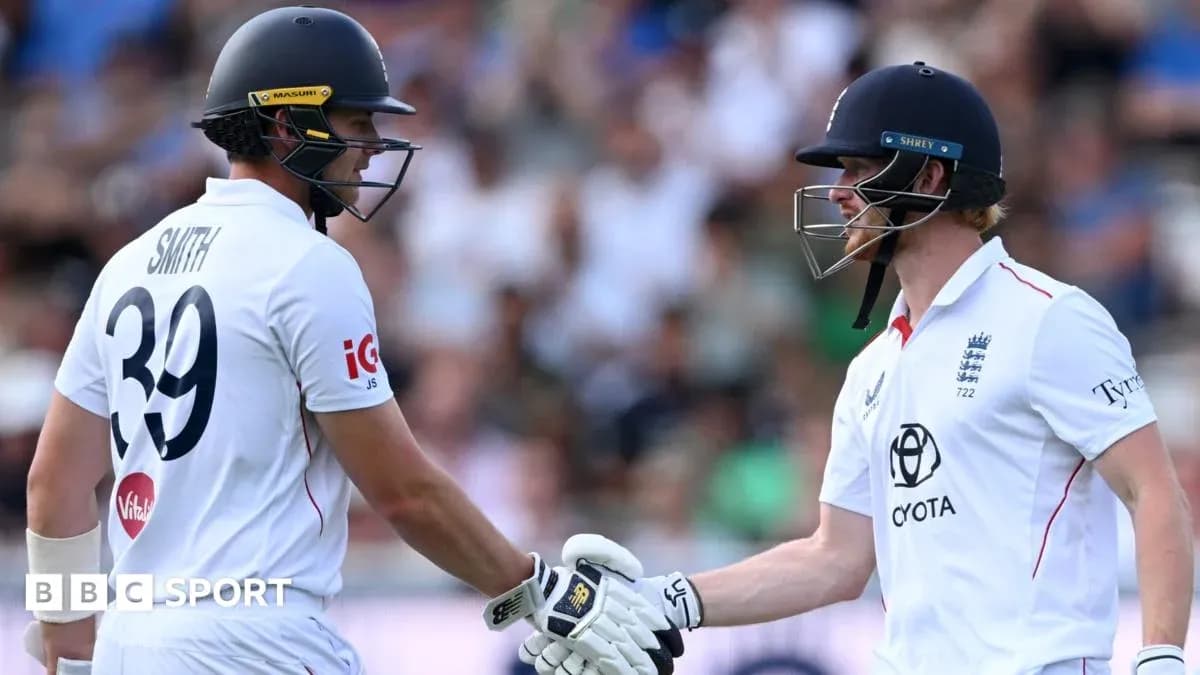
Walking in at 39-3 under heavy cloud against a Pakistan attack that finally found its length in this series, Smith played the innings England have been waiting for from him. He moved smoothly to 61, his first truly fluent contribution of the summer, and with Cox added 67 for the sixth wicket that changed the feel of the day.
Cox, in only his third Test, again looked as if he has been here for years. He left well, rode the movement, and picked off anything overpitched in a mature 55. This was not Headingley-style bravado; this was Lord’s trench work, sleeves rolled up, eyes narrowed.
When Smith and Cox were together, England looked almost comfortable. Once they were separated, the gloom seemed to press in again.
Abbas leads Pakistan’s response
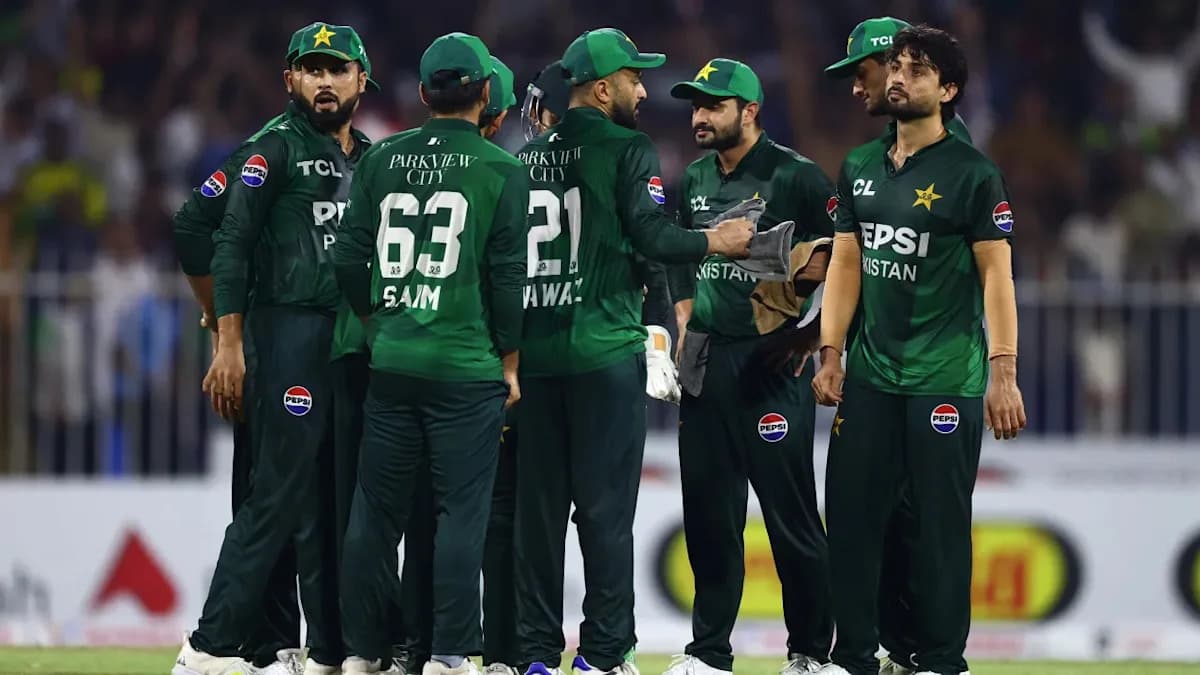
Pakistan, humiliated at Headingley, arrived in London knowing they could hardly be worse. They weren’t. With Babar Azam back from a hand injury and restored as captain, they found their rhythm in conditions that suited them perfectly.
Babar’s first act was to win the toss. His second was to hand the new ball to Muhammad Abbas and watch him go to work.
Abbas was superb. Relentless. At one stage he ripped through England with three wickets for four runs in 16 balls, a spell that finally brought a sense of menace back to Pakistan’s bowling. Emilio Gay feathered one down the leg side, Ben Duckett followed, and then Root – fresh from his triumphant return as captain at Headingley – was gone for four after being dropped on one.
Abbas finished with 4-56, figures that understate the control he exerted in the murk.
From the Pavilion End, Mohammad Ali offered a different threat, using the Lord’s slope like an old friend. Three times he nipped the ball back down it, three times he hit the stumps: Harry Brook, Smith and Ollie Robinson all bowled. Ali’s 3- figures were a reward for persistent, nagging work in conditions that punished any lapse.
This was the Pakistan attack that was supposed to turn up in Leeds. It arrived a week late, but it arrived.
England’s mistakes, Pakistan’s misses
On a day of fine margins, both sides will go to bed knowing they left runs and wickets out there.
England’s batters mixed discipline with self-destruction. Gay’s dismissal down the leg side fell into the unlucky category. Brook’s did not. He was bowled driving loosely at Ali, a shot that looked reckless against the movement on offer. Dan Lawrence’s run-out was worse: a mix-up and a scramble, ending with Shan Masood making amends for an earlier drop by throwing down the stumps to remove him for 17.
Pakistan’s fielding matched England’s batting for inconsistency. They shelled three chances, all at key moments.
Imam-ul-Haq put down Root at third slip on one; the reprieve cost only three runs, but it hinted at a sloppiness that never quite left them. Masood then dropped a simple catch at mid-wicket when Lawrence was on 10, before redeeming himself with that sharp run-out. The most damaging error, though, came from Mohammad Rizwan behind the stumps, a miss that reflected a wider issue: Pakistan’s keeper and slip cordon often stood too deep, allowing edges to die in front of them.
On a day when every run felt precious, those mistakes could yet haunt them.
Atkinson’s late charge
Just as England seemed destined to fold meekly, Gus Atkinson changed the mood.
Coming in with the innings fraying, he counter-attacked with 34 not out, a punchy, confident cameo that dragged England towards something workable. He farmed the strike smartly with the tail, picked his moments, and refused to let Pakistan close the day on their terms.
Atkinson’s runs may prove more valuable than they look on the scorecard. On a surface offering movement but far truer than the poor pitch used against New Zealand in June, 248-9 is not a total to sneer at. It is one to test, to probe, to see what it’s really worth when the ball is in English hands.
England would have dearly loved a late burst with the new ball under the lights. Instead, the umpires took them off for bad light, leaving Pakistan’s openers to ponder a restless night and England’s seamers to wait.
A tight Test in the making
Strip away the off-field noise, the disciplinary mess and the lingering questions about England’s culture, and what remains at Lord’s is a proper Test match.
The pitch is better than many feared, the overheads are in the bowlers’ favour, and more rain lurks in the forecast. That combination hints at a low-scoring, tense contest where every partnership matters and every drop is magnified.
England’s 248-9 is, at best, a platform. Pakistan, with Babar back and their attack finally tuned in, have a clear chance to seize control if their fragile batting holds together. Equally, if England’s seamers find the same movement Abbas and Ali extracted, that total could start to look larger by the hour.
After a day of rain delays, bad light and grinding cricket, nothing is settled. The arm wrestle has only just begun.