.svg&w=384&q=75 "logo")
England's Resilience Amid Political Tensions at Lord's
On a murky, brooding day at Lord’s, England’s batters weren’t the only ones under pressure. By the time bad light dragged the players from the field with the hosts 248-9, the second Test against Pakistan had already veered into territory few expected: a live diplomatic flashpoint in the middle of a cricket match.
Out in the middle, Jamie Smith and Jordan Cox had dragged England away from the brink after a brutal new-ball spell from Mohammad Abbas. Off the field, the Pakistan Cricket Board had lodged a formal complaint with host broadcaster Sky Sports over an 18‑minute lunchtime interview that cut straight to the heart of Pakistani politics and the plight of one of its greatest cricketers.
Lord’s, the self-styled home of cricket, suddenly felt like the centre of something far larger than a three-Test series.
PCB Fury Over Imran Khan Segment
The tension began to build not with a wicket, but with a broadcast decision.
During the lunch interval, Sky Sports aired a pre-recorded interview conducted by former England captain Michael Atherton with Kasim Khan, one of the sons of Imran Khan — the World Cup-winning captain and former Pakistan Prime Minister who has been held in solitary confinement for three years and is said by his lawyers to be in deteriorating health.
“It is not very clear what they are doing, just blatantly trying to kill him in there. Keep him in as long as possible, and silence him,” Kasim said, his words cutting through the usual mid-session chatter.
Atherton framed the piece starkly on air: “This is a humanitarian appeal, because there are increasing concerns about the health and wellbeing of Imran Khan.”
The interview came in a week when a group of former international captains, led by ex-Australia skipper Greg Chappell, again co-signed a letter urging Pakistan’s authorities to ensure Imran receives proper medical care. According to his legal team, the 71‑year‑old has already lost most of the vision in his right eye.
“The former players who signed the letter, many of them played against Imran. He’s held in the highest regard as a former player, one of the greatest players that Pakistan have produced,” Atherton told viewers. “And as his son said there, there’s an increasing sense of urgency around his health and we want to make sure he gets the proper and requisite medical care.”
Those words did not land quietly in the opposing dressing room.
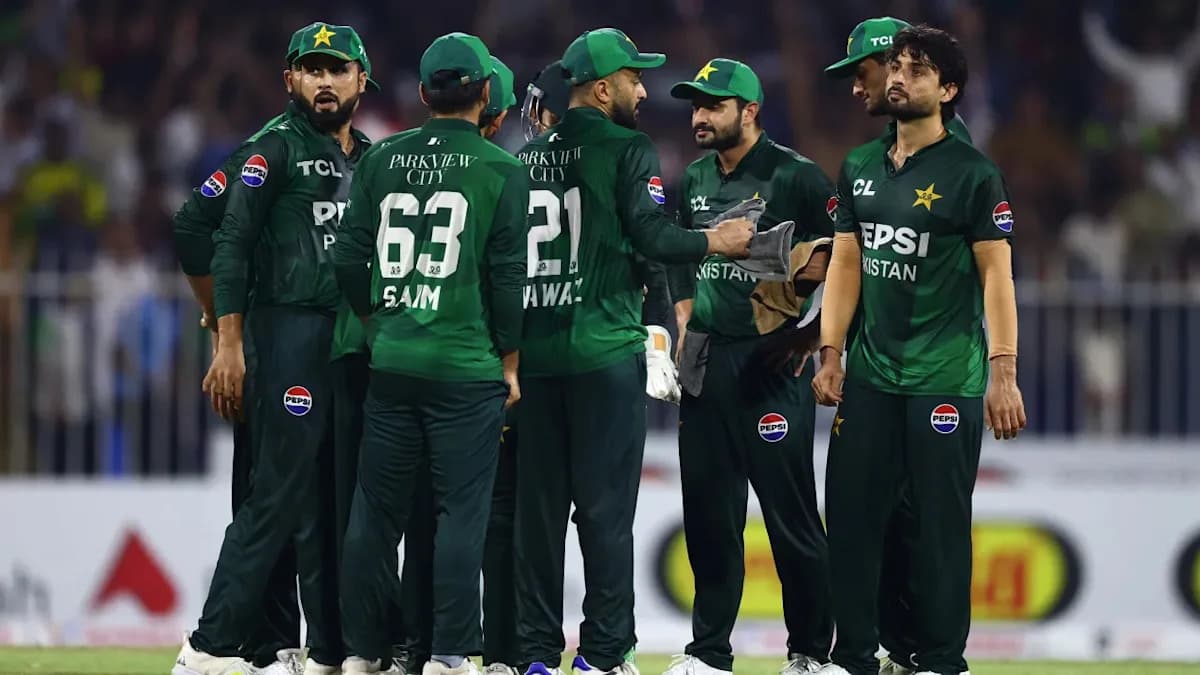
Cricinfo reported that the PCB contacted Sky before the interval had even finished, protesting the planned segment and warning that Pakistan’s players would not return to the field after lunch if it aired. Sky delayed the piece during those talks, then eventually ran the full 18 minutes. By the time it finished, at around 2.40pm, Pakistan’s players were already preparing to walk back out.
The game went on. The political fallout will not end with the stumps.
Abbas Bites at His Favourite Ground
Once the cricket resumed, the story returned, briefly, to something more familiar: Mohammad Abbas tormenting English batters at Lord’s.
On a green-tinged surface under heavy skies, Babar Azam had no hesitation in sending England in after winning the toss. The conditions were a seamer’s invitation, and Abbas, who has enjoyed several county stints and was player of the match when Pakistan last won a Test here in 2018, needed no second bidding.
“My first man-of-the match was at Lord’s, that’s why it’s my favourite ground — hopefully I will put my name on the honours board this time,” the 36-year-old said, eyeing another five-for.
He started with a slice of fortune. Emilio Gay glanced a leg-side delivery and seemed safe until Mohammad Rizwan flung himself to his right and clung on with one hand, a stunning take that lit up the morning.
Ben Duckett, busy as ever, looked set until Abbas jagged one back and trapped him lbw for 17. Then came the moment he really wanted. With Rizwan standing up to the stumps — a tactic that has repeatedly unsettled England — Abbas pinned Joe Root on the back leg for just four.
“Joe is a big batter, so I was pleased to get him with Rizwan coming up,” Abbas said. “When the ‘keeper is up, I am asking (questions), so we are making a plan.”
England slumped to 36-3, their captain gone, their top order shredded once more by a bowler who seems to grow a yard at this ground.
The pressure didn’t relent. Harry Brook, trying to impose himself, was beaten by a superb delivery from Mohammad Ali that jagged back through his defence. At lunch, England were 80-4 and hanging on.
Smith and Cox Turn the Tide
The afternoon brought a different kind of contest. The ball still nipped, the clouds still loomed, but England finally found resistance with a hint of defiance.
Jamie Smith, compact and unfazed, began to punch back. Jordan Cox, at number three and fresh from a fifty in his previous Test innings, settled into the sort of innings England desperately needed: controlled, patient, but never static.
Pakistan, so ragged in the field during their innings-and-103-run defeat at Headingley — a loss that dropped them to the bottom of the World Test Championship table — threatened to unravel again. Dan Lawrence, on 10, flicked to midwicket and offered Shan Masood a regulation catch. Masood spilled it.
For a moment, England looked as though they might cash in on the reprieve. Cox and Smith stitched together a stand of 67, ticking the score forward, bleeding the sting from the attack. Cox took on Ali Usman, whipping consecutive leg-side boundaries to bring up a 50 from 88 balls, with seven fours.
Smith’s own half-century arrived even brisker, from just 63 deliveries. He drove with authority, left well, and turned a crisis into a contest.
“I think it is a decent enough day for us,” Smith told Sky Sports at the close. “The ball was doing enough, nipping around — overhead conditions obviously assisted.” In the circumstances, “decent enough” felt like an understatement.
Pakistan, though, refused to let the day drift.
Pakistan Hit Back, Light Closes In
If Masood’s drop hinted at old frailties, his sharp work later suggested a response. Lawrence, perhaps still mindful of his earlier escape, nudged Ali Usman to leg and set off for a single that never existed. Cox sent him back. Masood swooped from midwicket and fired in a precise throw to Rizwan, who completed a straightforward run out. England’s rebuild took a hit.
Cox kept going, but Pakistan’s seamers sensed the moment. Substitute fielder Salman Ali Agha, on for Babar, produced a superb catch at second slip off Khurram Shahzad to remove Cox for 55, ending an innings that had steadied England and hinted at more.
Smith pressed on, but Ali returned to knock back his stumps, the set batter gone for 61. Two balls later, Ali struck again, nipping one back to remove Ollie Robinson. The lower order creaked, and the scoreboard, which had once promised a total with real heft, began to look fragile again.
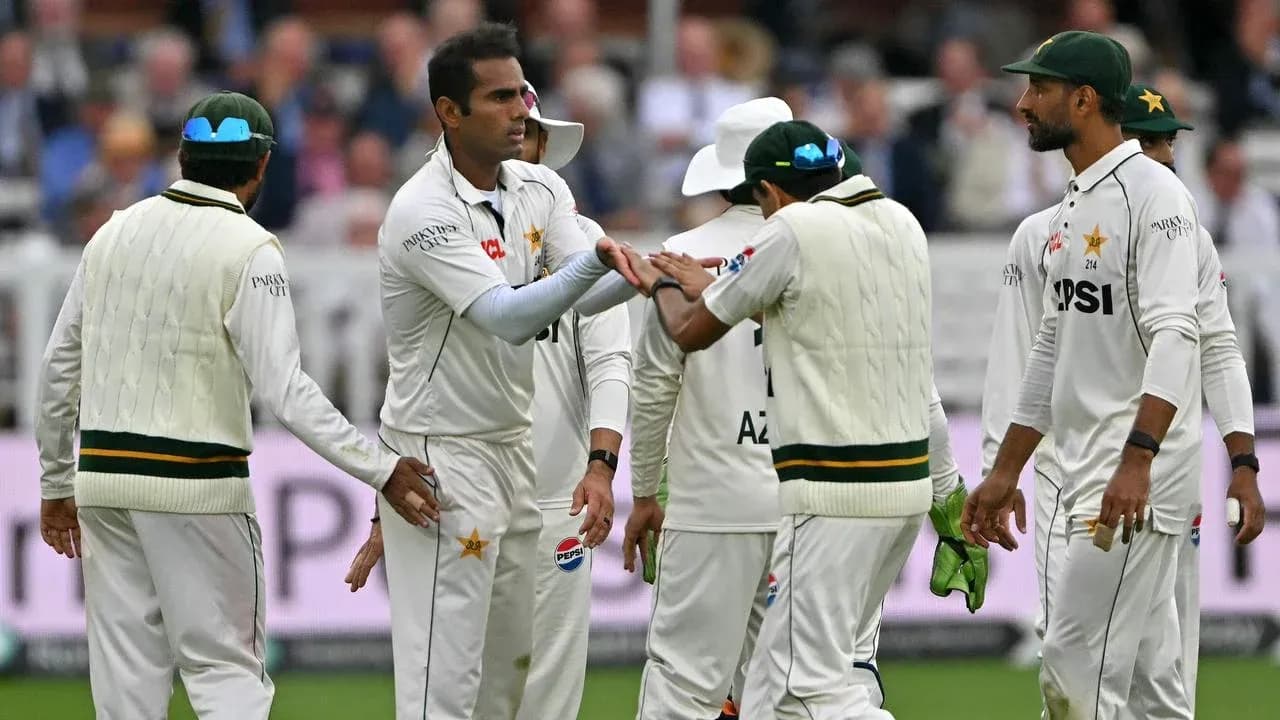
By the time the umpires intervened, with floodlights blazing yet the light deemed unsafe, Abbas had 4-56 from 15 overs, Ali 3-67 from 17. England, 248-9, were one wicket from being bowled out on a day that had offered them both peril and escape.
A Series Now Charged With More Than Runs
Pakistan’s performance at Lord’s already looks a world away from the listless showing at Headingley, where they were outplayed in all departments and could point to little more than the toss and the conditions in mitigation. Here, with Babar back from a finger injury and reclaiming the captaincy from stand-in Salman Ali Agha — the only change to either XI — their seamers have dragged them into a contest that could yet define their tour.
England, meanwhile, came into the match under their own cloud. Fast bowler Brydon Carse, unused in the first Test, had been dropped from the squad after another late-night drinking incident, an unwelcome subplot in a camp trying to project control and clarity.
All of that now sits beneath a larger, more volatile story. A Test match has become the backdrop to a row over human rights, political imprisonment and the legacy of a man still revered in the game. The PCB’s fury at Sky’s lunchtime segment, the threat — even if never realised — that their players might refuse to return, and the sight of Imran Khan’s son using a Lord’s broadcast slot to accuse authorities of trying to “kill him in there” have changed the temperature of this series.
The cricket will resume when the light allows. The ball will swing, the pitch will seam, and Abbas will chase that honours-board five-for he craves at his favourite ground.
But with England’s tail exposed and Pakistan’s anger far from spent, how long can this match stay just about bat and ball?