.svg&w=384&q=75 "logo")
England v Pakistan: Seamers Dominate at Lord’s
On a murky second day at Lord’s, England’s seamers turned a balanced Test into a mismatch.
What began as a competitive contest is now a one-sided examination. Pakistan trail by 261, their batting in pieces, England’s quicks hunting in a pack that suddenly looks built to last.
Robinson and Archer rip through Pakistan
The tone changed early. Josh Tongue and Gus Atkinson, resuming on the second morning, dragged England from 248-9 to 290 with a stubborn 10th-wicket stand worth 47. It felt useful at the time. Within a couple of hours, it looked enormous.
With the ball, England were ruthless.
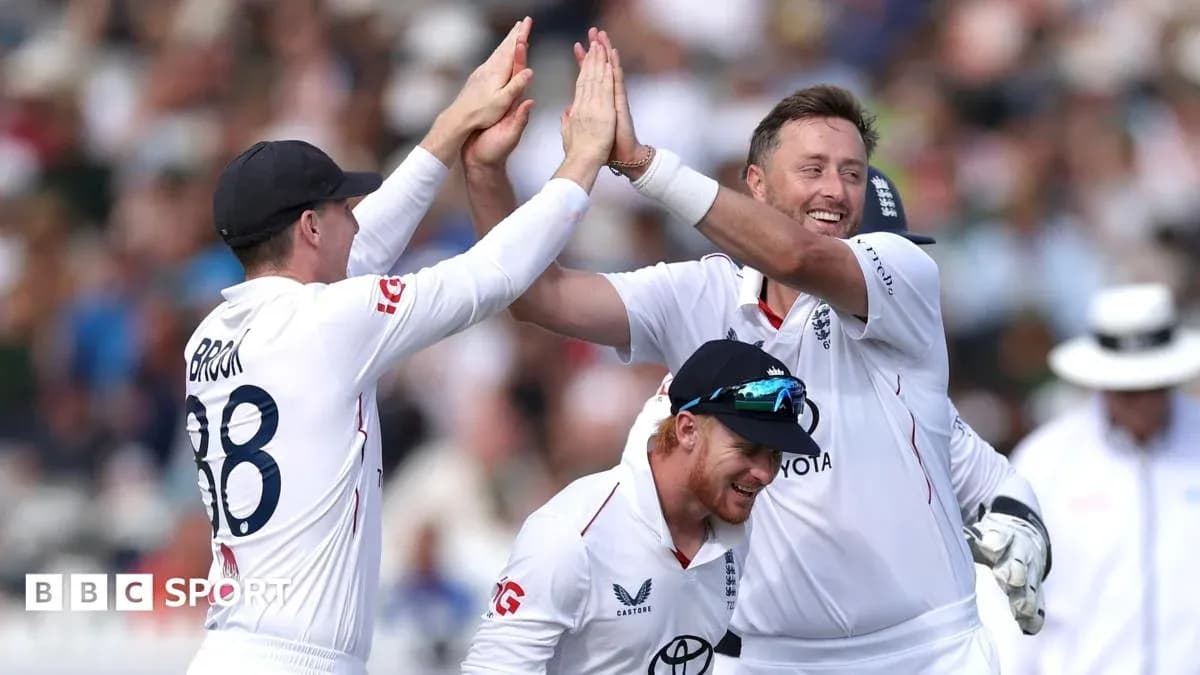
Ollie Robinson, in the middle of a remarkable comeback summer, took 4-11 with the kind of spell that makes batting look like guesswork. Barely nudging 80mph, operating almost the entire time with Jamie Smith standing up to the stumps, he dismantled Pakistan with relentless accuracy and late movement. Every ball asked a question; most batters had no answer.
At the other end, Jofra Archer brought the thunder. This is his ground and he bowled like it. His opening burst touched 95mph and averaged 90.7mph, a hostile, heavy spell that should have brought more than the wicket of Shan Masood. Azan Awais played and missed repeatedly, somehow surviving the early storm.
The pressure kept building. Tongue, hitting a full length, struck twice and continued a remarkable series in which he has taken a wicket every 13.3 balls. Atkinson, again better than his figures, beat the bat often and thought he had Awais caught behind, only for the opener to overturn the decision on review as rain briefly intervened.
When the players returned, England’s attack went up another gear. Robinson’s precision and Archer’s pace proved irresistible.
Robinson nailed Saud Shakeel and Muhammad Rizwan with lbw decisions that needed smart reviews, then forced Awais into a fatal mistake with a well-directed short ball. Those wickets pushed Robinson to 19 dismissals in three matches this summer at an average of 8.84 – outrageous numbers at any level.
Archer finally got the rewards his speed deserved, bowling Ali Usman and Muhammad Abbas. His record at Lord’s now stands in stark contrast to his returns elsewhere: an average of 17 on this ground, more than 30 everywhere else.
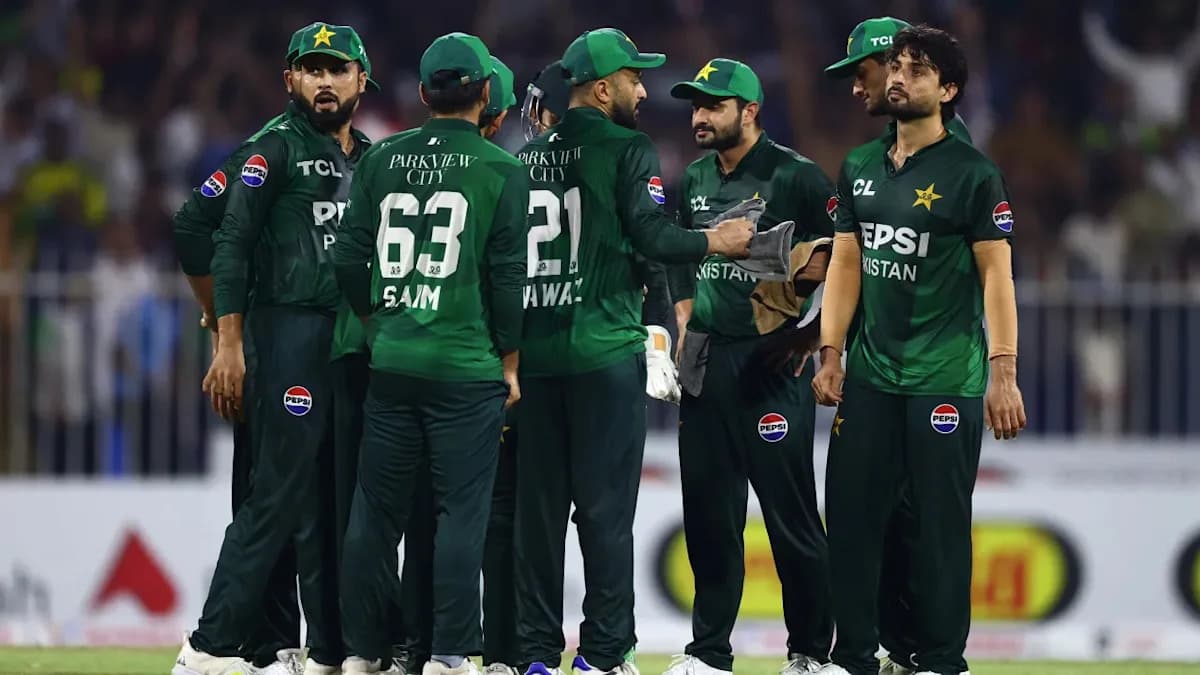
Pakistan folded for 110. Awais’ 46 stood alone; no other batter passed 20, and extras was the second-highest contributor. Without the injured Imam-ul-Haq, their top order looked even thinner, though his presence would likely have changed little against this level of sustained pressure.
Across three innings on this tour, Pakistan’s highest total is 171. They have yet to face 50 overs. That tells the story more starkly than any adjective.
England wobble, Gay digs in
A lead of 180 on first innings gave England complete control, but their second innings began with a reminder that this top order is far from settled.
Ben Duckett, so often fluent, gifted his wicket with a loose drive to mid-off. Jordan Cox, fresh from another half-century in this series, was pinned on the crease and fell lbw, both dismissals claimed by Khurram Shahzad. England were 13-2 inside 19 balls. The crowd quietened, not with panic, but with irritation.
The situation demanded calm. Emilio Gay and Joe Root supplied it, if not always smoothly. They stitched together a stand of 47, nudging the lead past 200 and reasserting control.
Gay, a left-hander under scrutiny, played within himself. He left well, picked off anything too wide and scored mostly through the off side when the chance came. It was not pretty, but it was exactly what England needed: time at the crease and the scoreboard moving.
Root looked to have found his rhythm. Then a familiar flaw resurfaced.
Mohammad Ali nipped one back, trapped the England captain in front, and Root reviewed almost in hope rather than expectation. The verdict went against him. It was the ninth time in seven Tests he has fallen lbw to seam, a stark contrast to the three such dismissals in his previous 39 matches. Whether the keeper is up to the stumps or back, the pattern is becoming a problem England can no longer ignore.
The next ball was almost a carbon copy. Harry Brook, promoted to vice-captain and walking into a mini-crisis, survived only because of a faint inside edge. The margin between a settled evening and a late-order salvage job was a fraction of wood on leather.
As the light faded, batting became an exercise in survival. Gay edged Abbas short of the cordon, a reminder that this was still hard work, and inched his way to 30 not out by the close. Brook was still there with him. England closed on 81-3, the lead stretching to 261.
A new-look attack, a familiar dominance
This England pace unit has been assembled out of necessity in the wake of Ben Stokes’ retirement from bowling, but it is starting to look like more than a stopgap.
Robinson, Archer, Tongue, Atkinson: four very different quicks, four distinct methods, one relentless approach. Archer’s raw pace, Robinson’s forensic seam, Tongue’s attacking length, Atkinson’s energy and hostility from a high release – it is a blend that has Pakistan completely outmatched.
Caution is required. Pakistan’s batting has been fragile, technically and mentally, across the series. Yet the numbers and the eye test agree: England’s bowlers have been outstanding.
The batting picture is more crowded. Smith has already banked runs. Cox has two half-centuries in the series. Jacob Bethell will return from a knee injury and expects to walk back into contention. Someone will be squeezed out. Gay, under the microscope, now has the platform to make sure it is not him.
The forecast for Saturday is grim, with the prospect of an entire day washed away. Even if that happens, England still have time on their side over the bank holiday weekend. With a lead already beyond 250 and Pakistan yet to show they can bat long, this Test – and the series – is England’s to finish.
The only real question now is not whether Pakistan can escape, but how ruthlessly England choose to close the trap.