Dwyane Wade's Journey: Transforming NBA Locker Room Culture
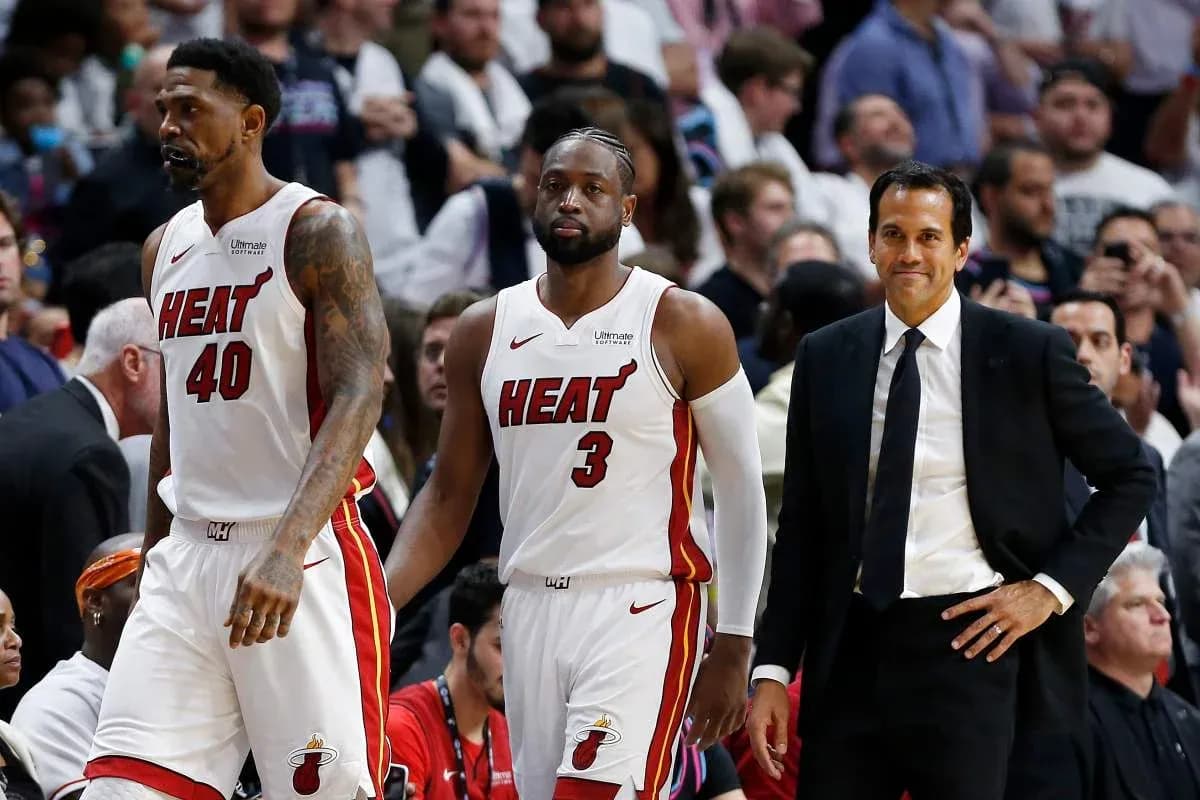
Dwyane Wade has heard every kind of locker-room joke an NBA career can throw at you. Three titles, 16 seasons, countless bus rides and training rooms. He grew up in that world. He helped define it in Miami.
But when his daughter Zaya came out as a trans woman, the noise around him suddenly sounded different.
The Hall of Fame guard recently opened up about the tension that followed in NBA locker rooms, describing how the casual shots at the LGBTQ community stopped being background chatter and started to cut.
“Well, long story short, when everything happened publicly… with Zaya, before we came out and talked about Zaya, obviously, you know, in the locker rooms, I started to like become a little different because I started listening a little bit differently,” Wade said. “And I, you know, I realized that masculine, you know, toxic environment that, you know, that we that we grew up in.”
He didn’t suddenly walk into a new league. The jokes had always been there. What changed was Wade. Once his daughter’s safety and dignity were part of the equation, the old soundtrack of the room didn’t feel like harmless banter anymore. It felt like a place where she, and people like her, would never be welcome.
So he pulled back. He stopped laughing. He left the room when certain lines were crossed. The same Heat locker room where he’d been the unquestioned alpha for years started to feel like a place he had to escape.
In a league that has never had an active player come out publicly, that silence and that culture are no small thing. Jason Collins waited until after retirement to share his truth, a decision that spoke volumes about the environment players live in.
For Wade, the conflict reached a point where he needed help from someone who knew him better than almost anyone.
A Conversation With Udonis Haslem
The turning point came with Udonis Haslem, the other pillar of “Heat culture,” the teammate who shared the grind, the titles, the trust of Pat Riley and Erik Spoelstra. If anyone was going to understand, it had to be him.
“I remember having a conversation with UD because he seen that I was like I wasn’t in on the jokes no more,” Wade recalled. “I wasn’t laughing. I was leaving out of the locker room when I would hear certain things or whatever.”
That shift didn’t go unnoticed. Haslem, a proud enforcer and voice of the room for more than a decade, saw his brother change. Wade decided he owed him an explanation.
“And I had to sit and talk to him about it because, you know, just like I was at one point, he was in on the jokes at the same time. And this was my brother. And I started feeling a way about his uses of words and his uses of, you know, different communities.”
The talk wasn’t about calling Haslem out in public. It was about pulling him in, one-on-one, and asking him to see the people behind the punchlines. Wade brought his hurt, his growth, and his responsibility as a father into that private space and trusted Haslem with it.
What came back changed the room.
“And from that conversation that him and I had, like he didn’t know, right? He didn’t know. And he eventually changed his thinking, his tone, his verbiage, and then his actions, right? And so like just the power of someone that he trusts to have a safe conversation with him in a safe environment.”
Haslem listened. Then he adjusted. The same veteran who policed effort, toughness, and standards in Miami now started to police something else: language, tone, the way people talked about communities they didn’t belong to and didn’t understand.
In a franchise celebrated for its edge and its ruthlessness, that was its own kind of culture shift.
Redefining “Heat Culture”
Miami’s identity has long been built on conditioning tests, sacrifice, and a certain hardness that Riley and Spoelstra demand. Wade and Haslem became the living, breathing examples of that standard. Yet here, the toughness looked different.
It meant vulnerability. It meant a franchise icon saying no to the old code when it collided with his daughter’s humanity.
Wade has since become one of the most visible allies of the LGBTQ community in American sports, praised for the way he has stood by Zaya and used his platform to challenge the same environment that once shaped him. The jokes that used to roll off his back now read as a warning sign about who feels safe in those rooms and who doesn’t.
He didn’t set out to rewrite the NBA’s locker-room playbook. But once it hit home, he refused to let it slide. And with one honest conversation, he turned a teammate, a captain, and a culture carrier into an ally.
In a league still waiting for its first openly gay active player, that kind of shift inside the room might be where the real change begins.