.svg&w=384&q=75 "logo")
Detroit Pistons' Offseason Strategy: Retooling for Success
The Detroit Pistons didn’t chase headlines this summer. They chased edges.
Fresh off a 60-win season and a statement that they’ve rejoined the league’s serious contenders, Detroit entered the offseason without the cap space or appetite for a blockbuster. They chose something subtler: reinforcing a core they believe can win now, while keeping enough flexibility to pounce when the right opportunity appears.
A New Look Without a Tear-Down
This is not a reset. It’s a retool.
As Hunter Patterson of The Athletic outlined, the latest version of the Pistons will look familiar at the top, but different around the margins. John Collins arrives as the headline addition, a veteran forward expected to slide straight into the power forward spot vacated by Tobias Harris. If Jalen Duren returns on a new deal, the starting group should otherwise mirror last season’s, with Collins offering a more vertical, athletic twist at the four.
Around them, the names change, the intent doesn’t. Isaiah Joe, Taurean Prince and Ebuka Okorie give Detroit new shapes to play with on the wing and in the backcourt. Joe brings deep-range shooting, Prince offers toughness and versatility, Okorie adds another young piece to develop. It’s the kind of supporting cast refresh you see from teams that think their main act is already good enough.
But everything, absolutely everything, starts with Duren.
The Duren Domino
The Pistons’ summer has revolved around one question: how do they keep Jalen Duren, and at what price?
Talks have stalled, the two sides locked in a contract stalemate that has stretched through the offseason. Until that’s resolved, every hypothetical trade, every aggressive move, sits on the whiteboard instead of the transaction log.
If — and it’s still an if — Detroit gets Duren locked into a new contract, the entire picture shifts. With their anchor secured, the front office can afford to be bolder, to convert some of their preserved assets into a player who moves the needle in May and June, not just in January.
That’s where the Derrick White idea enters the frame.
A Swing at Derrick White
If the Pistons decide the time is right, one potential call goes to Boston.
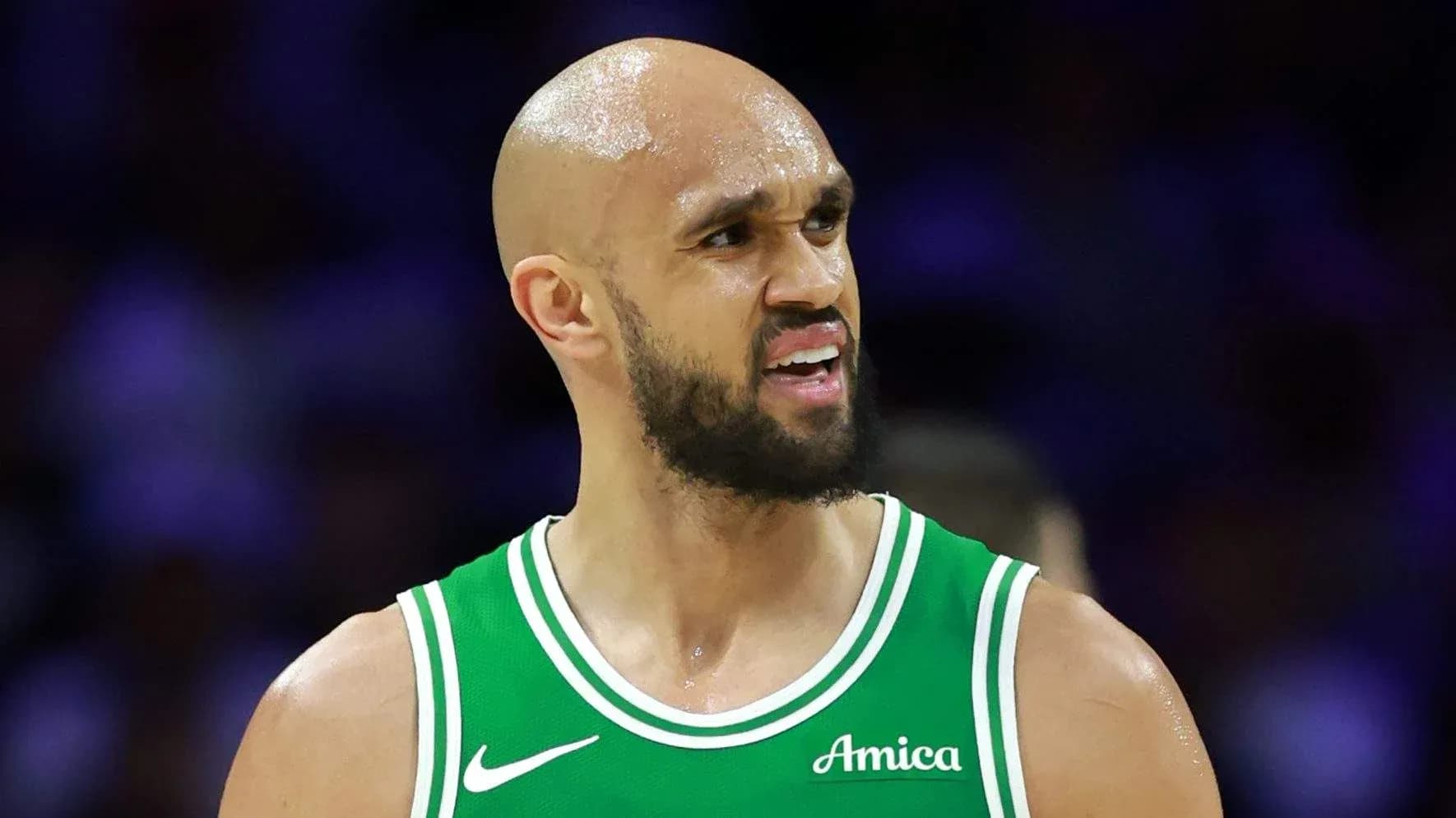
White, an All-Defense-caliber guard with a reliable three-point shot and a reputation for big-game poise, fits almost every box a contender wants next to its stars. He defends at the point of attack, spaces the floor, and doesn’t need the ball to impact winning. For a Detroit team looking to push from “very good” to “dangerous,” that profile is hard to ignore.
The hypothetical framework is straightforward:
- Pistons receive: Derrick White, second-round picks in 2028 and 2030
- Celtics receive: Duncan Robinson, Ron Holland II, 2031 first-round pick
Detroit would be betting on proven playoff equity. White is a championship-level defender, a guard who has lived deep in the postseason and held his own under the brightest lights.
The cost? Shooting, youth and a future chip.
Duncan Robinson’s movement shooting would be a loss. His gravity bends defenses, and Detroit knows how valuable that is. But the front office already moved to cushion that blow by bringing in Isaiah Joe, another deep-range threat who can punish teams from well beyond the arc.
Ron Holland II is the other sting. A terrific young defender with the tools to become the kind of wing every contender craves, Holland would give Boston yet another elite on-ball option. Watching him grow in green would not be easy for Detroit, especially if he blossoms into what many project.
Yet White is not a projection. He’s a finished product at a championship standard.
Would Boston Even Listen?
This is where the fantasy meets reality.
Derrick White isn’t just another good player in Boston. He’s part of the title-winning core, a guard whose two-way work has put him in annual All-Star conversations and made him a beloved figure inside the organization.
“As for White: It would also be a surprise, sources say, if the Celtics cut ties with him,” Jake Fischer reported last month, underscoring how deeply valued he is in Boston’s structure.
There have been rumblings of interest around the league. The Minnesota Timberwolves reportedly checked in on White before pivoting and landing LaMelo Ball from Charlotte. That kind of inquiry hints at his league-wide stature. Teams know what he brings.
So would the Celtics actually consider it?
On pure value, the proposed package isn’t light. Robinson’s shooting would be a weapon in Boston’s already potent offense, spacing the floor for their stars and adding another layer to their half-court sets. Holland would give them a long-term defensive piece on the wing, someone who can grow into a role similar to what White currently holds on the perimeter. Add a 2031 first-round pick, and it’s a strong return for a 32-year-old guard.
But value and willingness are different questions. Boston would have to weigh the certainty of White’s current impact against the upside and flexibility of the incoming pieces.
How Far Is Detroit Willing to Go?
For Detroit, the calculus is just as sharp.
They’ve resisted the temptation to cash in assets this offseason, preferring to preserve their war chest rather than chase a splash for the sake of it. That restraint has kept them in position to strike when the right player becomes available.
A deal built around Robinson, Holland and a future first would test that discipline. It’s not an all-in shove, but it’s far from conservative. It’s the kind of package a front office offers only if it believes the return can carry them closer to the stage where details decide series and margins shrink to single possessions.
Derrick White is exactly that kind of detail.
So the Pistons wait on Duren, study the market, and measure their window. They’ve already shown they can win 60 games. The next step is harder.
Is this the moment they finally push their chips in? Or do they trust that patience, not a headline trade, will keep them on the road they’ve started to pave?