.svg&w=384&q=75 "logo")
Dallas Mavericks' New Era: Ujiri's Vision and Roster Changes
The Dallas Mavericks have spent the summer tearing up their blueprint and drawing a new one in bolder ink.
They are no longer the veteran-heavy outfit trying to squeeze one more deep run out of an aging core. They are building around a teenage prodigy in Cooper Flagg, betting big on a front office shakeup, and quietly dangling proven playoff pieces on the trade market. Under the radar? For now. For much longer? Unlikely.
Ujiri Arrives, Kidd Exits, a New Era Begins
The real earthquake in Dallas didn’t come from a blockbuster player trade. It came upstairs.
After a seasonlong search, team governor Patrick Dumont turned to Masai Ujiri, the architect of the Toronto Raptors’ 2019 title, and handed him the keys to basketball operations. That single decision signaled a hard pivot: this is no longer a franchise content with incremental tweaks.
Ujiri’s first major call was ruthless and clear-eyed. Jason Kidd is out. Dusty May is in.
May arrives straight off an NCAA title run with Michigan, bringing fresh ideas, a college champion’s credibility, and a track record of maximizing young talent. For a team preparing to hand the ball — and the future — to Cooper Flagg, that matters more than any nostalgic attachment to the previous regime.
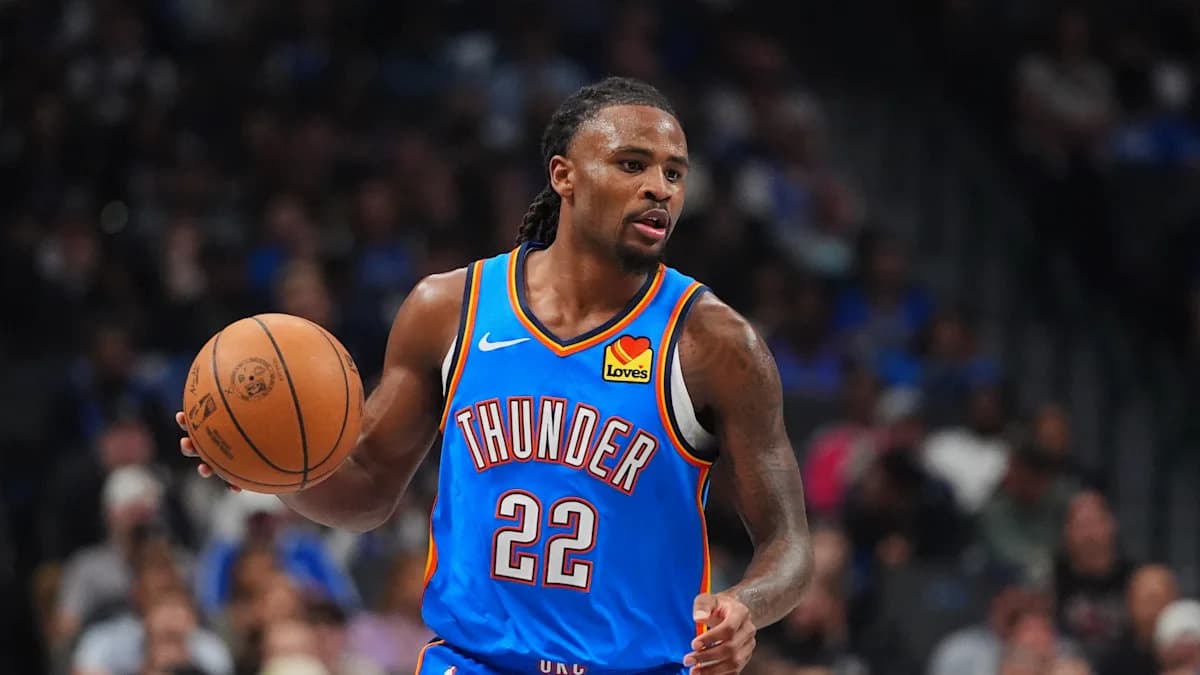
Dallas didn’t stop at the bench. In a six-team deal, the Mavericks added three players who can help now and grow with the project: former Grizzlies forward Santi Aldama, ex-Pistons guard Marcus Sasser, and EuroLeague veteran Tarik Biberovic. They also landed a former No. 1 pick in the trade chain that shipped Luguentz Dort from the Oklahoma City Thunder to the Atlanta Hawks, another swing on upside as they reshape the roster.
This is not a patch job. It’s a reset.
The Veteran Question: Kyrie, Washington, Gafford
The next phase is trickier.
Dallas sits at a crossroads with three veterans who can clearly help a contender: Kyrie Irving, P.J. Washington and Daniel Gafford. All three fit on a team trying to win now. But the Mavericks are tilting their timeline toward Flagg and a younger core, and the payroll is already heavy.
The logic is straightforward. Teams around the league are always searching for size and rim protection. That makes Gafford and Washington natural trade candidates. Irving is different. He’s still a superstar, still a high-level offensive engine, and in Dallas’ eyes, an ideal on-court mentor for Flagg as the teenager grows into the face of the franchise.
So the question in Dallas isn’t whether the veterans can play. It’s how many of them the Mavericks can afford to keep while carving out minutes and money for Aldama, Morez Johnson Jr. and, soon enough, Flagg.
A Knicks-Mavs Deal That Actually Fits
While Dallas wrestles with its cap sheet and rotation, New York has its own problem.
The defending champions watched Mitchell Robinson walk to their arch rival, the Boston Celtics, in free agency. That move stripped the Knicks of their most reliable defensive big outside of Karl-Anthony Towns, leaving a glaring hole behind and beside Jalen Brunson.
On paper, there’s a clean way for both teams to help each other.
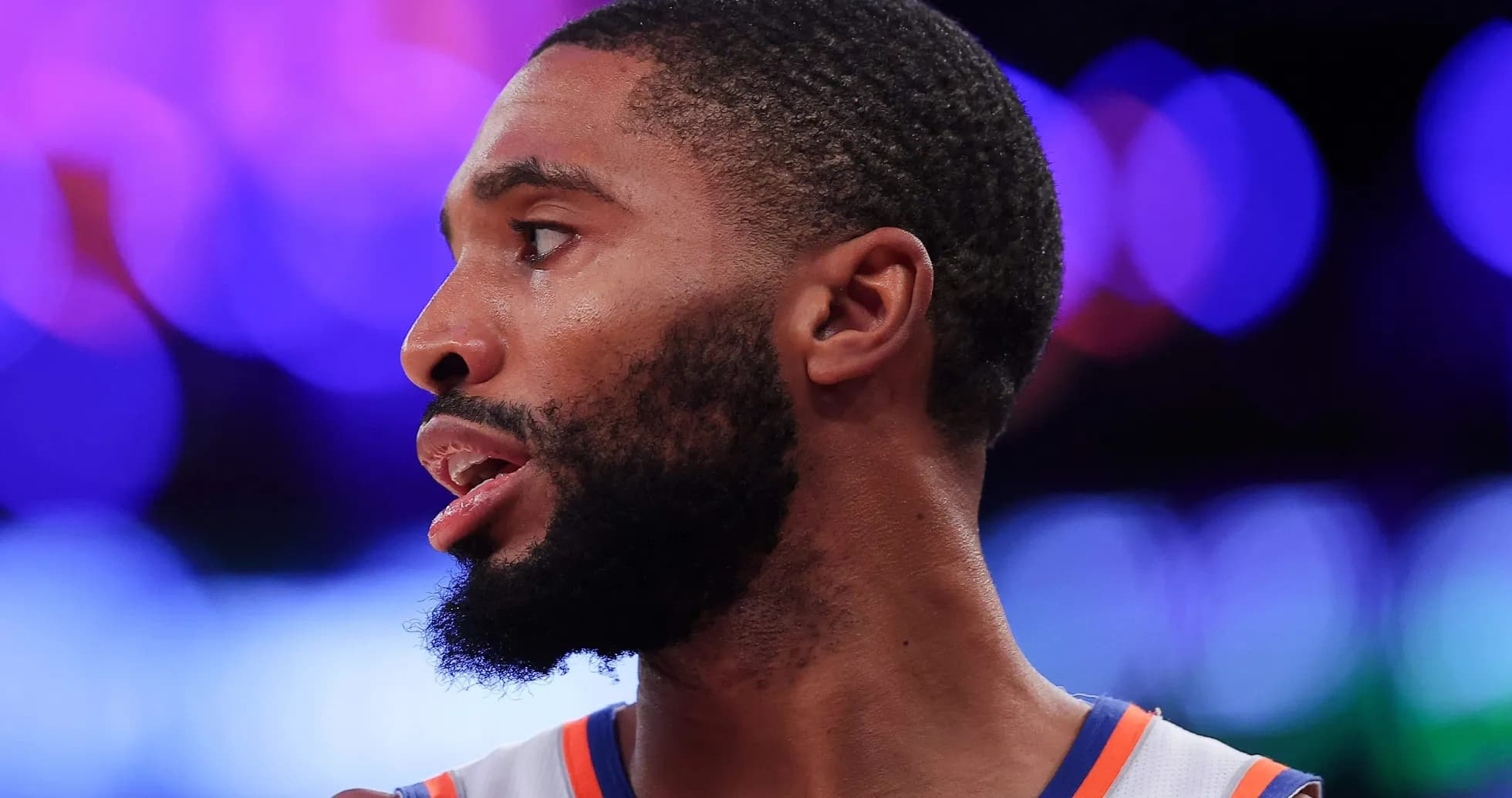
- Mavs receive: Mikal Bridges
- Knicks receive: Daniel Gafford and Caleb Martin
In this hypothetical, Dallas offloads two veterans and opens future financial flexibility, while New York lands a starting-caliber center tailor-made to run pick-and-roll with Brunson and a battle-tested wing in Martin who has already proved he can swing playoff games.
For the Knicks, there’s another layer: money. They sit dangerously close to the second apron. This deal would shave more than $6 million from their payroll while still upgrading their rotation with a center and a playoff-ready forward.
For Dallas, Bridges would slot in as a two-way wing who fits any lineup, any pace, any style. The Mavericks would lean even more into a long-term core that can grow around Flagg, Ujiri’s vision, and May’s system.
It’s only a proposal, but it’s the type of trade that mirrors where both franchises stand: one trying to protect a title window, the other trying to build the next one.
Gafford on the Block — at a Price
If Dallas wants to trim the “north of $300 million” they’ve committed to their frontcourt, moving Daniel Gafford is the obvious lever to pull.
The numbers tell the story. That level of investment in big men isn’t fatal in itself, but it becomes an issue when younger, cheaper options are pushing for minutes and, eventually, their own paydays. Aldama needs a runway. Morez Johnson Jr. will, too. The frontcourt can’t be both overcrowded and expensive.
According to NBA insider Brett Siegel, the Mavericks have already tested the waters.
They explored using Gafford in talks for Klay Thompson. “They believed that they could get something (in a trade for Klay Thompson),” Siegel reported. “There was nothing there. They were talking with teams about Daniel Gafford, about potentially trading him. Again, nothing really ever happened there.”
The holdup? Price.
Dallas has set the bar at a first-round pick for the 27-year-old center. In a league thin on starting-quality bigs, that ask isn’t outrageous. It’s just high enough to make teams hesitate in August, when optimism is free and no one feels desperate.
That may not last.
As injuries hit, rotations tighten and front offices stare down their own ceilings, the big man market tends to shift. If the Mavericks hold firm on their valuation, a team could eventually decide Gafford is worth the pick. If they can’t find that buyer by the trade deadline, the leverage flips, and Dallas will have to decide whether to drop the price or ride out the season with an overloaded frontcourt.
The Mavericks have already chosen their direction. The only mystery now is how quickly the rest of the roster — and the league — catches up to it.