Colin Ingram Retires: A Glamorgan Legend's Journey
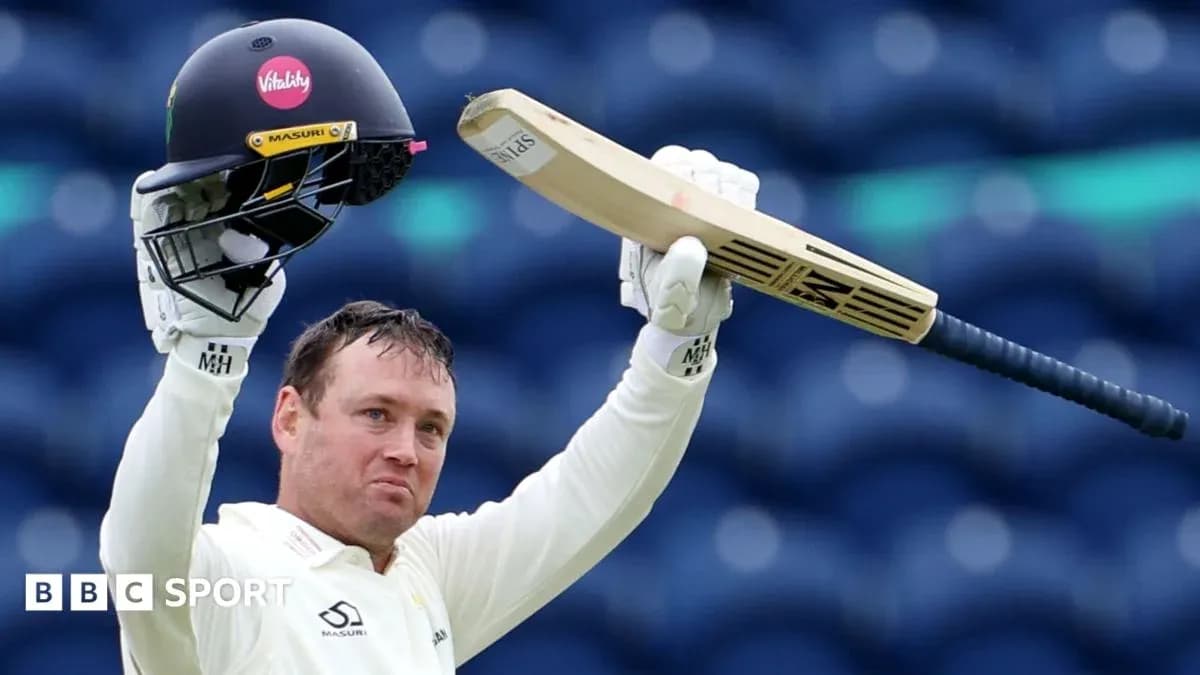
Colin Ingram, the South African left-hander who became woven into Glamorgan’s modern identity, will retire at the end of the season after 11 years with the county and just over two decades in the professional game.
The 41-year-old, Glamorgan’s longest-serving overseas player of the 21st century, will move straight into coaching, drawing a line under a career he describes as the fulfilment of a childhood dream.
“I’ve had a full crack and left it all out there,” he said, announcing his decision and reflecting on a journey that has taken him from Bloemfontein to Cardiff and almost everywhere in between.
A decade that changed Glamorgan
Ingram arrived at Sophia Gardens in 2015 and did not take long to become a central pillar of the side. A hard-hitting left-hander with a taste for the big occasion, he quickly turned into a fan favourite and a dependable presence in the dressing room.
He leaves as the leading overseas figure of Glamorgan’s recent era and a key part of their promotion-winning Championship side in 2025, when he finished as the club’s top run-scorer. Across formats for Glamorgan he has piled up 31 centuries, with a towering best of 257 not out, and he captained their T20 side in 2018 and 2019.
His county numbers are outstanding. In first-class cricket for Glamorgan he has scored 5,645 runs at an average of 47. In one-day cricket he has 2,630 runs at a remarkable 62. In T20s he has 3,431 runs at 32, the bulk of them scored with the kind of clean, unfussy power that made him such a prized asset on the franchise circuit.
He offered more than runs. Ingram’s leg-spin brought 67 wickets, mostly in white-ball cricket, and he even stepped in as an occasional wicketkeeper when the team needed cover.
The world traveller
Before he settled in Cardiff, Ingram had already worn several badges. He played 40 limited-overs internationals for South Africa and represented Free State, Eastern Province and Warriors at domestic level. English fans outside Wales may remember his brief 2014 stint at Somerset.
As the T20 boom exploded, he became a familiar face in leagues around the world. His itinerary reads like a map of modern franchise cricket: tournaments in Australia, India, Pakistan, the West Indies, the Middle East, his native South Africa and the Hundred, where he turned out for Oval Invincibles.
That global schedule, combined with persistent knee problems, meant he played little Championship cricket for Glamorgan across a five-year stretch. Only after a successful knee operation did he return properly to the longer format, adding a late-career chapter few expected.
Cricket as “art”
For all the miles travelled and tournaments ticked off, Ingram has always spoken about batting in unusually personal terms. In announcing his retirement on social media, he again described cricket as his “art”.
“I was fascinated by the game from a young age, and in particular batting,” he said. “At times, when it flows everything slows down and it feels like the most natural, instinctual thing I’ve ever done. Like my form of art and the bat my paint brush and it’s exhilarating.”
Those words fit the way he played this season. Even in his final campaign, he produced flashes of that old, flowing dominance. He scored Championship centuries against Yorkshire and Warwickshire and was at the heart of a home win over Surrey, making 80 and 61 not out in the match. His role in limited-overs cricket, though, was reduced to just three appearances.
One last walk at Sophia Gardens?
The story is not quite finished. Ingram could yet have a farewell outing in Glamorgan colours in the final Championship match of the season against Essex, a game that may also mark the end of the road for another stalwart, 40-year-old Chris Cooke.
If selected, it would be a fitting final act: two pillars of the dressing room taking their last bow together at the close of a long summer.
Beyond the boundary
As he steps away from the middle, Ingram is already looking to the next phase.
“As one chapter closes the next opens beyond the boundary as I begin my coaching career,” he said. “My art is complete but I hope to influence the game positively and inspire players to be the best they can while enjoying their journeys.”
For Glamorgan, replacing his runs and his presence will be a significant task. For the players he will soon coach, the challenge is different: how do you pick up the brush from a man who spent 20 years turning batting into art?