.svg&w=384&q=75 "logo")
Cathy Engelbert's Retirement Marks a New Era for the WNBA
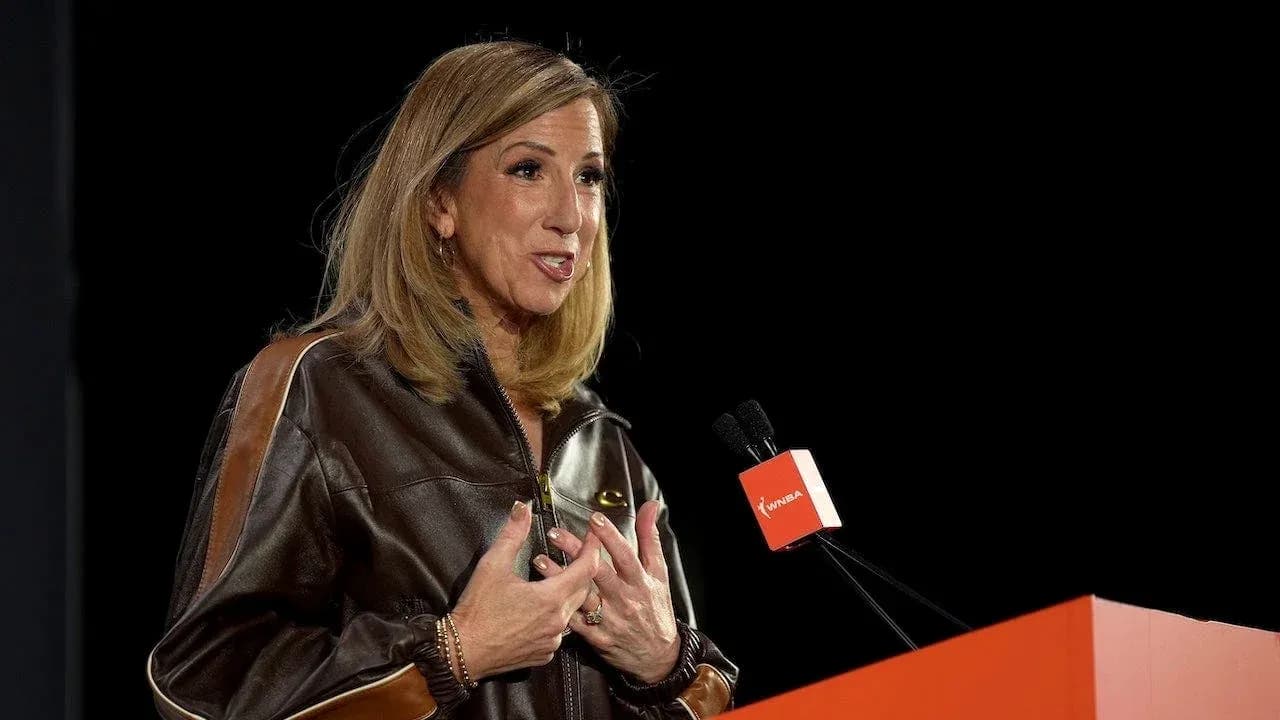
Cathy Engelbert, the first commissioner in WNBA history and the architect of its recent surge into the mainstream, will retire at the end of the calendar year, closing a seven-year tenure that reshaped the league’s scale and ambition.
The announcement came from NBA commissioner Adam Silver, who had appointed Engelbert in 2019 to a role that did not previously exist in name or scope. At the time, the WNBA carried potential but not yet the valuation, visibility, or cultural weight it has today.
Silver called her time in charge “the most significant period of growth in the league’s 30-year history,” a statement that, by almost any metric, holds up. Under Engelbert, the WNBA grew from 12 to 18 teams, pushed franchise valuations to new heights and turned long-overdue investment into measurable returns.
A Seven-Year Jolt of Growth
Engelbert stepped into the job with a corporate background and a mandate to modernize. She inherited a league fighting for attention and respect, with players already driving the conversation but infrastructure and visibility lagging behind.
She leaves a product that looks very different.
The WNBA’s own statement underlined the transformation: increases in viewership, record digital engagement, rising game attendance, more League Pass subscribers, surging merchandise sales, corporate partnership revenue climbing, and franchise values spiking. The numbers told a story the league had been waiting decades to tell.
Engelbert also reimagined the calendar. In 2021, she introduced the in-season Commissioner’s Cup, a tournament designed to add competitive and commercial edge to the regular grind. She then stretched the schedule itself: the regular season expanded to 44 games in 2025, with a record 50-game slate already announced for 2027. More games, more inventory, more chances to be seen.
Those moves helped position the WNBA as a year-round conversation rather than a niche summer product.
Progress in a Season of Tension
Her retirement lands at a moment when the WNBA is more visible than ever and just as scrutinized.
This season has been dominated by debate and division as much as by basketball. Indiana Fever’s Sophie Cunningham’s comments on trans athletes in women’s sports and the treatment of Caitlin Clark have driven headlines and talk shows, pulling the league into the center of a broader cultural fight.
Engelbert has faced sharp criticism in that climate, particularly around marketing. Detractors argue the league has not done enough to spotlight its biggest stars, with Clark at the heart of that discussion. Supporters counter that the broader ecosystem is finally catching up to the players’ talent and charisma, even if the pace remains uneven.
Through all of it, the league’s growth has been undeniable. The tension now is whether the WNBA can harness that attention, not just absorb it.
“Bigger, Stronger and More Enduring”
In her own statement, the 61-year-old commissioner framed her exit as the closing of a long professional chapter, not a retreat.
“After more than seven years at the WNBA and more than 40 total years in business, I have made the decision to retire as WNBA Commissioner,” Engelbert said.
She reflected on the state of the league when she took over in 2019: “a league with enormous potential yet untapped awareness and significant undervaluation.” The gap between what the WNBA was and what it could be defined her early years in office.
“I retire knowing we have built something bigger, stronger and more enduring than we could have imagined,” she said, adding thanks to WNBA and NBA owners and staff, players, investors, fans and what she called a “powerhouse” league office. She closed with a pointed note: “I retire with immense gratitude and tremendous optimism for the future of the WNBA, with the best yet to come.”
The timing of her departure means she will not be the one to negotiate the next wave of decisions that will shape that future: the looming media rights landscape, the next collective bargaining agreement, and the continued expansion of teams and markets.
For now, one major question hangs over a league finally operating with real momentum: who steps into a job that has never been more demanding, or more important?