.svg&w=384&q=75 "logo")
Stuart Broad and Jimmy Anderson's Call to England Cricketers: Grow Up or Get Out
Stuart Broad and Jimmy Anderson have delivered a blunt message to England’s current generation: grow up, or get out of the way.
The two seamers, who defined an era of English cricket with their discipline on the field, turned that same sharp edge on the dressing room after yet another off-field incident dragged the national side back into the headlines for the wrong reasons.
Broad and Anderson lose patience
Brydon Carse is the latest name caught in the storm. The Durham bowler was arrested in the early hours of Sunday morning after an incident at a nightclub in Derby, handcuffed by police and then de-arrested. Derbyshire police confirmed they are investigating “allegations of assault” linked to the episode, which came in the wake of Durham’s County Championship win over Derbyshire.
Carse has been dropped from the England squad for the second Test against Pakistan and is under investigation by the cricket regulator, though he has still been named in Durham’s side for their Championship match against Gloucestershire.
For Broad, the Carse case is not an isolated blot. It is part of a pattern.
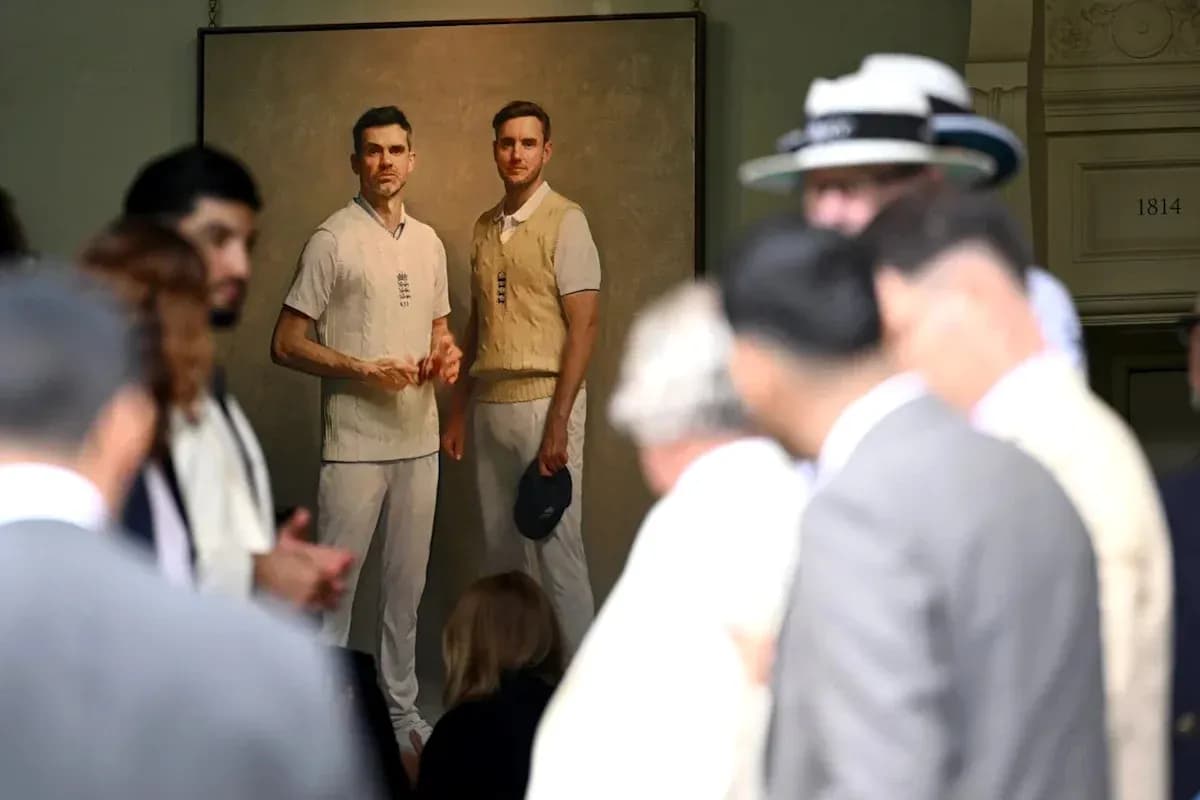
“Eight of the 30 centrally contracted players have now been reprimanded or involved and that is quite extreme and actually quite tiresome,” he said at Lord’s, where a painting of him and Anderson was being unveiled. The setting was ceremonial. The mood was anything but.
Broad backed his former captain without hesitation. “Joe Root spoke beautifully on this and is a brilliant example of how to do it. If you won’t listen to him and follow him, then this is not for you.
“South Africa away and Australia at home [in 2027] – if you can’t commit every bit of your mind and body to wanting to perform on this field, then I don’t understand.”
That is the bar, laid down by a man who spent his career chasing series wins in exactly those kinds of tours.
Root’s anger at repeat offences
Root, now the new England captain, had already made his irritation clear. He described himself as “really hacked off” after what is now the fourth alcohol-related incident involving England players in 10 months.
“It’s not the isolated incident itself,” Root said, “it’s the fact we continuously keep making stupid mistakes away from the game and it’s detracting from what we are doing on the field.”
Only weeks earlier he had scrapped the team curfew, trusting his players to behave like professionals. He challenged them to “be adults” and to understand the difference between a quiet beer and a night that spirals.
“[We need to] create a good, strong culture where you know when the right time is to celebrate and enjoy a win or to have a sensible beer, but remember – you’ve got to play for England.”
The message was clear: freedom comes with responsibility. Some have taken the first part and ignored the second.
Anderson’s warning from experience
If Broad spoke with the authority of a recent dressing-room leader, Anderson spoke with the weight of history. He has been there. He knows how quickly a night out can stain a reputation.
Anderson was among several players fined for a nightclub incident during the 2007 World Cup. That episode, he says, jolted him into line.
“It was a massive wake-up call,” he admitted. “You can make a mistake when you’re young, but you have to learn from it and grow up fast. So it’s just mind-numbing that people can still be putting themselves in these positions when there is so much attention around it.”
The veteran seamer painted a picture of a different kind of dressing room, one policed from within.
“When we were successful, we had players who did that sort of policing. Someone would say: ‘Just come away, you don’t need another drink, you don’t need to go to a nightclub,’ and if someone wasn’t training properly someone would say to them: ‘You tossed off that net session, you didn’t practise properly.’”
Standards were enforced not by memos, but by team-mates. Harsh words, early nights, raised eyebrows. It was uncomfortable. It also helped win series.
“This is a young team and they’ll get there,” Anderson added, offering a sliver of optimism. But the patience of the old guard is clearly wearing thin.
The painting at Lord’s shows Broad and Anderson side by side, immortalised in oils. Their real legacy, though, may depend on whether the players who follow them choose to listen – or carry on learning their lessons in the glare of a police station doorway.