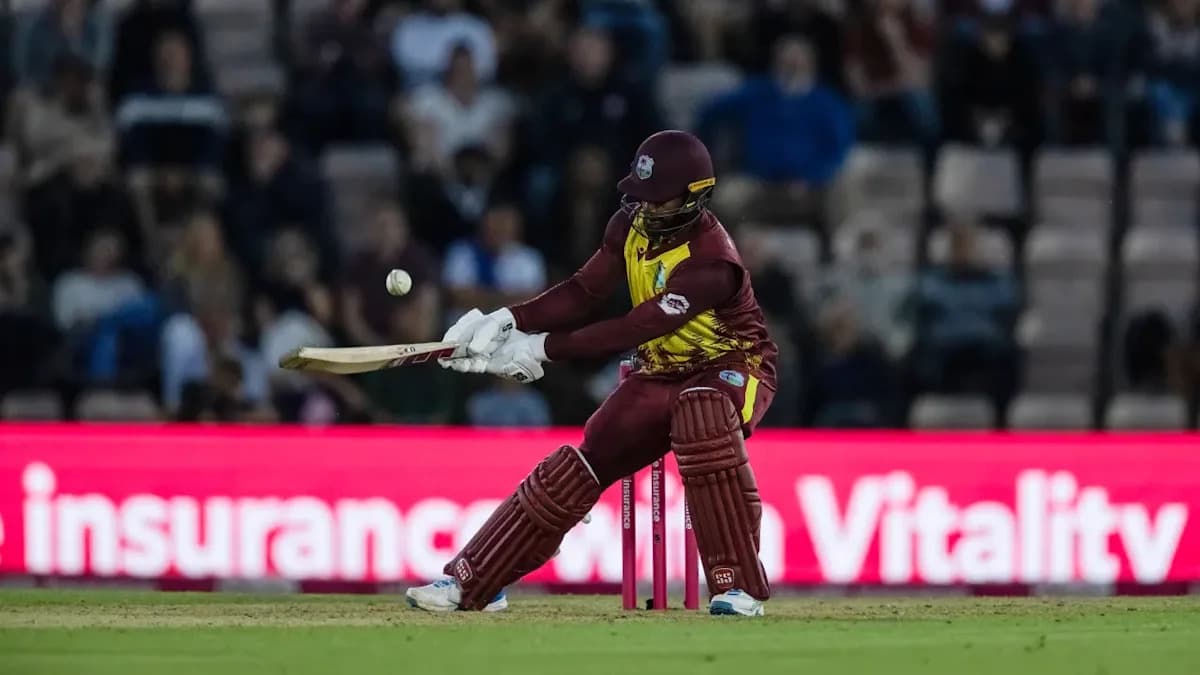
Brendan Taylor Overtakes Tendulkar as ODI Longevity King
On a cool Harare morning, with Australia back in town after a 12-year absence, a quiet piece of history slipped onto the field in Zimbabwe’s colours.
Brendan Taylor, 40 years old and back from the brink of a career that looked finished twice over, walked out for the first ODI against Australia and moved past Sachin Tendulkar as the longest-serving player in men’s ODI history.
Twenty-two years and four months. That is the span of Taylor’s ODI career now, nudging him beyond Tendulkar’s 22 years and three months in the format. The numbers are stark, but the journey behind them is anything but straightforward.
A record built through turbulence
Tendulkar’s ODI legacy remains almost untouchable: 18,426 runs, 463 matches, and a catalogue of records that shaped an era. Taylor will not touch those peaks. What he has done instead is endure.
He debuted in 2004, a young batter trying to make sense of international cricket in a Zimbabwe side constantly in flux. Since then, he has become one of his country’s defining players, the steadying presence in a batting order that has often leaned heavily on him.
By the time he took the field on Tuesday, Taylor had already stacked up 11 ODI centuries in 207 matches, the most hundreds by any Zimbabwean in the format. He has been the man for crises, the one expected to absorb pressure when collapses loomed, the name fans checked first on the team sheet.
His story, though, veered sharply off course.
Taylor retired from international cricket in 2021, seemingly closing the book on a long, bruising career. Months later, that chapter darkened. In 2022 he received a three-and-a-half-year ban for breaching the ICC’s Anti-Corruption and Anti-Doping codes, a sanction that looked certain to draw a hard line under his time in the game.
Yet here he is, back again.
With his suspension completed, Taylor returned in 2025 as Zimbabwe began plotting a bigger stage: co-hosting the 2027 ODI World Cup with South Africa and Namibia. For a country desperate to build momentum and credibility before that tournament, his experience is a valuable currency. For Taylor, it is a rare second chance at an ending on his own terms.
Australia return, old faces remain
While Taylor’s milestone framed the day, there was another strand of history in Harare. This was Australia’s first one-day international in Zimbabwe in 12 years, a reminder of how infrequently top-tier opposition has visited.
Mitchell Marsh, now captain, is one of only three players across both squads who took part in the last ODI between these sides in Zimbabwe, a match the hosts famously won in 2014. The other two survivors? Sikandar Raza and Brendan Taylor, the heartbeat of this Zimbabwe side then and now.
On Tuesday, Marsh won the toss and chose to bat, looking to impose Australia early in a series that offers them valuable away experience and Zimbabwe a chance to measure themselves against a heavyweight.
Australia lined up with Marsh at the helm, supported by Travis Head at the top and a middle order featuring Cooper Connolly, Josh Inglis, Alex Carey and Matt Renshaw. Ollie Peake added depth, while Xavier Bartlett, Nathan Ellis, Adam Zampa and Spencer Johnson formed a varied attack.
Zimbabwe, playing in front of home supporters who know exactly what a scalp against Australia means, named Brian Bennett and Ben Curran alongside Innocent Kaia at the top. Taylor slotted into the middle order with Craig Ervine, behind their captain and all-round talisman Raza. Wessly Madhevere, Brad Evans, Newman Nyamhuri, Wellington Masakadza and Blessing Muzarabani rounded out a side built on a mix of promise and battle scars.
A milestone with a World Cup on the horizon
Taylor’s new record does not erase Tendulkar’s towering presence over ODI cricket. It does, however, underline a different kind of greatness: survival in a system that has often felt unforgiving, especially in Zimbabwe.
From teenage debutant in 2004 to veteran in 2025, via retirement, suspension and a late-career recall tied to a home World Cup cycle, Taylor’s career now stretches across generations of teammates and opponents. Young players in that Zimbabwe dressing room have grown up watching him; now they share a field with him as he sets a mark no one has previously reached.
The numbers say he has outlasted even Tendulkar in years. The real question is what he does with whatever time is left — and how far this final act can carry Zimbabwe as they build towards 2027.