Belfast Wolves: A Cricket Team Without a Home
The flags flew at Stormont this summer. New Zealand in a Test, India in one-dayers, Afghanistan in T20s – a proper international calendar in the east of Belfast. Yet the city’s new professional cricket team, the Belfast Wolves, have not faced a single ball there.
They are a franchise without a home game. A brand without a base. And they are trying to build a fan culture from the motorway, not the pavilion.
This is the curious launch of one of the founding members of the European T20 Premier League (ETPL): Belfast on the badge, Dublin and the Netherlands on the fixture list.
A Belfast team that doesn’t play in Belfast… yet
For now, all six ETPL teams are on tour. The competition has been staged in Dublin and across the Netherlands, leaving several franchises with no home dates at all. The Wolves’ owners hope that changes next year, with Belfast earmarked as a host city once the logistics, facilities and agreements fall into place.
Until then, it’s all about noise. Visibility. Hype.
The people behind the Wolves know they are asking something unusual of sports fans: buy into a team you can’t yet see in your own city. So they are treating this first season as a branding mission as much as a cricket campaign.
Claire Hughes of En2End, a sports fan engagement agency, believes the concept is workable – at least in the short term.
She calls it “possible to create initial hype around a new sports franchise without it playing in its home city”, pointing to the power of strong personalities, heavy broadcast coverage and smart storytelling.
That’s the hook. But not the whole job.
“Building genuine, lasting fandom is much harder without a physical presence or shared experiences that allow local people to feel the team genuinely belongs to them,” she warns.
That is the crux for the Wolves. Awareness is one thing. Belonging is another.
Hughes sees “interesting opportunities” in the gap: community engagement, grassroots sessions, fan events, screenings, local partnerships, and creating recognisable personalities and rituals around the team. The danger, she suggests, is that “translating awareness of the Belfast name into an authentic connection with Belfast audiences” will take more than clever branding.
The Wolves need to feel like a club, not just a logo on a livestream.
Young cricketers, future fans
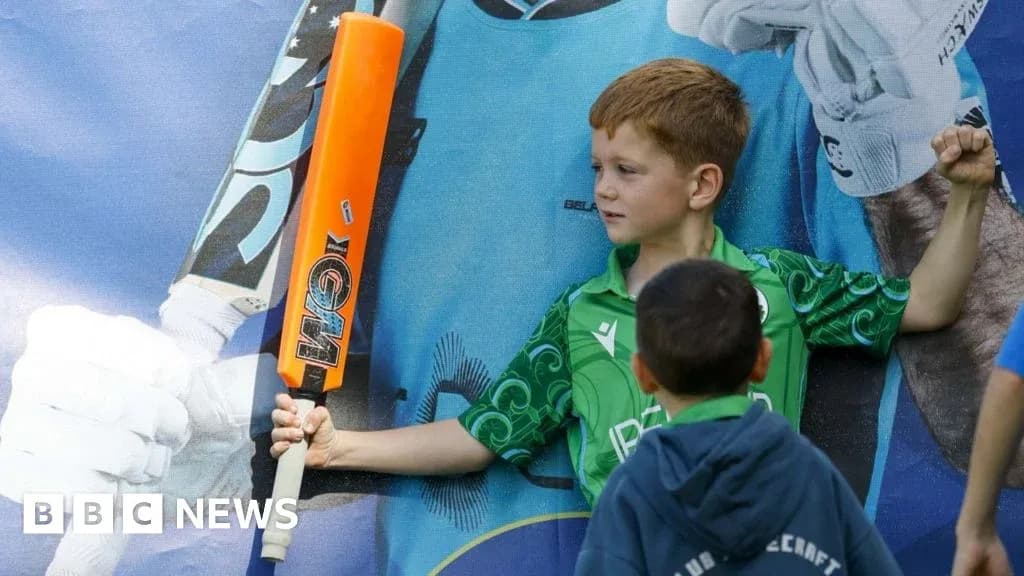
At the coalface of that challenge are players like Harry Dyer and Adam Leckey, both on the Northern Cricket Union (NCU) talent development programme and both exactly the kind of local prospects the franchise wants to inspire.
Dyer, 20, can already sense a buzz.
“There was a buzz around the Wolves,” he says, but he doesn’t hesitate when asked what comes next. Home games.
“Hopefully in future, if Belfast were to have home games with all the facilities that they are planning to get brought in, I think younger kids would definitely follow them and hopefully call the Belfast Wolves their team.”
That word – “their” – is the entire project in a sentence.
Dyer believes the format helps. T20, with its short, sharp bursts and constant jeopardy, is built for new audiences. He talks about the ETPL as “an event as well, it’s not just a cricket match”, and points to the model of The Hundred, with its DJs, music and festival feel as a blueprint for pulling in people who might never have watched a full day’s cricket.
Leckey, 19, has already travelled to see the Wolves in action in the Netherlands. That alone hints at the dedication of the game’s hardcore in Northern Ireland. He wants the return trip to go the other way next season.
He sees the Wolves as a chance to drag cricket into the same conversation as the sports that dominate pitches and playgrounds across the region.
“Compared to the amount of people that play rugby, play hockey, play football, barely anybody plays cricket and something like this could maybe interest people,” he says.
If the Wolves can turn kids like Dyer and Leckey into both players and advocates, the franchise starts to look less like an import and more like a pathway.
‘Family, fearless and fun’
Inside the club, there is no attempt to hide the ambition. Wolves chief executive Neil Maxwell talks about a “level of passion in Northern Ireland about the game” that the franchise is desperate to tap into, rather than manufacture.
The team’s catchcry – “family, fearless and fun” – is not subtle, but it is deliberate. This is not the language of a quiet, traditional county side. It is a sales pitch to families, to kids, to casual fans who might never have heard the term “net run rate”.
“If we can make that connection with our audience and with our fans, I think that'll be a real positive for us,” Maxwell says. For him, the project only truly succeeds if it leaves something behind.
“I think a legacy there would be to help develop the game in this region.”
Legacy is a big word for a team that has yet to play at home. But it underlines the direction: this is not meant to be a travelling circus that disappears when the tournament ends. The Wolves want to bite into the local cricket ecosystem and stay there.
NCU sees ‘opportunities, not challenges’
The Northern Cricket Union, which governs the game across Antrim, Armagh, Down and part of Tyrone, has chosen to lean in rather than stand back. It has formed a partnership with the Wolves, framing the new team as “a source of pride and inspiration for young cricketers”.
NCU chief executive Callum Atkinson is clear-eyed about the oddity of a Belfast franchise without Belfast fixtures. He calls the Wolves “a significant opportunity”, but accepts that having no home games is “a challenge”.
He also understands the scale of the education job. For many people, he says, both the ETPL and the very idea of franchise cricket are “a relatively new concept”. That, in his view, is where the upside lies: a blank slate for introducing “fresh audiences to the sport and create new connections with cricket”.
This first ETPL season has, in Atkinson’s words, been about one thing: getting the competition off the ground. Prove it works. Prove it’s watchable. Prove it’s worth bringing to Belfast.
“We see these as opportunities rather than challenges,” he insists. He points to Northern Ireland’s “strong sporting culture and relatively few major sporting events during the summer months” as fertile ground for something different.
Strip away the corporate language and the message is simple: there is space on the calendar, and the Wolves want to fill it.
The question now is whether a team built on the road can truly belong to a city it has not yet played in – and what happens when the Wolves finally run out at home and find out, in real time, how much Belfast has been listening.