.svg&w=384&q=75 "logo")
BCCI Redefines Player Selection Rules
The Board of Control for Cricket in India has seen enough chaos for one season.
After a string of late withdrawals, mid-tour exits and scrambled replacements, the BCCI, its selection committee and the Centre of Excellence headed by VVS Laxman have quietly redrawn the rulebook on player clearance. The new mantra is simple: no more gambles.
If you’re not rock-solid fit, you don’t just walk back into an India squad.
Harshit Rana, the turning point
The shift did not come out of thin air. It has scars behind it.
Harshit Rana’s case is the one that keeps coming up in conversations inside Indian cricket. The fast bowler finally returned to the national frame in June for the Ireland and England tours after five months out. It was supposed to be his restart.
It lasted less than two weeks.
Rana broke down again, could not complete the England leg and was flown back home. Prince Yadav had to be rushed in as a replacement. Plans torn up, workloads reshuffled, combinations disturbed. For the think-tank, it was a familiar, exhausting story.
And Rana is hardly alone.
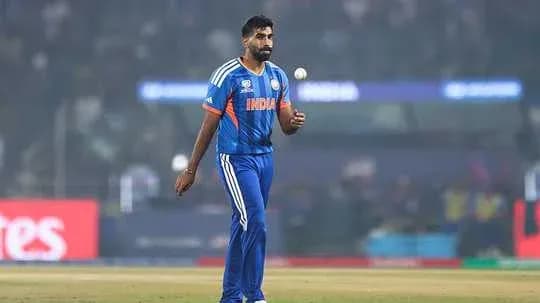
Jasprit Bumrah and Sai Sudharsan were both picked for the Sri Lanka Tests, only to be replaced by Auqib Nabi and Sarfaraz Khan. Suryansh Shedge came in at the last minute for Nitish Kumar Reddy on the Ireland and England tour. Varun Chakaravarthy was pulled out of the Zimbabwe trip, with Ravi Bishnoi drafted in late.
One or two such episodes can be written off as bad luck. When it keeps happening, it becomes policy territory.
From hope to hard lines
That is where the CoE now stands: no more optimism-based selections.
Inside the selection room, the bar has been raised. Officials want to be, as one source put it, “not just 100 per cent, but 200 per cent confident” before a player is declared available. The old habit of pencilling in a big name and “seeing how it goes” has been pushed aside.
The result is a new category that has begun to appear in BCCI squad announcements: conditional picks.
In Tuesday’s media release for the T20I series against Afghanistan, four names carried an asterisk – Bumrah, Washington Sundar, Nitish Reddy and Rana. All four are in, but only if they clear fitness tests in time.
That little symbol next to their names is doing a lot of heavy lifting.
Laxman’s transparency play
VVS Laxman has become the public face of this recalibration. The CoE head has framed the move not as a clampdown, but as clarity.
“They (players) understand that they're not yet ready to participate in the national series,” Laxman said recently, underlining that the process remains “player-centric and team-centric”. The key, he stressed, is open communication – between medical staff, selectors and the players themselves.
He pointed to a new level of openness in fitness reporting and selection notes. When the BCCI puts out a squad, those asterisks are not decoration. They are a clear signal: these players are picked subject to fitness.
If they fail the tests, the selectors already know who steps in. No panic calls, no blind scrambles. As Laxman put it, “it's basic common sense.”
For a system that has often been accused of opacity, the bluntness is striking.
The selection clock
The timing of selection meetings has also forced the board’s hand.
BCCI secretary Devajit Saikia explained that squads are usually finalised three to four weeks before departure. On that day, a player might still be under rehabilitation, not yet match-ready. Rejecting him outright could mean losing a key option who might be fully fit by the time the team actually travels or plays.
“So if he gets picked within that period of 21 or 28 days, he will be taken into the team,” Saikia said. That is why the door stays half-open. The player is not fit on selection day, but may be perfectly fine by the first ball of the series.
The asterisk bridges that gap between medical timelines and cricketing calendars.
Bumrah, Reddy and the waiting game
The Afghanistan T20Is, starting September 13 in New Delhi, will be the first real test of how this policy plays out under pressure.
Behind the scenes, there is quiet confidence about Bumrah. Those in the loop believe the spearhead will be available despite the conditional tag next to his name. The selectors are operating on the assumption that he will be ready for the three-match series.
Nitish Kumar Reddy’s case is tracking in the same direction. The all-rounder, laid low by a quadriceps injury, has ramped up his workload at the CoE and is back to bowling six to seven overs a day at full tilt. People familiar with his progress expect him to make the Delhi games.
Rana and Washington Sundar sit in a greyer zone.
Their situations are less clear, and this is where the new approach bites hardest. No matter how tempting it might be to roll the dice on their talent, the CoE has drawn its line.
“The CoE will not take chances,” said a source.
For India, the message is stark. The era of hopeful selections is over. The next phase belongs to players who can not only make a squad, but stay there.