.svg&w=384&q=75 "logo")
BCCI Advocates for Player Rest and Prep in Upcoming FTP Cycle
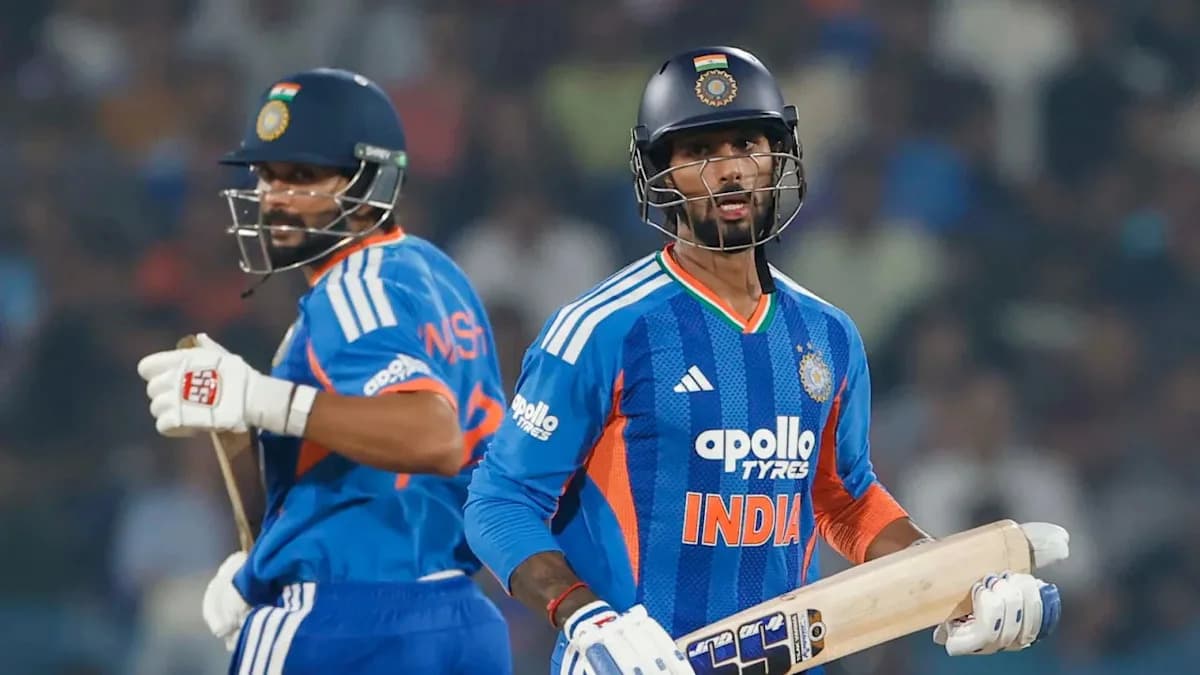
The Board of Control for Cricket in India wants the next Future Tours Programme to look very different from the current treadmill. Less grind, more preparation. Especially when it comes to tours of the SENA countries.
With the 2027-31 FTP cycle on the table later this month, the BCCI has moved to arm its negotiators with a clear brief: protect player rest and build in proper acclimatisation windows before major overseas series.
A two-day workshop on the FTP in Dubai on September 22 and 23 will bring together operations teams from all full-member boards, with the top eight Associate nations also invited into the room. That is where India’s case must be made, and quickly.
“The challenge we are facing is that there are too many matches in the year, and that is why, in the next FTP, we will do certain things and take certain measures,” BCCI secretary Devajit Saikia said on Thursday after a review meeting of the Indian team.
He spelt out the core demand. India’s FTP managers, he said, have been told to ensure the calendar creates “proper rest for the players, as well as some kind of acclimatisation or friendly matches before any major series in SENA countries.”
On paper, it sounds simple. In reality, the next cycle is already crowded.
India are due to host England for a five-Test series at the start of 2028, then fly to Australia for another marquee tour at the end of that year. Return visits follow: a tentative tour of England in 2029 and a home series against Australia in 2031.
Those heavyweight contests sit inside an ICC-heavy four-year stretch. The T20 World Cup lands in Australia and New Zealand in 2028. The Champions Trophy comes to India in 2029. Another T20 World Cup follows in 2030, split between England, Scotland and Ireland. Then the 2031 ODI World Cup heads to India and Bangladesh.
On top of that, there are World Test Championship obligations. India are expected to travel to South Africa and West Indies and host Sri Lanka and one more opponent during the cycle. Every gap already has a claimant. Every window has a cost.
Carving out rest periods and warm-up games in that landscape will not be straightforward. The BCCI, though, has built a reputation for getting its way in global scheduling discussions. This time, the argument comes wrapped in player welfare and competitive integrity, not just commercial muscle.
While the calendar debate gathers pace, another shift is brewing in the background: the return of multilateral cricket.
Cricbuzz understands that the next international cycle could feature more tri-series and similar tournaments, driven by a growing belief among several boards that bilateral series are losing their appeal and, crucially, their financial punch. Multilateral events, by contrast, are seen as offering stronger returns, especially in white-ball formats.
Right now, such tournaments are almost museum pieces. A T20I tri-series is currently being played in Namibia, featuring the hosts, South Africa and Zimbabwe. Since the 2019 World Cup, there has been just one ODI tri-series – New Zealand, South Africa and Pakistan – staged as a lead-in to the 2025 Champions Trophy.
India’s own history with these events is rich but dated. Since the 2011 World Cup, they have played only four multilateral tournaments outside of the Asia Cup. There was the 2011-12 tri-series in Australia, with Sri Lanka as the third side. Another in 2013 in the West Indies, involving Sri Lanka and the hosts. Then the 2014-15 tri-series in Australia, which also featured England.
The last such event was the Nidahas Trophy in 2018, a T20I tournament in Sri Lanka with Bangladesh as the third team. It ended with Dinesh Karthik’s unforgettable last-ball six in the final, one of India’s most dramatic white-ball finishes of the decade.
The first three of those tournaments were ODI events; Nidahas was T20I. The Asia Cup remains a multilateral staple too, but it sits in its own category, owned and run by the Asian Cricket Council rather than any single board.
Typically, multilateral tournaments belong to the host board, which controls the commercial levers. For India, that model comes with a twist. Matches not involving the Indian team simply do not command the same broadcast value. That reality has long shaped the BCCI’s thinking and helps explain why India have not hosted a multilateral event since the TVS Cup in 2003-04, a tri-series with Australia and New Zealand.
If multilateral cricket is to make a genuine comeback in the next FTP, the economics will need to evolve. Media-rights structures, revenue-sharing models, and the valuation of non-India fixtures all sit on the negotiating table.
The BCCI arrives in Dubai with two parallel fights: more time for its players to breathe and adjust, and a say in how a new wave of multilateral tournaments might look and pay. How those battles play out will shape not just India’s schedule, but the rhythm of international cricket through to 2031.