.svg&w=384&q=75 "logo")
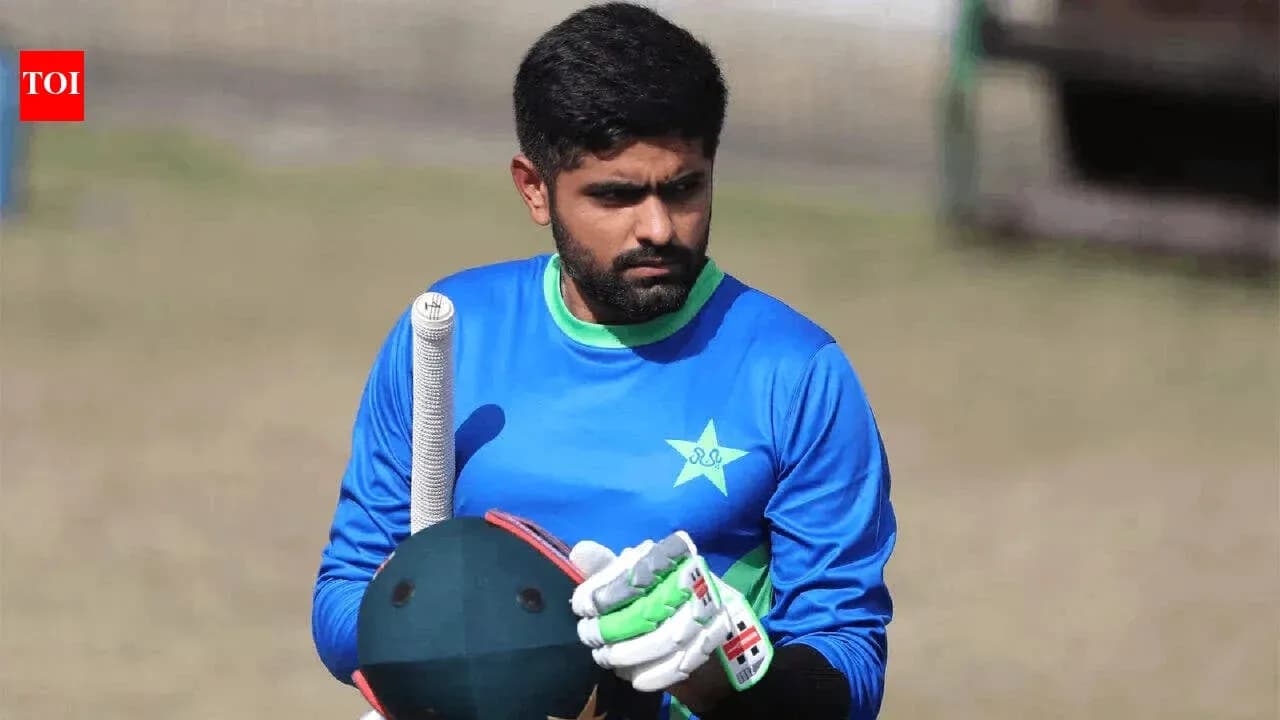
Babar Azam's Century Drought: A Journey of Near Misses
For years, Babar Azam walked to the crease in Test cricket with an air of inevitability. If he settled, he scored big. Hundreds arrived with such regularity that they felt less like milestones and more like check-ins on a long journey.
That journey has stalled.
His last Test century came on December 26, 2022, in Karachi. A commanding 161 against New Zealand, his ninth Test hundred, capped a golden year: 1,184 Test runs, four centuries, and the sense that Pakistan’s captain had taken his place among the format’s elite.
Since then, nothing. Seventeen Tests. Thirty-six innings. No hundred.
A drought that began quietly has hardened into a crisis of conversion.
From Karachi high to a long, slow slide
The irony is that the drought began almost immediately after that 161. In the very next innings of that Karachi Test, Babar fell for 14. New Zealand stayed in the game; the captain’s purple patch flickered.
The scores that followed hinted at fluency without fulfilment. In the second Test against New Zealand, he made 24 and 27. Useful, but forgettable. In Sri Lanka in 2023, the pattern repeated: 13, 24, 39. Starts, then stalls.
The Australia tour that followed was supposed to sharpen him. Instead, it underlined the problem. Across three Tests he managed 21, 14, 1, 41, 26 and 23. The 41 in Melbourne stood briefly as his highest score of the drought, an innings that promised far more than it delivered. He looked set. He looked in. Then he was gone.
The numbers told a story: Babar was still Pakistan’s technical reference point, still the batter opponents planned for. But he was no longer finishing what he started.
2024: When a slump turned into a worry
By 2024, the concern had deepened. Against Bangladesh, on pitches that usually offer top-order batters a chance to rebuild numbers, he scraped 0, 22, 31 and 11 across two Tests. The rhythm had deserted him.
Then came England at home, a series that always carries extra scrutiny. In Multan, on a surface where Shan Masood and Abdullah Shafique both cashed in with centuries, Babar managed only 30. Chris Woakes trapped him lbw, another innings cut off before it could grow. That 30 extended a run without even a Test fifty, let alone a hundred.
The pressure built. Questions followed. Was it technical? Mental? Captaincy burden? The scorecards offered no excuses, only a stark pattern.
A late-year tour to South Africa finally brought a flicker of change. At Centurion, Babar reached 50 — his first Test fifty since that 161 against New Zealand. It felt like a small release. At Cape Town, he went further: 58 in the first innings, then 81 in the second. For the first time in a long time, a hundred looked genuinely within reach.
He fell 19 runs short. The wait for a 10th Test century went on.
2025: Better numbers, same nagging gap
Babar entered 2025 with that 81 in South Africa as his standout effort. Across the two-Test series, he compiled 193 runs, three fifties, and the sense that his game was stabilising again.
On paper, his 2025 Test returns improved on the struggles of 2023 and 2024. He scored more, he looked more assured, and the noise around his form softened.
But the one number that mattered most to him and to those who judge him — the next hundred — refused to move. His highest score of the year remained 81. The ceiling, once routinely breached, had become an invisible barrier.
2026: Run-out on 88 and the cruelest miss
In 2026, in Port of Spain, the drought produced its most brutal twist.
Babar crafted 88 in the second Test against West Indies, an innings that carried the old hallmarks: control, timing, authority. Twelve runs short of the milestone that had haunted him for nearly four years, he looked set to stride through the 90s.
A mix-up ended it. Brandon King’s run-out cut him down on 88. No edge, no unplayable delivery, just a breakdown in communication and another hundred gone begging.
The series underlined the paradox of his form. He had made 58 not out in the first Test chase, then 88 and an unbeaten 24 across the two matches. His 193 runs lifted him briefly back into the ICC Test top 10. The rankings suggested resurgence.
Yet his Test record still stopped at nine centuries.
Bangladesh and another missed opening
Bangladesh, again, seemed to offer a softer landing. Before the England tour, Babar posted 68 and 47 in a two-Test series, scores that steadied Pakistan and hinted at a player edging back towards his best.
But both innings ended in the same familiar place: solid, not decisive. Helpful, not historic. He had done enough to shape the games, not enough to own them.
For a batter once defined by his ability to turn 50 into 100, the pattern cut deep.
England, Lord’s and the weight of expectation
The latest chapter came against England, and it started with a setback. Babar missed the first Test at Headingley with a finger injury. Pakistan collapsed without him, losing by an innings and 103 runs. His absence only sharpened the focus on his return.
He declared himself 90 per cent fit for the second Test at Lord’s. The stage was perfect: a famous ground, a wounded team, a captain searching for a statement innings.
It never arrived.
In Pakistan’s first innings, with the side under pressure, he lasted long enough only to nick off for 8. Jordan Cox took the catch off Josh Tongue as Pakistan folded for 110 all out. Another low score, another missed chance to reset the narrative.
The second innings offered a chase of 389 and a chance at redemption. Instead, Jofra Archer’s pace and bounce forced an awkward response. The ball ballooned to Cox at third slip. Babar walked off for 6.
Two innings at Lord’s. Eight and six. Still no century.
From 161 in Karachi to 88 in Port of Spain, from 81 in Cape Town to 68 against Bangladesh, Babar Azam has lived four years on the brink of a landmark he once treated as routine. The technique remains. The class is visible. The scores, increasingly, feel like fragments of an unfinished story.
At some point, the drought will end. The question now is not whether Babar can score another Test hundred, but what version of him will emerge when he finally does.