.svg&w=384&q=75 "logo")
Atlantic Division Preview: Knicks, Celtics, Nets, 76ers, and Raptors
The Atlantic Division has never been quiet. This year, it’s deafening.
A blockbuster swap between Boston and Philadelphia, LeBron James walking into the Sixers’ practice facility, the defending champion Knicks trying to prove they’re no one-year wonder — and that’s before you even get to a Raptors team quietly loading up and a Nets franchise desperate to matter again.
Training camp hasn’t opened yet. The storylines already feel like mid-June.
New York Knicks: Champions, finally — and suddenly the hunted
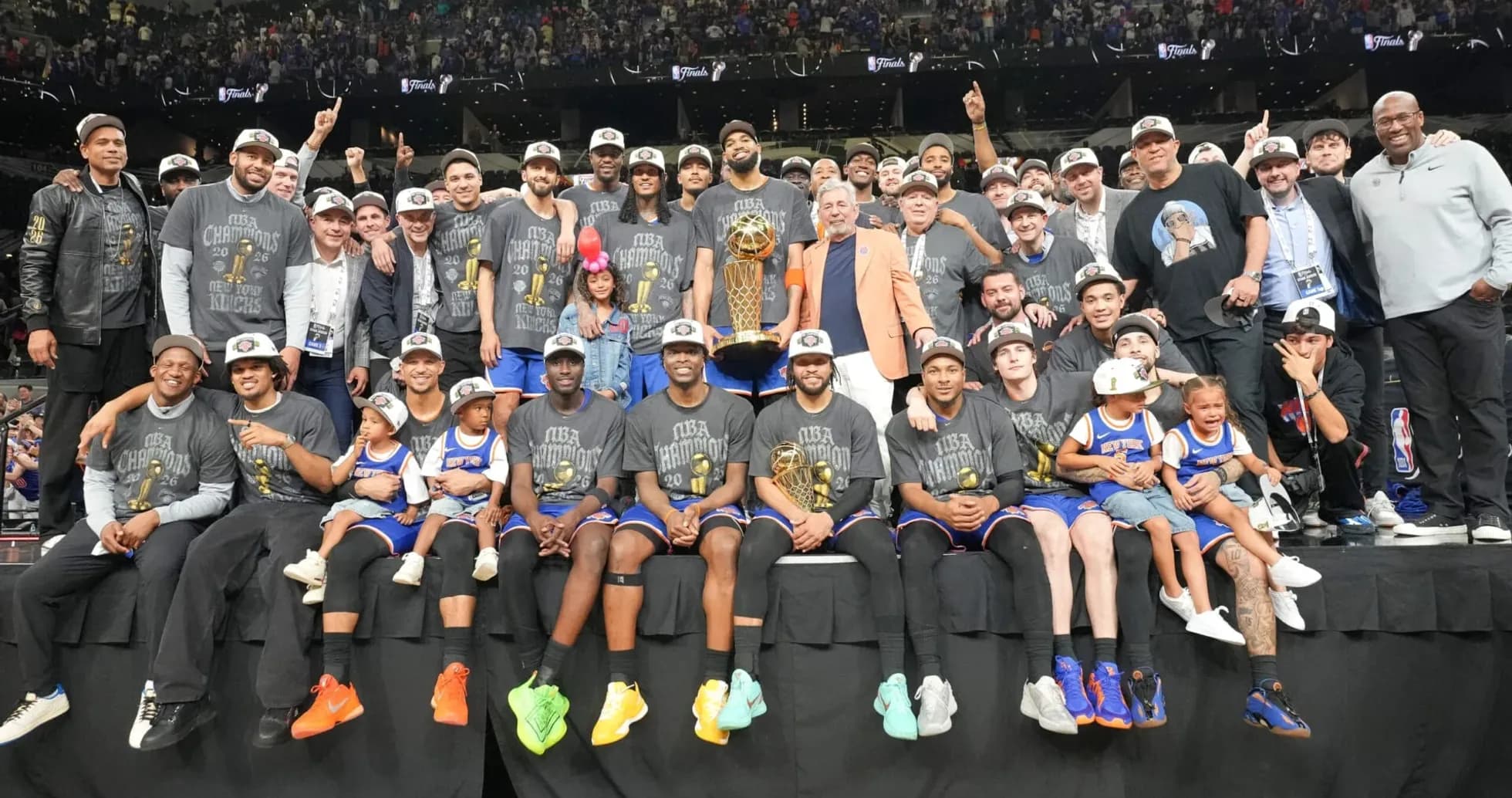
The drought is over. Fifty-three years without a parade, wiped away by a 53-29 season and a title run that turned Jalen Brunson into a Finals MVP and Madison Square Garden back into basketball’s capital.
That kind of catharsis usually buys time, even in New York. The Knicks have it. What they don’t have is much turnover.
Mitchell Robinson is gone, the most significant loss from the championship core, cashing in with Boston. Ariel Hukporti and Jeremy Sochan also departed, but the Knicks chose continuity over splash. The front office moved surgically, not dramatically: Andre Drummond arrives to soak up center minutes behind Karl-Anthony Towns, while Jack Kayil and Tyler Nickel add depth on the perimeter.
It’s a champion’s offseason — restrained, confident, bordering on defiant. The message: what we had was good enough.
And it still looks that way. Towns, OG Anunoby, Josh Hart and Brunson give New York a battle-tested spine, with Brunson now carrying the aura that comes with owning a Finals series. The Knicks don’t need to repeat to validate last year; that banner already hangs. But with this core, they have every right to think the next wait for a title in New York should be measured in months, not decades.
Boston Celtics: Tatum’s burden, and a very different wingman
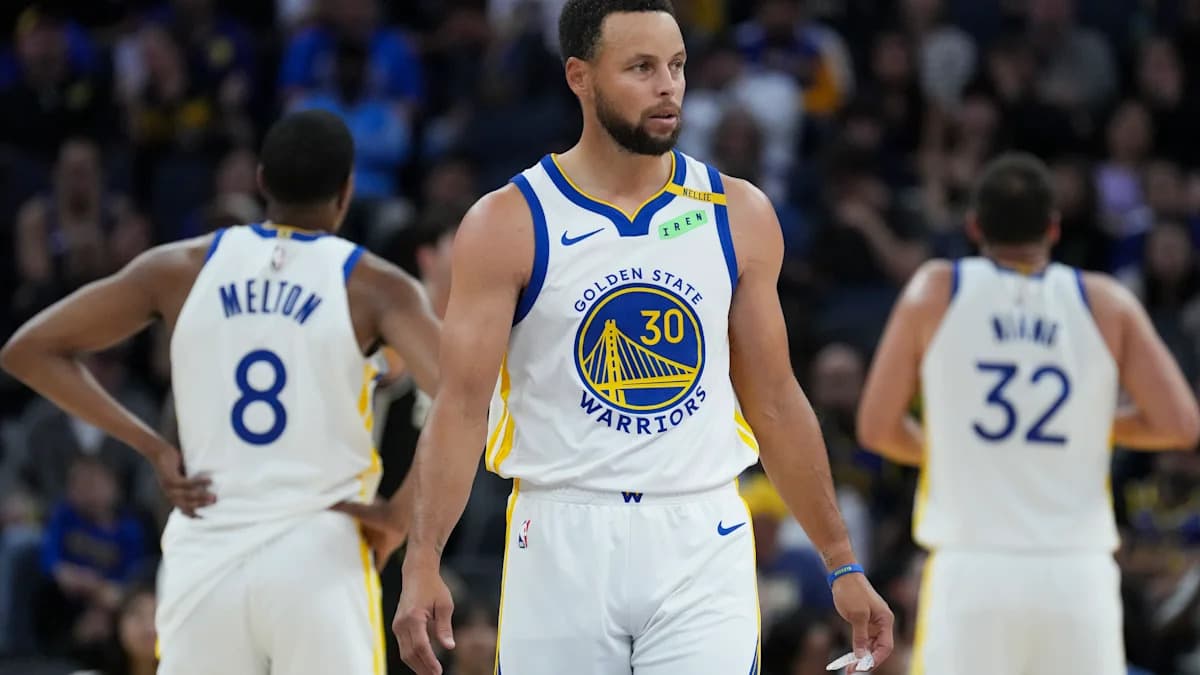
Boston rode an MVP-level season from Jaylen Brown to a 56-26 record while Jayson Tatum limped through the year, available for only the final weeks of the regular season. Then came the crash: a first-round exit that felt like a wasted campaign.
The Celtics responded with a gamble that reshapes the franchise.
Brown is gone, shipped to Philadelphia in a move that sent shockwaves through the division. In his place, Boston leans into star power with a different profile: Paul George joins Tatum on the wing, while veteran point guard Mike Conley adds stability in the backcourt. Mitchell Robinson arrives to anchor the middle, with Chris Cenac Jr. and Dillon Mitchell bolstering the forward rotation. Dalano Banton, Chris Boucher, Max Shulga and John Tonje exit in the churn.
This is Tatum’s team more than ever. Healthy again, he’ll be asked to shoulder the kind of load Brown carried last season. George, coming off an uneven spell in Philadelphia, becomes the barometer. If he and Derrick White rediscover their best form, Boston’s floor rises quickly.
The Celtics aren’t rebuilding. They’re retooling around a singular star and betting that a healthy Tatum, a revived George and a sturdier center in Robinson can push them right back into the East’s top tier — and erase the sting of that early playoff stumble.
Brooklyn Nets: Randle returns to New York, and the kids get help
The Nets spent last season as a developmental lab. Five first-round picks, heavy minutes for a young core, and a 20-62 record that landed them at the bottom of the Atlantic.
That kind of season tests patience. It also clarifies needs.
Brooklyn decided Michael Porter Jr. couldn’t carry the offensive burden alone. The answer: Julius Randle, a former All-NBA forward who knows New York’s glare better than most, arrives via trade to give the Nets a proven scorer and playmaker in the frontcourt. Moritz Wagner, Keon Ellis and Tyler Bilodeau add depth, while Ziaire Williams and Nic Claxton move on.
The draft remained part of the plan, just with a sharper edge. At No. 6, the Nets grabbed Mikel Brown Jr., a Louisville product with true combo-guard chops and a game that should translate quickly. On a roster still in transition, he’ll get every chance to carve out early rotation minutes. With the extra first-rounder from the Randle deal, Brooklyn snagged Joshua Jefferson at No. 28, another long-term piece for a still-forming identity.
There’s urgency now. The Rockets hold swap rights on Brooklyn’s first-round pick next season, stripping away the safety net of another bottom-out. The Nets don’t need a miracle leap, but they do need progress — and they’ve finally put some veteran muscle around their prospects to chase it.
Philadelphia 76ers: LeBron, Embiid, Brown — and a title-or-bust aura
The Sixers’ story has been painfully familiar: Joel Embiid dominates, then breaks down, and the team’s title dreams skid to a halt. Last season followed the script. Another injury-hit campaign for Embiid, a 45-37 finish, and a run that stopped in the conference semifinals.
This summer, Philadelphia tore up the script.
First came Jaylen Brown, the former Celtic and long-time rival, landing in Philadelphia and instantly changing the dynamic of the Embiid-Tyrese Maxey core. That alone would have been one of the league’s biggest moves.
Then LeBron James chose the Sixers.
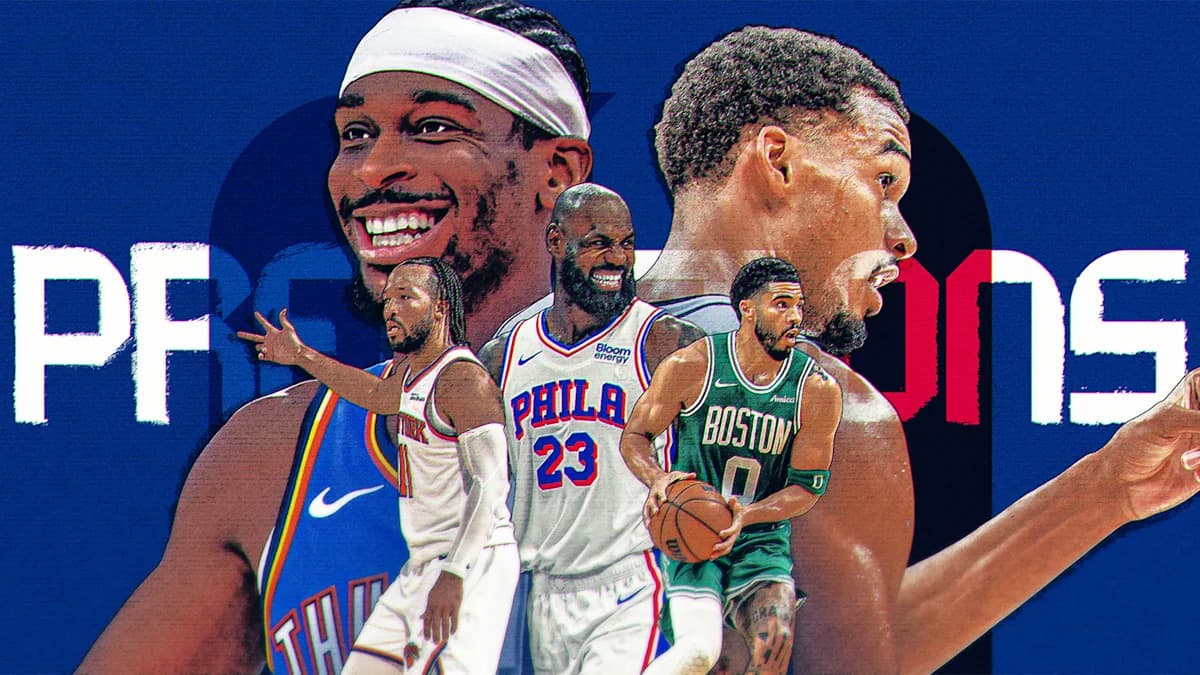
With one decision, the league’s spotlight swung to Philadelphia. LeBron joins Embiid, Brown, All-NBA guard Maxey and All-Rookie guard VJ Edgecombe to form what might be the most intimidating starting five in basketball. Around them, the front office added Kentavious Caldwell-Pope for perimeter defense and spacing, Ariel Hukporti for size, Labaron Philon Jr. and Anfernee Simons for backcourt depth and scoring, plus Dean Wade for frontcourt versatility.
To make room, Philadelphia let go of Paul George, Kelly Oubre Jr., Quentin Grimes, Andre Drummond, Dalen Terry, Trendon Watford and Johni Broome. The roster looks completely different — leaner at the top, heavier on star power.
The questions are obvious and massive. Can LeBron still carry this level of responsibility at his age? Can Embiid stay upright when it matters? If those answers lean even slightly positive, the Sixers aren’t just contenders. They’re positioned to chase the franchise’s first championship since 1983, with a group built to own the moment, not just reach it.
Toronto Raptors: Depth, development and a dangerous ceiling
Toronto didn’t make headlines last spring, but it made noise. A No. 5 seed in the East, a first-round series that stretched to a Game 7, and a team that looked a piece or two away from something more serious.
The Raptors chose evolution over overhaul.
Sandro Mamukelashvili departs, while Kyle Anderson arrives to add his familiar brand of savvy playmaking and positional versatility. Jaden Bradley and Allen Graves join as fresh faces, but the real story is internal growth.
Few teams can match Toronto’s offensive balance. On any given night, three — sometimes four — Raptors can drop 20, and they don’t hemorrhage stops on the other end. That balance becomes even more dangerous if the young core continues its upward climb.
Collin Murray-Boyles is at the center of that hope. He grew steadily through his rookie season, then punched above expectations in the postseason with polished post moves and touch around the rim. Guards Ja’Kobe Walter and Jamal Shead appear on similar trajectories, hinting at a future where Toronto’s depth is not just respectable but punishing.
All of it orbits Scottie Barnes. With Barnes and RJ Barrett as the headliners and an emerging supporting cast snapping at the league’s heels, the Raptors look built not just to return to the postseason, but to start demanding a bigger say in how the East is decided.
The Atlantic once ran through Boston almost by default. Now, the defending champions live in Manhattan, the most star-studded lineup might be in Philadelphia, Toronto is sharpening its edges, and Brooklyn is fighting its way back into relevance.
Someone’s grip on this division is about to slip. The only question is whose.