
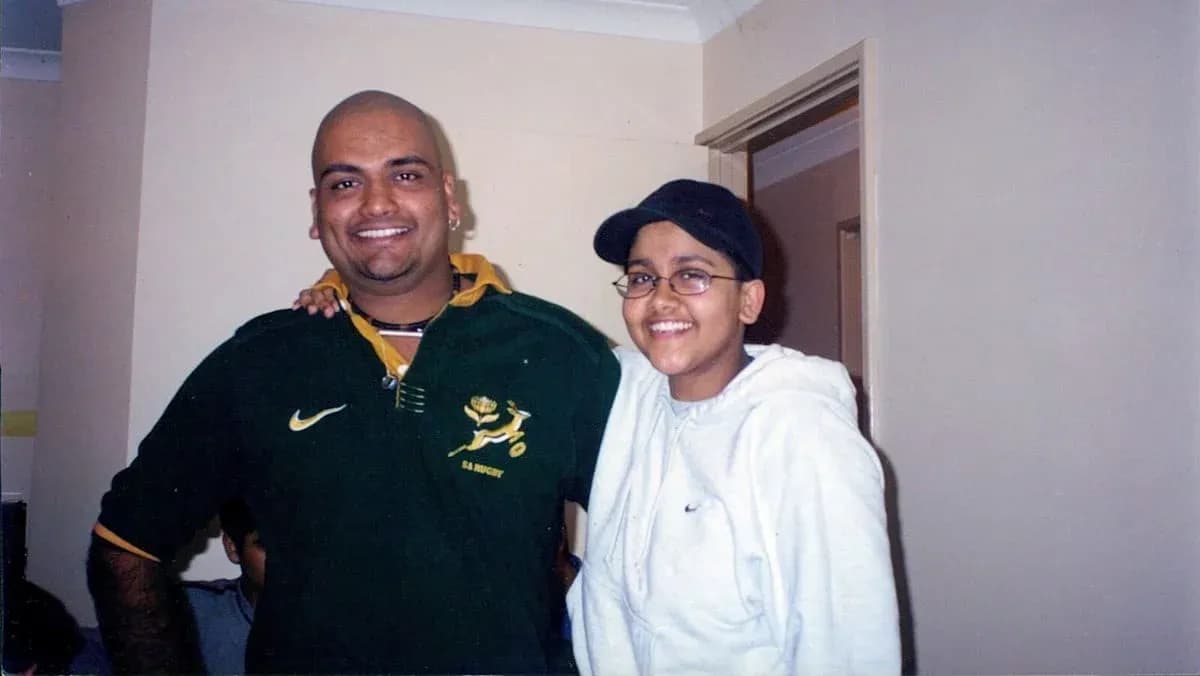
The Tragic Death of Arjun Menon: A Family's Fight for Justice
On a quiet Sunday morning in May 2025, as a family in Singapore headed out for a routine house viewing, a phone kept ringing with an unfamiliar country code.
They let it ring out once. Then again. It would not stop.
When the youngest sister finally answered, the world they knew ended. On the other end of the line, from Malawi, came a scream: Arjun is dead.
For most of the cricket world, Arjun Menon was the coach who had thrown himself into building the game in a small African nation, the man who had once led Singapore to SEA Games gold. For his older sister, Prema, he was something far more ordinary and far more irreplaceable: the “cool kid” from Neptune Court, the brother who never punched down, the first friend.
He was 48 when unknown assailants killed him at his home in Blantyre, Malawi’s second-largest city. His car and wallet were taken. His life, and his family’s certainty, were not coming back.
A Family Scattered, Then Shattered
The Menon siblings had grown into adulthood like “orbiting satellites”, as 42-year-old Prema puts it. One in Australia, one in Africa, one in Singapore. They were spread across continents, but the gravitational pull of family remained.
Arjun had moved to Malawi in 2020, determined to lift the local cricket community. He settled there, embraced the place, and, by all accounts, was embraced in return.
“He loved the place,” Prema recalls. Their father, who spoke to Arjun every day, believed his son felt safe, rooted, and deeply connected. There had been no talk of threats. No hint of danger.
Then came that call.
Prema remembers shock, but not for herself. Her first thought was of her parents, and of something her father used to say: the biggest curse is losing your child. She watched that curse unfold in real time.
Within days, she was on a plane to Malawi, an 18-hour journey from Singapore to a landlocked country in southeastern Africa that had suddenly become the most important place in her life.
She stayed about 10 days. She buried her brother there. She tried to piece together what had happened in the early hours of that May morning.
Answers, even basic ones, proved elusive.
“They’re Still Investigating”
With little familiarity with Malawi’s systems, the family leaned on the president of Cricket Malawi, where Arjun had served as head of cricket operations, to communicate with the police.
The updates that filtered back over the following months were brief and numbing in their repetition: “They’re still investigating.”
The family turned to Singapore’s Ministry of Foreign Affairs for help. But Singapore has no diplomatic representation in Malawi; the nearest embassy sits in South Africa. The ministry can liaise with foreign authorities and provide practical information, but it cannot investigate, offer legal advice, or file police reports on behalf of families.
Prema also approached the Singapore Police Force and several Members of Parliament. The Singapore Police Force contacted the Malawian authorities and indicated it would assist within Singapore’s laws if a request came in. As of Aug 31, no such request had arrived from Malawi.
Repeated attempts by media to obtain comment from Malawi’s police went unanswered. MFA declined to comment.
The Menons waited. The investigation, they were told, continued. Yet no arrests have been made. No clear picture of that night has emerged.
Grief, Then Another Loss
Six months after Arjun’s death, the family absorbed another blow. In December, Prema’s mother died. The search for answers, already emotionally draining, had to pause.
When Prema resumed her efforts in July, she did so more directly. She began calling Malawian officers herself.
One officer told her he had sent a report to the Singapore mission months earlier. When she finally received it, she saw the date: Jul 31. It had gone out only after her call.
The report itself contained almost nothing new. The same line. Police were still investigating.
In August, a new investigating officer offered the first tangible detail in months: closed-circuit television footage and call logs had been reviewed. Nothing had turned up.
It was not the breakthrough she wanted. But it confirmed something vital — the case had not been formally abandoned.
Still, the pattern troubled her. The family had identified themselves to Malawi police through MFA, yet most updates came only when she pushed. Rarely, if ever, did the phone ring the other way.
Navigating a foreign system without established contacts, she says, felt like groping in the dark. Knowing which department to call, which office to knock on, could have made a difference.
“I just think we need help,” she says. “There’s something missing here to get us to the next stage, and I don’t think a private citizen can do it on their own.”
A Public Search, A Private Pain
In July, Prema took her search into the open. She began documenting it on Instagram — not as a campaign against any one authority, but as a way to show what happens when a Singaporean dies violently in a country without a Singapore embassy.
Right now, she argues, families “figure it out as you go, through calls, emails, and a lot of trial and error”. As more Singaporeans live and work in far-flung places, she believes more families will face the same maze.
Her posts are part advocacy, part therapy. They help her process not only the horror of the crime, but the quieter ache of a future erased.
“He was there from the very beginning,” she says. “He’s my first friend, your sibling… It’s very different from the loss of my mum because a loss of a sibling is like losing a part of your body. Like it’s no longer there.”
The response has been overwhelming. Her inbox fills with messages and voice notes from people whose lives Arjun had touched — some five minutes long, some shorter, many carrying the same theme: he changed my life.
The stories keep coming. So does the sense that his work, his impact, was still in motion when it was cut short.
A Legacy on the Field and Beyond
At the end of August, Arjun’s friends gathered at Singapore Cricket Club to honour him the way he had spent so much of his life: on the field.
They staged a charity cricket and football tournament in his name. By Sep 14 evening, more than S$13,000 had been raised on Give.Asia.
Most of that money will go to Maoni Orphanage in Malawi and the Vivekananda Cultural Centre in Singapore — a bridge between the country he adopted and the one that shaped him.
To many, Arjun will always be the cricketer and coach: a former Singapore international who later guided the national team to a historic gold medal at the 2017 SEA Games, and then crossed continents to build something in Malawi.
Prema hopes people remember something deeper as well. His refusal to punch down. The intensity with which he loved and felt. The way he seemed to be friends with everyone.
Her Hindu faith offers one frame: when your purpose is fulfilled, you are called back. Some days, that belief brings comfort. On others, the stories that flood her inbox make it hard to accept that his purpose was complete.
He had told their father he wanted to buy a farm when he retired. There was, she feels, so much more he wanted to do.
Waiting for Malawi to Answer
More than a year after that Sunday phone call, the Menon family still lives with a void where answers should be.
No suspect has been brought to court. No clear motive has been laid out. There is only a file somewhere in Malawi, an open investigation, and a family thousands of kilometres away, still dialling, still asking.
Prema does not speak in the language of revenge. She speaks in the language of accountability.
“I just want someone to answer for this crime, the person who did it,” she says. “They shouldn’t be able to walk around like nothing has happened.”
Her final hope stretches back to the country her brother chose, and loved.
“Lastly, my hope is that as much as Arjun loved Malawi, I hope some of that love is returned,” she says.
For a man who poured himself into its cricket fields and communities, for a coach who made it his home, the question lingers over Blantyre and beyond: will the country he embraced ever fully answer for how his story ended?





