AJ Dybantsa and Zion Williamson: The NBA’s Emerging Middle Class
The NBA’s annual player hierarchy has a way of telling on the league. You don’t just see who’s great. You see who’s trusted, who’s fading, who’s a bet on tomorrow rather than a reward for yesterday.
From 78 to 51, this slice of the rankings is a crossroads zone. Former All-Stars trying to hold on. Rookies and risers elbowing their way in. Franchise pillars whose flaws now shape their teams as much as their strengths.
Let’s walk it.
A New No. 1 in Washington, a New Home for Ja
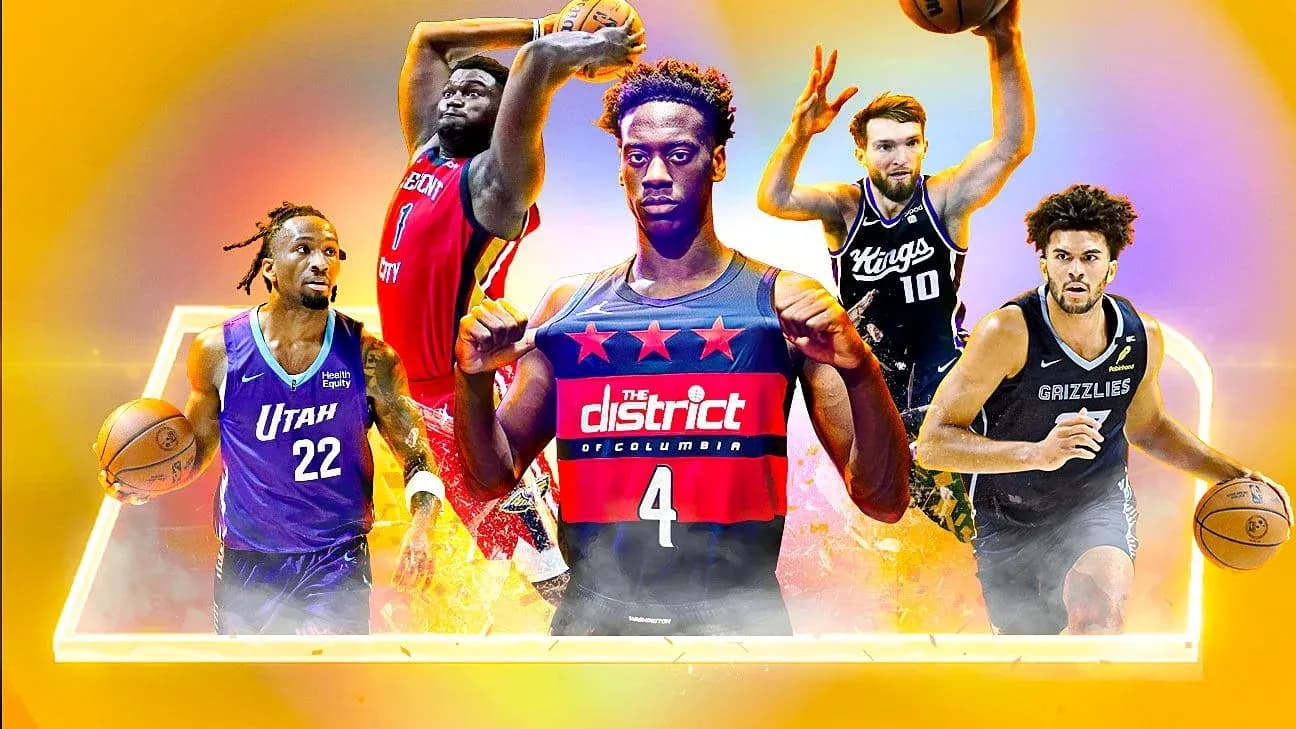
AJ Dybantsa arrives in the league with a label few 19-year-olds ever carry: savior.
Washington’s first No. 1 pick since John Wall, Dybantsa comes in off a blistering freshman year at BYU, where he led the nation in scoring at 25.5 points per game. He’s the first player to top the college scoring charts and then go No. 1 in the draft since Glenn Robinson in 1994. That’s not a casual comp.
He’s a contact magnet at forward, the kind of scorer who lives at the line and doesn’t shy from the physical stuff. The twist? He’s walking into a locker room that already has Anthony Davis, Trae Young and a collection of recent first-rounders. Where he lands in that hierarchy will define both his Rookie of the Year push and whether Washington finally stops living in the lottery.
Ja Morant, meanwhile, shows up in Portland with a different kind of pressure: just be available.
He has played only 79 games over the past three seasons. Now he drops into a backcourt logjam that features Damian Lillard, Jrue Holiday, Scoot Henderson and, when healthy, Shaedon Sharpe. The numbers say the talent is still there — since entering the league in 2019-20, Morant is one of only nine players to average at least 20 points and seven assists. The question is whether he can reclaim the relentless, downhill version of himself that once owned Memphis and the Grizzlies’ record books.
Culture Changers and Defensive Menaces
Dillon Brooks has gone from meme to model.
“Dillon the Villain” is now a culture piece, the kind of veteran teams bring in to change habits. Houston jumped from 22 to 41 wins in his first season there. Phoenix added nine wins last season as he put up a career-high 20.2 points per game and earned a three-year extension. He also finished top 10 in made 2-point jumpers, proof that his game isn’t just noise and bravado.
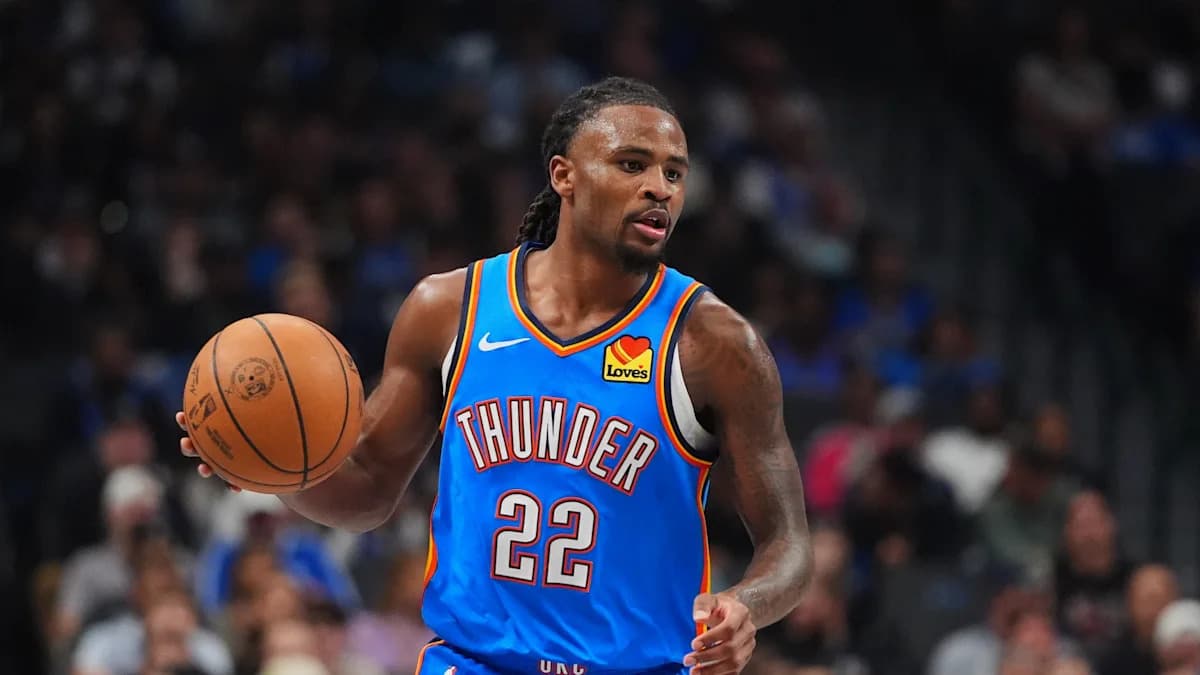
Cason Wallace is the opposite kind of headline: quiet, ruthless, efficient.
He cracks the top 100 for the first time almost entirely on the strength of his defense. The Thunder guard led the league in steals and total deflections, held opponents to 41.6% shooting as the closest defender in the regular season, and then turned the playoffs into a personal clinic. Austin Reaves, Devin Booker, Stephon Castle and Jalen Green shot a combined 25% from three when Wallace was on them. He’s played at least 68 games in each of his first three seasons, including all 82 as a rookie. An All-Defense nod has already arrived. A rookie extension can follow before the Oct. 19 deadline.
In Detroit, Ausar Thompson is building a reputation that needs no qualifiers. You can question his jumper; you can’t question what he does to offenses. He led the league in steals per game and finished second in total deflections, then amped it up in the playoffs with nearly four combined steals and blocks per night. The Pistons have already locked him into a deal that could look like a bargain if he improves even modestly. If not for Victor Wembanyama, Thompson would be sitting squarely in the Defensive Player of the Year conversation.
Big Men with Big Questions
Isaiah Hartenstein has quietly become one of the most important bigs in the league — when he’s actually on the floor.
Injuries have limited him to 94 games over the past two seasons, but his impact in Oklahoma City is obvious. He’s averaged a double-double, ranked fifth in total defensive net points, and turned the Thunder’s interior into a bruising, disruptive space. His size and energy next to Chet Holmgren give OKC one of the most intriguing frontcourt tandems in basketball.
Walker Kessler’s value is more speculative, but the Lakers are all-in.
They sent unprotected firsts in 2031 and 2033, plus pick swaps in 2028 and 2030, to pry him from Utah, then handed him a four-year, $130 million deal. This for a player who logged only five games last season due to a torn labrum in his left shoulder. The bet is clear: Kessler, a 7-foot-2 rim protector who has averaged 2.4 blocks per game — second only to Victor Wembanyama since 2022-23 — will anchor the defense and become Luka Doncic’s ideal lob partner.
In Indiana, Ivica Zubac is asked to do something simpler but just as vital: steady the back line.
He arrived from the Clippers after a season interrupted by injuries, yet his profile remains rock solid. Fourth in the league in rebounding the year before at 12.6 per game, second-team All-Defense, and a brutal last line of resistance at the rim. Opponents shot just 49% at the basket against him last season, fourth best among players who defended at least 200 attempts. For a Pacers team trying to claw back to relevance with a healthy core, Zubac’s rebounding and defense will decide a lot of spring plans.
Domantas Sabonis is coming from the opposite direction: a star trying to prove he’s still a centerpiece.
Sacramento’s 2025-26 season imploded when Sabonis played just 19 games before undergoing season-ending knee surgery. The extended absence was a first in his 10-year career, but his profile remains familiar. He’s one of the league’s most productive offensive hubs, ranking second in double-doubles over the past five seasons, and he just saw his three-year streak of leading the NBA in rebounds per game snapped. The Kings still run through his energy and elite passing, yet his lack of 3-point range and limited rim protection continue to complicate any attempt to build a serious contender around him.
Jarrett Allen sits in a different lane entirely: the perfect dance partner in the pick-and-roll.
Cleveland leaned heavily on his chemistry with James Harden after the former MVP’s arrival. Allen set 13.7 on-ball screens per game for Harden, a top-five figure among any duo that ran at least 100 pick actions together after Feb. 7. The results were devastating. In those 13 regular-season games with Harden, Allen averaged 18.4 points on 70.5% shooting. Over the full season he shot 64% from the field, fifth best among qualified players. The Cavs now get a full year of that partnership.
Guards on the Move, Guards on the Rise
VJ Edgecombe’s rookie year in Philadelphia didn’t just justify his No. 3 draft slot; it stretched it.
He started from Day 1 on a team that reached the second round, averaged 16.0 points, 5.6 rebounds and 4.2 assists, hit 35% from three and finished 11th in the league in minutes played. His 2,623 minutes were the most by a rookie since Ben Simmons and Donovan Mitchell in 2017-18. That kind of workload, at that efficiency, for a playoff team, is not normal.
Keyonte George in Utah was on a different awards track entirely.
He would have been a prime Most Improved Player candidate if not for the league’s 65-game rule. His scoring average jumped by at least 6.8 points, and he joined a group of just 11 players to average at least 23 points and six assists last season. He also became only the second Jazz player, alongside Deron Williams, to reach 3,000 points and 1,000 assists within his first three seasons. With Jaren Jackson Jr. and No. 2 pick Darryn Peterson now in the fold, Utah suddenly looks like a playoff threat — and George’s ranking is likely to climb again.
Nickeil Alexander-Walker is already living that leap.
In his first season with Atlanta, he exploded to 20.8 points per game and career-best efficiency, locked down the starting shooting guard spot, and helped fuel one of the league’s hottest teams down the stretch. No one increased their scoring average more from 2024-25 to 2025-26; his jump of 11.4 points per game was the largest in the NBA. The reigning Most Improved Player now walks into the season with All-Star expectations, not just hope.
Darius Garland, by contrast, is trying to reclaim ground.
He slid down the rankings after playing only 45 games last season and being traded from Cleveland to the Clippers. Yet there were signs of life in Los Angeles: the Clippers went 13-6 in his 19 appearances. A proven shooter — one of 71 active players with at least 1,000 made threes — he ranked 10th in points per direct pick among 51 players who ran at least 1,000 on-ball screens as the handler. In Ty Lue’s matchup-driven offense, Garland’s shooting and pick-and-roll craft become essential spacing tools.
Tyler Herro finds himself in a different kind of reset.
Traded from Miami to his hometown Milwaukee Bucks, then caught in a very public physical altercation with former teammate Bam Adebayo in Las Vegas, Herro now becomes the offensive engine for a rebuilding team that just parted ways with Giannis Antetokounmpo. He arrives as a 2025 All-Star who grew from sixth man to lead initiator with the Heat, and he’ll have a green light in Milwaukee. Last season, he ranked second in points per direct isolation among players with at least 100 isos, trailing only Shai Gilgeous-Alexander. The ball will be in his hands. Often.
Payton Pritchard’s rise in Boston has been more subtle but no less real.
He jumped into a consistent starting role before sliding back to the bench in February, yet still posted career highs in points (17.0), rebounds (3.9) and assists (5.2). His touches per game leapt from 51.8 to 68.9 — the second-largest increase among 33 players who logged at least 4,000 touches in each of the past two seasons, behind only Deni Avdija. Pritchard started 50 games last year after just 17 total over his first five seasons. That’s not an accident; that’s trust.
Desmond Bane brought something Orlando simply didn’t have enough of: reliable shooting.
He played all 82 games — one of just four players to start every night, alongside Toumani Camara, Mikal Bridges and Donte DiVincenzo — and gave the Magic more than 20 points per game for the third time in four seasons. The real value, though, sits beyond the arc. Bane has now strung together five straight seasons with at least two made threes per game on strong percentages. On a team often battered by injuries, his availability and spacing are the spine of their playoff hopes.
Wings Who Define Winning… or Don’t
Paul George lands in Boston as the latest high-stakes gamble for a franchise that just traded away Jaylen Brown.
This will be George’s fourth team after seven years in Indiana, and he arrives off a sharp first-round showing for Philadelphia in a seven-game series win over these same Celtics: 17.4 points per game, 55% from three, plus 4.0 rebounds, 3.0 assists and 1.4 steals. Boston expects him to keep making deep playoff noise and chase a third trip to the conference finals in his 17th season. He also sits on the edge of history, needing just two more made threes to pass Kyle Korver for eighth on the all-time list.
Mikal Bridges remains the league’s iron man and New York’s metronome.
He has played 638 consecutive games, eighth all-time, and could pass Harry Gallatin, Bill Laimbeer and Dolph Schayes this season. His scoring dipped to its lowest level since 2022, but he turned into a sniper in the playoffs, hitting 56% from the field and delivering big shots during the Knicks’ run. His streak is already the second-longest to begin a career, behind only Johnny Kerr’s 844. If his postseason form carries over, the Knicks will have far more than just durability in their corner.
Michael Porter Jr. found something he’d been searching for in Denver: freedom — only he found it in Brooklyn.
Traded to the Nets along with a 2032 unprotected first-round pick, Porter responded with a career-high 24.2 points per game and 36.3% from three. It was his fourth straight season north of 36% from deep, and he delivered 14 games with at least 30 points, more than double his previous best. A late-season left hamstring strain slowed him, but he had missed just 14 games total since 2023-24 before that. Now he enters the final year of his $40.8 million deal, eligible for four more years and up to $234 million. The stakes for both sides could not be clearer.
Trey Murphy III has become the archetype every contender wants: a true 3-and-D forward with upside.
He’s a career 38% shooter from deep on high volume and ranked sixth in 3-point makes per game last season. Quietly, he’s also added more to his game, increasing his assist average in every season of his career. The numbers hint at untapped creation. The history is already rare: last season he became just the second player ever to post at least 200 made threes and 100 dunks in a single season, joining Lauri Markkanen’s 2022-23 campaign. No wonder he’s one of the league’s most intriguing trade chips.
Jaden McDaniels, often pigeonholed as a defensive specialist, broke that box open.
He climbed 19 spots in the rankings after a career year on offense: 14.8 points, 2.7 assists and a blistering 41% from three. In the playoffs, he erupted for 32 points in a Game 6 win that eliminated Denver in the first round. Defensively, he remained one of the league’s most trusted stoppers, defending 2026 All-Stars for 1,163 matchups — fourth most in the NBA. With Julius Randle and Naz Reid traded and Donte DiVincenzo out most of the year with a torn right Achilles, McDaniels will carry a heavier offensive load even with LaMelo Ball now in Minnesota.
Julius Randle, now in Brooklyn, arrives with numbers that impress and questions that linger.
He dropped 20-plus points per game for the fifth time in six seasons and was one of only four players to post at least 1,500 points, 500 rebounds and 300 assists last year. Then the playoffs hit, and his production cratered: five fewer points per game, 39% from the field, 24.4% from three. Minnesota moved him to the Nets, who desperately need someone to juice an offense that ranked 30th. There’s reason to think he can help; in lineups where Minnesota played without a point guard, Randle averaged 5.0 assists. He has two years left on his deal, including a player option for 2027-28. This stop will say a lot about how the league views him going forward.
Brandon Ingram, now with the Clippers, sits in that same gray zone.
He won Most Improved Player in 2019-20 and has essentially hovered at that level ever since, scoring between 20 and 25 points every season for seven straight years. The efficiency is roughly league average, the usage high, the counting stats clean. Yet he’s now on his third team in three seasons because his overall impact hasn’t matched the shine of his scoring totals. He remains one of the league’s premier midrange operators — his 197 made midrange shots last season trailed only DeMar DeRozan and Kevin Durant — but how much he affects winning beyond getting buckets is still an open debate.
Aaron Gordon doesn’t inspire that kind of argument in Denver. His impact is right there in the win column.
With Gordon in the lineup last season, the Nuggets played at a 62-win pace. Without him, that dropped to 48. He then fought through a calf issue in the playoffs as Denver crumbled in the first round. The concern is durability: he has averaged just 53 games played in the three seasons since their 2023 title run, and his slide in the rankings reflects a growing fear that injuries are becoming chronic. When he’s on the floor, though, his activity, experience and defensive versatility still make him the ideal complement to Nikola Jokic and Jamal Murray. He has also quietly reinvented his shot, hitting 41% from three over the past two seasons after sitting at 32% across his first 10 years.
Jaren Jackson Jr. will try to bring that same kind of two-way edge to Utah.
Acquired in a flurry of Jazz moves in February, the former Defensive Player of the Year played only three games for his new team but arrives with a well-established profile: 18.6 points, 5.6 rebounds and 1.9 blocks per game for his career. He ranked in the top 10 in effective field goal percentage allowed as the contesting defender among players who challenged at least 800 shots last season. Slotted next to Lauri Markkanen, Keyonte George, Ace Bailey and No. 2 pick Darryn Peterson, Jackson is a central piece of Utah’s push for its first playoff berth since 2022.
Legends, Iron Men and Enigmas
Damian Lillard’s return to Portland will feel like a homecoming and a test.
He missed all of last season with an Achilles injury and now re-enters a backcourt that just added Ja Morant. The last time he played, he was still a 25-point scorer who hit 38% from three. He remains the franchise’s all-time leading scorer and ranks second in assists. After a detour away from the Blazers, he’ll pull on their jersey for the first time since 2022-23. The emotion will be real. The expectations, too.
On the opposite end of the spectrum sits Zion Williamson, whose story has shifted from “if he’s healthy” to “is this all he is?”
He played 62 games last season, the second-highest total of his career, and yet his impact felt strangely muted. His usage rate and scoring average dropped to career lows, with 21.0 points per game. The raw dominance is still there in flashes — he led the league with 15.4 paint points per game among players who appeared in at least 40 contests — but the total package hasn’t evolved. His defensive limitations and lack of shooting range make him a complicated fit in modern lineups, and he hasn’t made an All-Star team since 2023.
Once, Williamson was a high-risk, high-reward enigma: rarely available, unstoppable when he was. Now, in his mid-20s, he looks more ordinary than anyone expected.
The league doesn’t wait. Not for injured stars, not for former prodigies, not for names that used to carry more fear than they do now. From Dybantsa’s first step in Washington to Zion’s next one in New Orleans, this tier of players will decide a lot about who rises and who gets left behind in the NBA’s next era.