Abhishek Sharma's 30-ball T20I Century Shatters Records in Delhi
On a clear Delhi night, Abhishek Sharma didn’t just score runs. He detonated them.
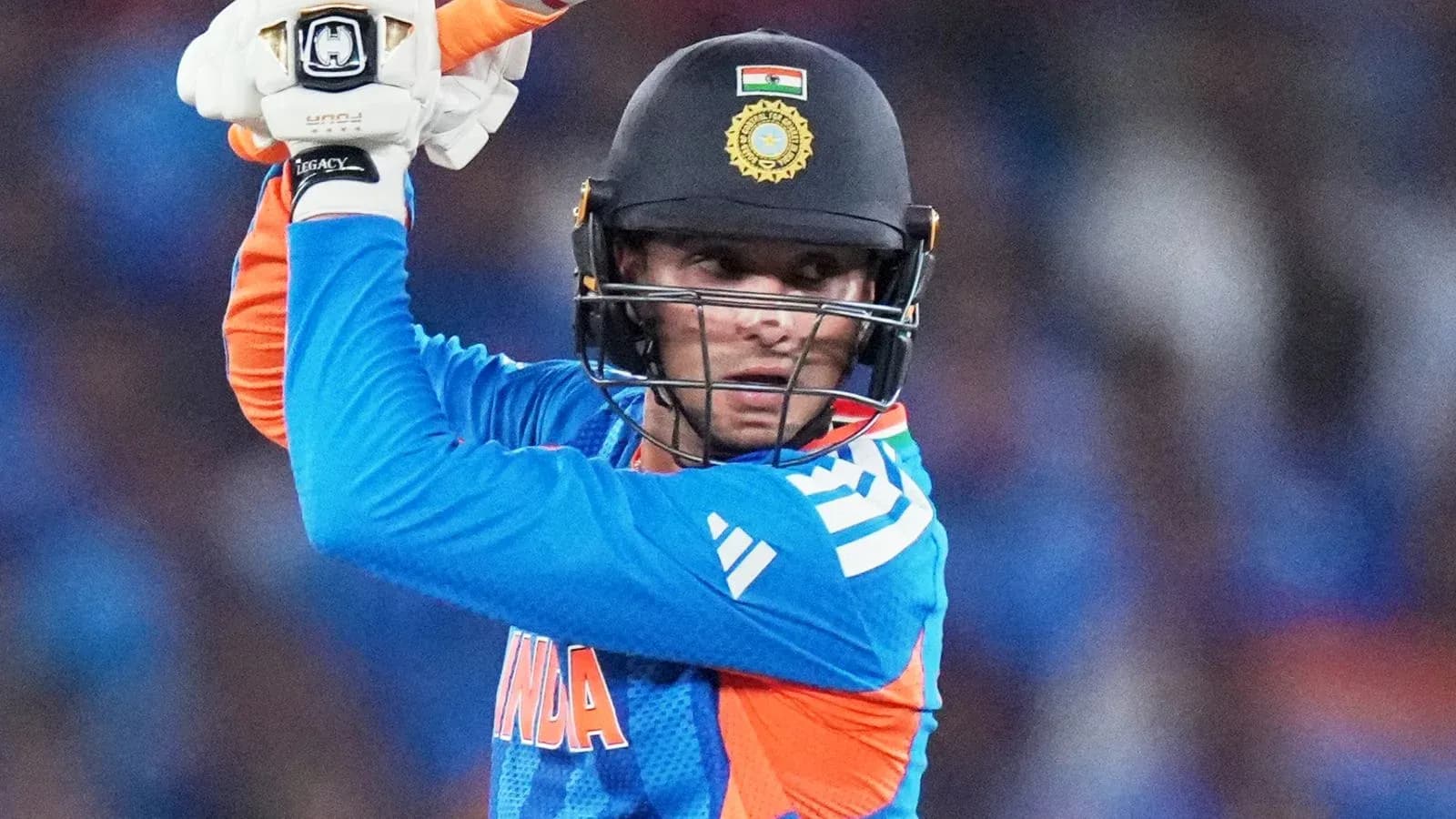
In 34 balls of audacious hitting against Afghanistan, the left-hander blasted 108 and rewrote T20I history, racing to his hundred in just 30 deliveries – the fastest T20 international century by a batter from a Test-playing nation.
Eleven sixes. Nine fours. One stunned opposition. And a record that had seemed safely parked with two of the game’s most explosive hitters.
A new benchmark for the big boys
Until this innings, the benchmark for players from Test nations sat at 33 balls, shared by New Zealand’s Finn Allen and Zimbabwe’s Sikandar Raza. Abhishek sliced three balls off that mark, turning what had been a high bar into a blur.
Allen’s hundred had come on a grand stage, in a T20 World Cup semi-final against South Africa in Kolkata earlier this year. Raza’s had arrived against Gambia in October 2024. Both felt like outliers, the kind of once-a-career assault bowlers remember for years.
Abhishek made it look like a routine demolition.
His 30-ball hundred is also now the quickest in a T20I contested between two Test-playing countries, a niche but fiercely contested slice of history in an era dominated by power-hitting.
The absolute world record remains with Estonia’s Sahil Chauhan, who reached three figures in 27 balls against Cyprus in 2024. Turkey’s Muhammad Fahad sits just behind with a 29-ball ton against Bulgaria a year later. In the women’s game, West Indies star Deandra Dottin still owns the mark with a 38-ball hundred against South Africa in St Kitts back in 2010.
On Thursday in Delhi, Abhishek muscled his way into that elite conversation.
India crush Afghanistan, seal 3-0 sweep
The onslaught powered India to 221-7, a total that felt imposing the moment the ball left Abhishek’s bat for the final time. Afghanistan never came close.
Chasing 222, they crumbled to 94 all out, bundled out in 14.1 overs as India completed a ruthless 3-0 series sweep. The gulf between the sides, already clear, widened with every wicket.
Abhishek’s night wasn’t confined to the bat. In the field he chipped in with a catch, while Nitish Kumar Reddy ripped through the middle order in the 12th over, claiming three wickets and slamming the door on any faint hopes of resistance.
By then, the contest had long since shifted from “can Afghanistan chase this?” to “how quickly will this end?”
Climbing India’s T20I pantheon
This was not a one-off eruption. Abhishek now has three T20 international hundreds, the third-most by an Indian. Only Rohit Sharma, with five, and Suryakumar Yadav, with four, sit ahead of him.
Rohit also held India’s previous record for fastest T20I century – a 35-ball blitz against Sri Lanka in Indore in 2017. That, too, has now been left behind.
The remarkable part? Abhishek has gone even faster in domestic cricket. Earlier in 2024, he smashed a 28-ball hundred for Punjab against Meghalaya, a warning shot that Thursday’s carnage in Delhi was coming.
This time, though, the stage was bigger, the opposition stronger, the stakes higher. And he still batted as if time didn’t apply to him.
Records can be broken in quiet corners of the cricketing map. They can arrive in low-profile fixtures and slip under the radar. This one didn’t. This was a statement, delivered at full volume.
If this is how Abhishek Sharma bats at the start of his international journey, the real question is not what records he has broken already, but how many more he is going to chase down.