
Abhishek Sharma’s 30-ball Century Shines in Delhi
The lights at Arun Jaitley Stadium had barely taken full effect when Abhishek Sharma turned a routine Thursday night into a landmark one.
On a humid Delhi evening where Afghanistan chose to chase for the first time in the series, the left-hander detonated their attack, racing to a 30-ball hundred and finishing on 108 off 34. It was not just the fastest T20I century by a batter from a Full Member nation; it was an innings that bent the entire contest to India’s will before the halfway mark.
By the time Rashid Khan finally found an outside edge and Rahmanullah Gurbaz completed the catch, India were 142 for 1 in the 10th over, and the game felt all but gone.
Toss to turmoil
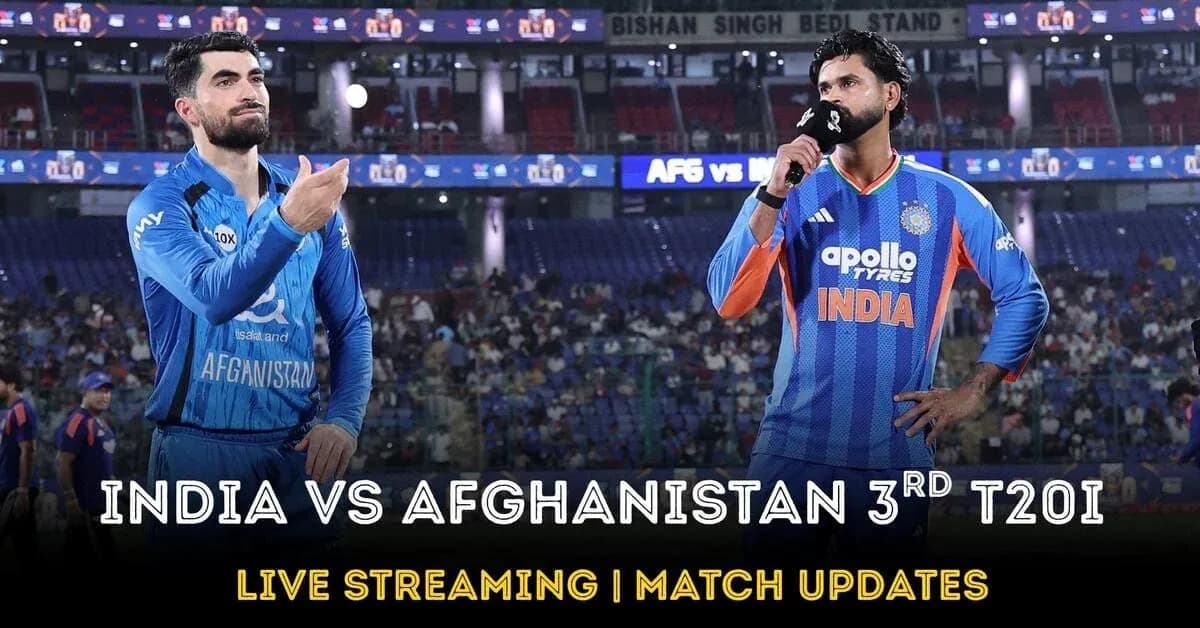
Afghanistan captain Ibrahim Zadran won the toss and did what most visiting captains do in Delhi – he bowled. With some cloud cover, high humidity and a hint of early assistance expected, it was a logical call. India’s Shreyas Iyer, though, was not complaining.
“We would have batted first,” he said before the start, embracing the “fun challenge” of setting a total after two serene chases had already sealed the series 2–0.
India made a single change: Yash Thakur for Arshdeep Singh, with Vaibhav Sooryavanshi still waiting for a debut. Afghanistan went for two, bringing in Noor Rahman and Abdullah Ahmadzai for Gulbadin Naib and Noor Ahmad, keeping their trusted spin pair of Rashid and Mujeeb ur Rahman intact.
On paper, the script looked familiar. Afghanistan, having struggled to post competitive scores in the first two games, would lean on their bowlers, then hope their batting could finally avoid another early collapse.
Abhishek tore that script to shreds.
A powerplay from another planet
The first over from Fazalhaq Farooqi was a gentle prelude: five runs, a single boundary, India 5 for 0. Measured, almost cautious.
Then the game changed pace.
Azmatullah Omarzai’s first over went for 17 to Abhishek alone. A swivelled six over deep square leg. A sliced four down the ground. Another six over deep extra cover. By the end of the second over, India were 22 without loss, and the left-hander was already 20 from eight balls.
Farooqi returned and was greeted with a barrage. Abhishek launched him straight for six, then helped a short ball over fine leg for another. A pulled four, a top-edged boundary, and 23 runs later, India were 45 for 0 after three. Delhi, so often a tricky surface in the past, now looked like a batting highway.
Sanju Samson, content to play second fiddle early, joined in against Mujeeb. After being beaten by turn, he cleared his front leg and sent a tossed-up ball soaring straight for six. India reached 56 without loss after four overs, Abhishek on 46, the crowd already sensing something special.
The onslaught peaked in Mohammad Nabi’s first over. Samson greeted the veteran off-spinner with back-to-back sixes, then survived a simple chance as Zadran spilled him at mid-off. The reprieve brought up 9,000 T20 runs for Samson. It also unleashed Abhishek again: a six over long-on to raise his fifty, a cut four, and another six to close the over. Twenty-nine runs, India 85 for 0 after five, Afghanistan visibly rattled.
Rashid Khan, the man teams usually turn to when chaos needs calming, was dragged into the storm. His first over went for 15. Abhishek, beaten once by turn, responded with two rasping fours through extra cover and sweeper, then a towering six over the off side. India reached 100 without loss at the end of the powerplay. Abhishek had 76 off 22; Samson 24 off 14. This was brutality dressed up as timing.
History in real time
Abdullah Ahmadzai’s introduction did little to stem the flow. Samson slapped him to deep backward point for four, Abhishek picked off another boundary, and India moved to 109 without loss after seven.
Mujeeb’s return only fed the fire. Abhishek rocked back to launch him over long-on, then finished the over by drilling another six straight down the ground. After eight overs, India were 124 for 0. Abhishek stood on 93 from 28 deliveries; Samson had quietly moved to 31.
The ninth over brought the moment that will live far beyond this series. Samson nudged a single, Abhishek stepped down and muscled Ahmadzai over the rope to move to 99. The next ball, he simply pushed down the ground to bring up his third T20I hundred – this one in just 30 balls.
Fastest T20I century by a batter from a Full Member nation. In Delhi. In a dead rubber that suddenly felt like a marquee occasion.
Helmet off, Abhishek dropped into a meditation pose, the stadium roaring around him. India 134 without loss after nine. Afghanistan’s bowlers, already under pressure after two defeats, had been dismantled.
Rashid strikes back, briefly
Rashid’s third over finally ended the carnage. Before that, Abhishek had added another six over long-on and a single, taking him to 108 off 34, with nine fours and 11 sixes. Samson continued to tick along, but the leg-spinner held his nerve.
Tempting Abhishek with a googly wide of off, Rashid drew a big swing over extra cover. The thick outside edge carried to Gurbaz, who made no mistake. Abhishek reviewed, more in hope than conviction, but UltraEdge showed a clear spike. India were 142 for 1 after 9.5 overs at drinks, the damage already terminal.
From there, the innings shifted gear. Samson, now the senior man at the crease, took charge without losing his tempo. He launched Mujeeb over long-off for six, worked the gaps, and steered India to 152 for 1 after 11 overs. Tilak Varma, promoted to No. 5, managed just two before a moment of hesitation cost him his wicket. Rashid swooped on a ball nudged back towards him and hit the non-striker’s stumps with a direct hit. Tilak was gone for 2 from 5.
Shreyas Iyer walked in with licence to swing, nudged Rashid for a single, and watched Samson continue his quiet accumulation. Singles, nudges, a punch down the ground – nothing flashy, everything controlled.
Mujeeb’s final over, the 13th of the innings, underlined Samson’s composure. He stepped leg side to loft straight for four, flicked to deep mid-wicket, and then eased another single to long-on to reach a second consecutive T20I fifty, this one from 34 balls. India were 164 for 2 after 13, the platform set for a final assault.
Selection calls and looming questions
Behind the fireworks lay the quieter storylines that matter in a T20I year.
India’s decision to retain their top order – Abhishek, Samson, Ishan Kishan and Iyer – reflected growing faith in a group that has already delivered two comfortable chases in the series. Shivam Dube, Axar Patel and Nitish Kumar Reddy again offered middle-order ballast and extra bowling options, with Ravi Bishnoi and Jasprit Bumrah anchoring the attack. Yash Thakur’s inclusion ahead of Arshdeep added a fresh pace option without disrupting the batting template.
Afghanistan’s changes spoke of a team searching for balance. Noor Rahman and Ahmadzai came in to bolster the bowling, but their top order remains under scrutiny. Gurbaz, dismissed for ducks in both previous games and struggling badly against Bumrah in T20s, faces another stern examination. Zadran’s own runs have been solid but insufficient, and long rebuilds from the middle and lower order – first Omarzai’s 64 rescuing them from 43 for 5 in the opener, then late blows from Nabi and Rashid in the second game – have not translated into winning totals.
The match-ups underline the challenge. Rashid has dismissed Abhishek twice in six T20 innings, yet the left-hander still scores at a staggering strike rate of 237.77 against him. Iyer, by contrast, has fallen to Rashid three times and scores at a far more modest 120. Gurbaz’s strike rate of 37.50 against Bumrah tells its own story.
On a pitch offering “plenty of runs” but just enough with the new ball to interest the seamers, Afghanistan needed early wickets. They got none. They needed Rashid and Mujeeb to apply a squeeze. Abhishek blew that plan apart inside six overs.
Now the equation is brutally simple. Afghanistan, the designated hosts in Delhi, must chase under lights against a high-class Indian attack, with a series already lost and a top order short on runs. India, with a clean sweep in sight and the Asian Games looming, have found a new batting talisman and a top order that looks increasingly difficult to contain.
Abhishek’s 30-ball hundred may have started as a “fun challenge” for India. For Afghanistan, it has become a stark question: how do you stop a batting unit that is only just discovering the full extent of its power?





