.svg&w=384&q=75 "logo")
Aatif Nawaz Critiques PCB's Coach Dismissals After Lord’s Defeat
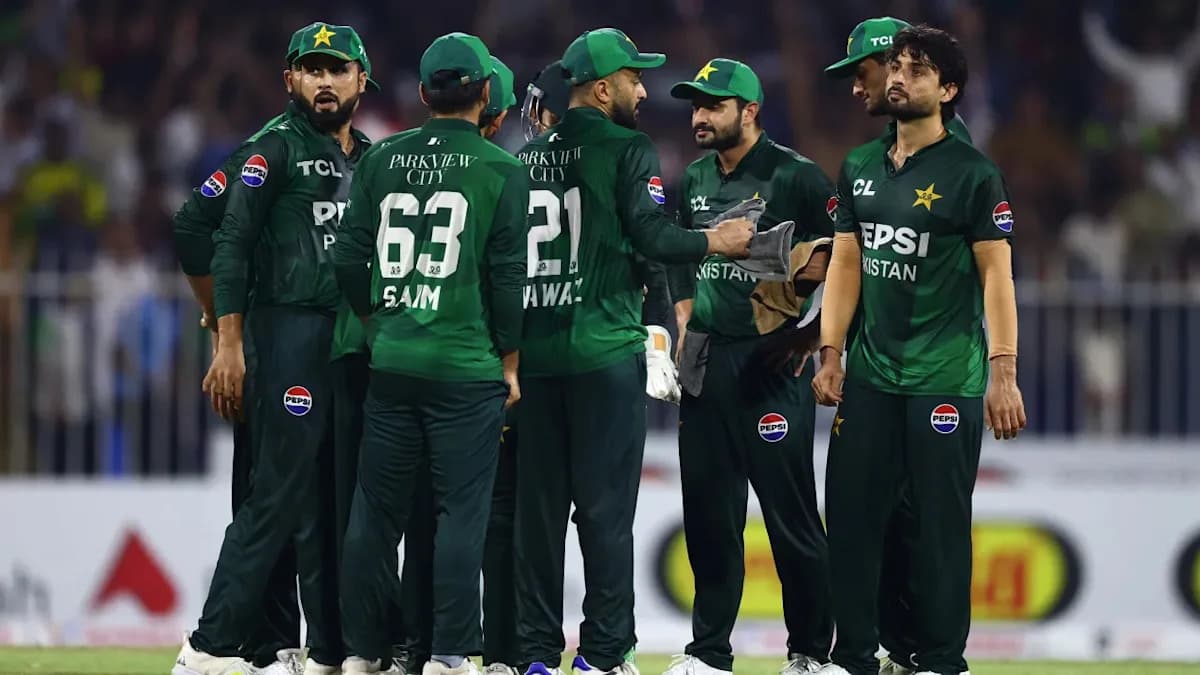
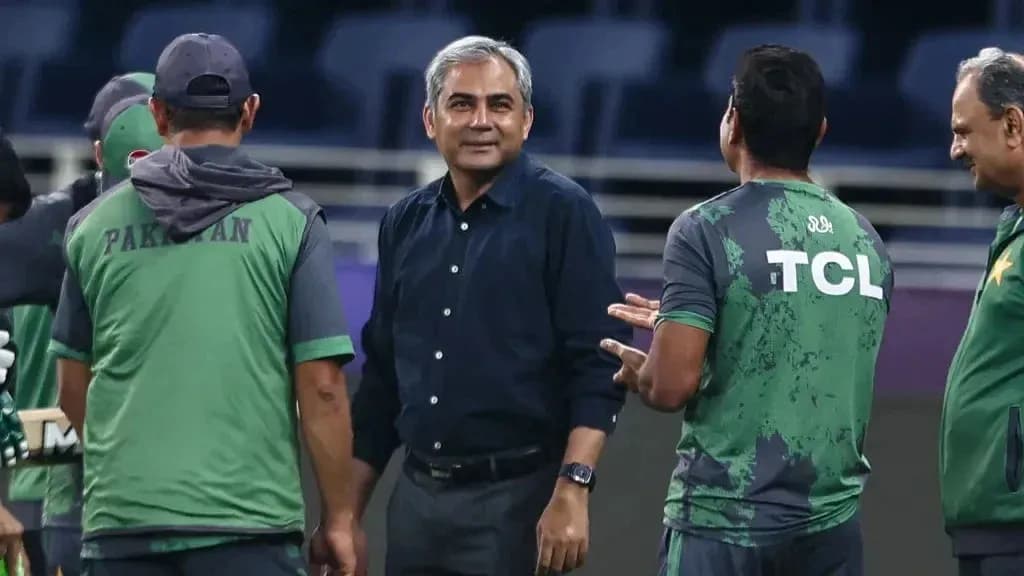
The dust had barely settled on Pakistan’s series defeat at Lord’s when the axe swung. Hard. Seven players sent home, the head coach dismissed, the bowling coach removed, five uncapped players summoned for a dead-rubber at Edgbaston.
For many, it felt drastic. For Aatif Nawaz, it felt senseless.
The British-Pakistani broadcaster, speaking on the For The Love Of Cricket podcast alongside Stuart Broad and Jos Buttler, did not tiptoe around the Pakistan Cricket Board’s reaction to the 2-0 loss in England. He went straight for the decision that baffled him most.
“Get rid of your head coach, get rid of your bowling coach. What’s the bowling coach done?” he asked. “His bowlers took enough. They took all the wickets. At least the bowlers at Lord’s got the wickets.”
The numbers back him up. Pakistan’s batting folded repeatedly, failing to reach 200 in any of their four innings in the series. The bowlers, led by Mohammad Abbas, kept dragging them back into contests their batters had already surrendered. Abbas took nine wickets at Lord’s and wrote his name onto the honours board. Days later, the man in charge of that attack, Umar Gul, was out of a job.
That, for Nawaz, is the heart of the absurdity.
Batting chaos, bowling blamed
Nawaz made no attempt to defend Pakistan’s batting. He called it what it was: unacceptable. A top order that never settled, a middle order that never resisted, a line-up that never once put England under serious scoreboard pressure.
But as he pointed out, the PCB’s response bore little resemblance to the root of the problem.
“It just seemed like the kind of move you do when you’re trying to placate the angry voices in your country,” he said. A purge, not a plan.
Sacking the head coach after a heavy defeat is one thing. Removing the bowling coach when the bowlers have done their job is another. It sends a different sort of message: that performance is almost incidental when the board feels the need to be seen “doing something”.
A system nobody can follow
Nawaz then widened the lens. This wasn’t just about one bad week in England. This was about a pattern.
“It’s very hard to keep track of who’s the batting coach, who’s the bowling coach, who’s your chief selector, who’s your captain, who’s your vice captain,” he said, laying bare the churn that has become a grim hallmark of Pakistan cricket.
His example was pointed. “He could be captain one game and then the 12th man the next, as Salman Agha found out in this test series.”
That single line captured the chaos. Roles that should be earned and protected are instead shuffled at dizzying speed. Captains demoted, fringe players promoted, coaches discarded, selectors rotated. Continuity becomes a luxury; clarity, an afterthought.
The latest cull only deepened that sense of volatility.
The dead rubber defence – and its cost
Nawaz did acknowledge there is at least one argument in the PCB’s favour. With the series already lost, the third Test at Edgbaston is a dead rubber. Change, in that context, can be justified.
“It’s a dead rubber. You could say if you play the same 11, they would be bound to get dominated by England again. So you have to try something drastically different. That’s the defence of the move, I suppose,” he said.
Five uncapped players have been drafted in. On paper, it looks like opportunity. Fresh faces, fresh energy, a chance to see who can handle the heat of Test cricket in England.
Yet the manner of the overhaul – seven players dumped, two coaches removed in one sweeping announcement – carries a different weight. It feels less like a considered reset and more like a public execution after a bad week.
And that, Nawaz warned, is where the real damage lies.
A chilling message to red-ball hopefuls
His deepest concern wasn’t for those already in the dressing room. It was for those still dreaming of getting there.
“What kind of message are you sending to the next generation of Pakistan cricket players who want to play red-ball cricket for Pakistan? Why would they want to do that?” he asked.
It’s a brutal question, but a necessary one. Pakistan already loses players to the global franchise circuit. T20 leagues offer money, security, and a clear calendar. Test cricket, by contrast, demands time, sacrifice and patience. If, on top of that, it offers no job security, why would a young player commit to it?
Nawaz believes that if Test cricketers in Pakistan live under constant threat of being discarded after one poor series, the next generation will simply pivot towards white-ball cricket. They’ll chase T20 contracts rather than a Test cap.
On this evidence, who could blame them?
Punishing the one department that worked
Strip away the emotion and one detail still refuses to fade: the bowling.
At Lord’s, Abbas was relentless and skilful, his nine wickets a reminder of Pakistan’s enduring fast-bowling pedigree. The attack, as Nawaz stressed, did its part. It created chances, took wickets, and gave Pakistan a foothold in conditions where their batters repeatedly let them down.
Yet the man tasked with shaping and guiding that group, Umar Gul, lost his job in the same breath as the head coach. No nuance. No distinction between what worked and what failed.
When a board responds to a series defeat by discarding seven players and two coaches in one go, it sends a clear signal. Not about standards, but about panic. About optics. About the need to appease fury at home rather than calmly diagnose what went wrong.
The PCB can argue that Edgbaston is a fresh start, a chance for new blood and new ideas. The scoreboard will eventually tell its own story. But for every young fast bowler watching Abbas shine at Lord’s while his coach is shown the door, another question now hangs in the air.
If even success isn’t safe, what, exactly, is the price of failure?