2026-27 Fantasy Forward Risers and Sleepers
The 2026-27 forward pool doesn’t just look different. It feels different.
LeBron James is gone from Los Angeles. Giannis Antetokounmpo has changed coasts and conferences. Rotations have been ripped up, rebuilt and, in some cases, left with gaping holes at power forward and on the wings. That chaos is exactly where fantasy managers find their edge in Yahoo’s High Score format.
Minutes are up for grabs. Usage is on the move. And a handful of forwards are walking into roles the market hasn’t fully priced in.
Forward Risers
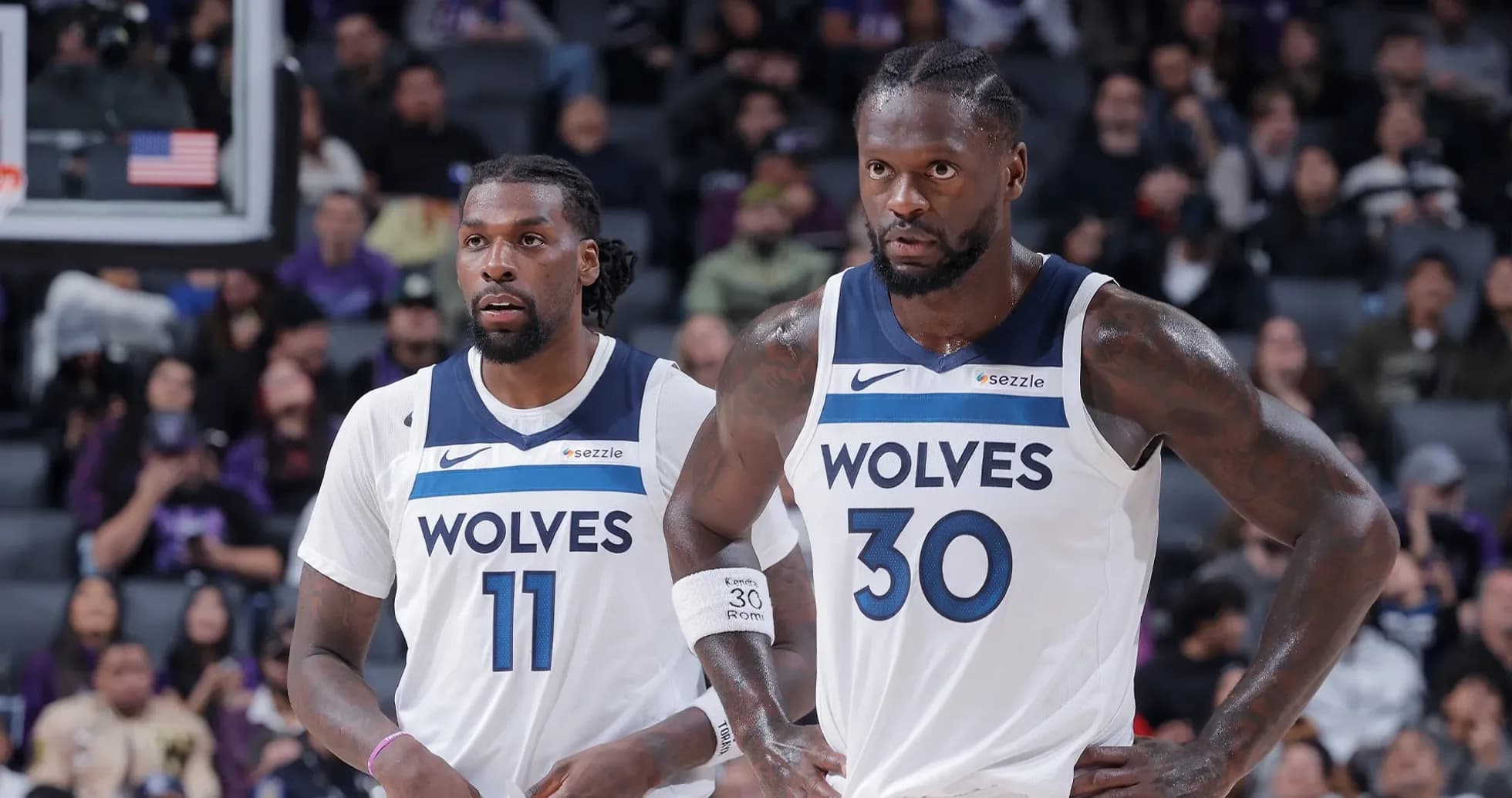
Naz Reid, Charlotte Hornets
Naz Reid has spent years looking like a starter trapped in a sixth man’s body of work.
In Minnesota, the talent was obvious, but the depth chart was unforgiving. Rudy Gobert and Julius Randle soaked up frontcourt minutes, and Reid topped out at 26 minutes per game last season. Even in that limited run, he delivered 13.6 points, 6.2 rebounds and 2.2 assists.
Charlotte changes everything.
The Hornets went hunting for size this summer and cleared out shots with Miles Bridges moving on. Reid now walks into a frontcourt that needs his scoring, his stretch shooting and his defensive activity. For the first time, 30-plus minutes a night isn’t a fantasy; it’s a realistic expectation.
His career numbers as a starter tell the story: 15.5 points, 7.1 rebounds, 2.0 assists, 1.8 threes, 1.1 steals and 1.2 blocks across 77 games. That profile lands around 33.5 High Score points per game before you even factor in a potential bump in role and confidence. In this format, where steals and blocks punch above their weight, his defensive mix is gold.
Reid’s ceiling nights as a stretch big can spike into the 40s. With an ADP of 65 on Yahoo, he doesn’t just look viable. He looks underpriced.
Julius Randle, Brooklyn Nets
Minnesota’s other big outbound move dropped Julius Randle into a franchise that badly needed a focal point.
Brooklyn is retooling around Michael Porter Jr. and injecting youth with rookie guard Mikel Brown Jr., but Randle arrives as the proven engine. This is familiar territory. He has averaged at least 20 points in five of the last six seasons and has already shown what happens when a team hands him the keys.
In 2022-23 with the Knicks, Randle posted 25.1 points, 10 rebounds and 4.1 assists on a 29.5% usage rate. That line translates to roughly 43 High Score points per night before steals and blocks even enter the equation. Minnesota never let him reach that level of involvement; his usage there never climbed above 26.5%.
Brooklyn can.
On a roster still sorting out its pecking order, Randle is the ready-made hub. In a weekly best-score format, a forward capable of detonating for 30-15-6 doesn’t just help. He warps matchups. When he hits, it feels like cheating the system.
Andrew Wiggins, Miami Heat
Miami didn’t just trade for Giannis Antetokounmpo. It tore up its identity in the process.
Tyler Herro and a chunk of the Heat’s young depth went to Milwaukee, leaving a new core: Giannis, Bam Adebayo, Davion Mitchell’s playmaking and point-of-attack defense, and veteran shooting from Tim Hardaway Jr. and Klay Thompson.
That structure begs for a third scorer. Andrew Wiggins fits the vacancy.
Even in a modest role last season, operating on a 19.4% usage rate, Wiggins produced 15.4 points, 4.8 rebounds, 2.7 assists, 1.1 steals and 1.0 blocks. That’s about 32 High Score points a night. Before that, he had cleared 20.9% usage every season, and at 24.5% two years ago he averaged 18 points.
The quiet killers in his profile are the steals and blocks. In this scoring system, they stack up fast, especially on nights when his scoring ticks up as the third option behind Giannis and Bam.
At an ADP of 110, Wiggins doesn’t need a career year to beat his draft slot. He just needs the ball a little more often.
Forward Sleepers
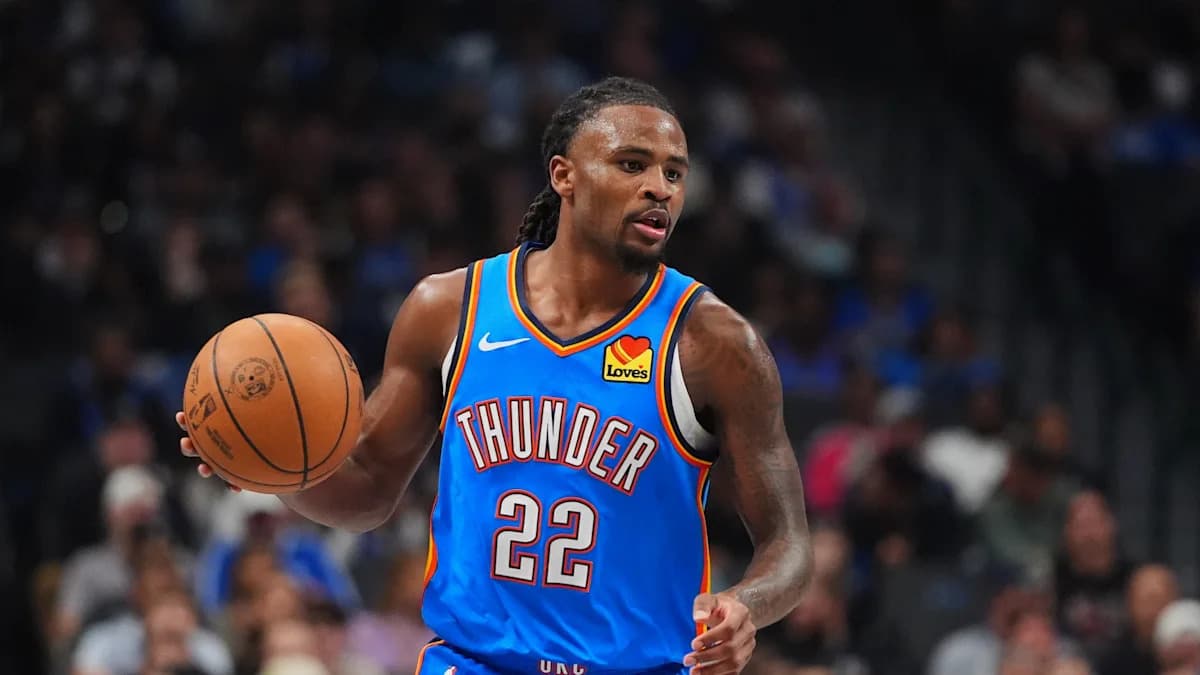
Jaime Jaquez Jr., Milwaukee Bucks
Jaime Jaquez Jr. has already lived a full NBA arc in three seasons: promising rookie, sophomore dip, then a sharp rebound last year.
His response was emphatic. Jaquez averaged 15.4 points, 5.0 rebounds and 4.7 assists in 28 minutes per game, while lifting his field goal percentage to 50.7% from 46.1%. That growth made him a central piece of the package Milwaukee demanded for Giannis.
The Bucks now walk into a new era. Tyler Herro becomes the primary scorer, with Ryan Rollins beside him, Kevin Porter Jr., Kyle Kuzma and Myles Turner in the rotation, and young pieces Brayden Burries and Nate Ament pushing for time. In that mix, Jaquez projects as the stabilizer — the connector who plays heavy minutes and touches every part of the box score.
His 4.7 assists alone are worth 9.4 High Score points. His low-volume three-point shooting, which can be a drag in other formats, doesn’t cost him here. If his role grows as expected, career highs across points, rebounds and assists are firmly on the table.
Managers looking for a forward who quietly fills every column will find him in Milwaukee.
Collin Murray-Boyles, Toronto Raptors
On paper, the path looks blocked. Jakob Poeltl is locked in through 2029-30 at more than $27.3 million per year and should open as Toronto’s starting center.
Reality has been less stable.
Poeltl played just 46 games last season and has failed to clear 57 appearances in each of his three full seasons with the Raptors. Collin Murray-Boyles stepped into that void and didn’t look like a stopgap. Across 22 starts, he averaged 9.1 points, 5.7 rebounds, 2.7 assists, 1.1 steals and 1.2 blocks.
That rookie line comes out to roughly 27 High Score points, with about a quarter of that haul coming purely from steals and blocks. For this format, that defensive activity is exactly what you want from a late-round forward.
Toronto also just freed up 22 minutes per game with Sandro Mamukelashvili’s move to the Lakers. Those minutes won’t all land in Murray-Boyles’ lap, but they don’t need to. A modest bump, combined with his disruptive defense, makes his ADP of 122 look light.
If Poeltl’s durability issues persist, Murray-Boyles has the profile to jump from deep sleeper to weekly lineup fixture.
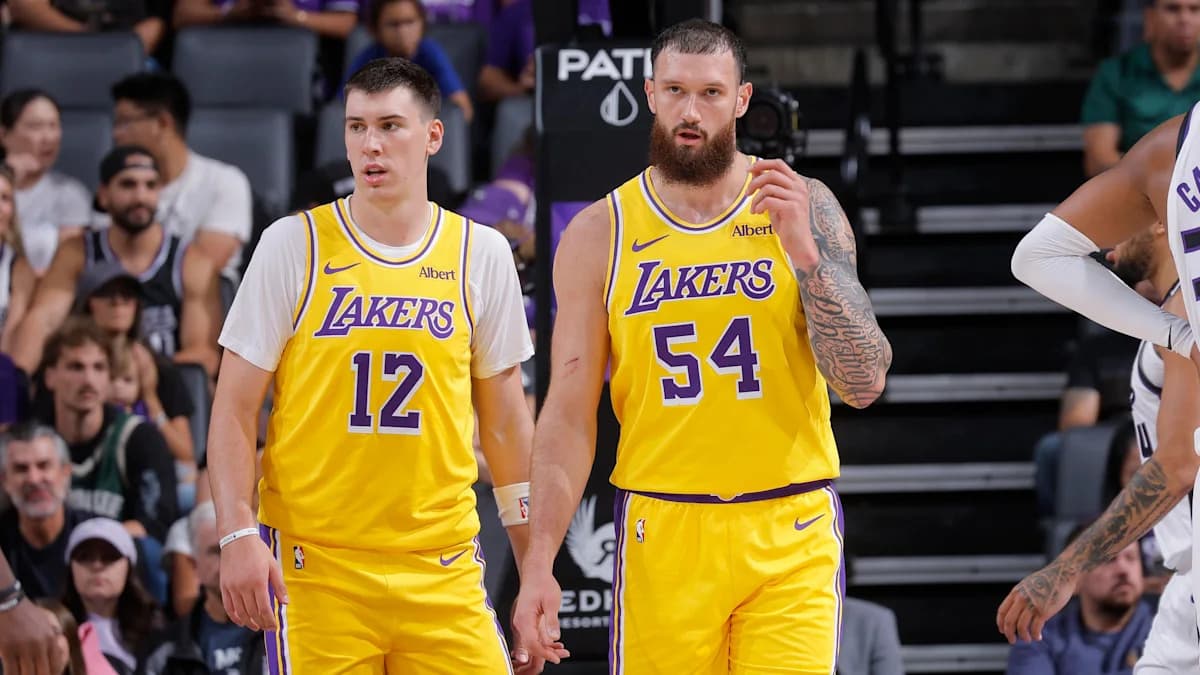
Sandro Mamukelashvili, Los Angeles Lakers
Sandro Mamukelashvili’s breakout didn’t happen in a marquee market, but fantasy managers should not ignore what Toronto unlocked.
Before last season, he had never topped 15.3 minutes per game. The Raptors handed him 22 minutes a night across 80 games, and he responded with 11.2 points, 4.9 rebounds and elite efficiency: 38.9% from three and 52.3% overall.
The Lakers took note.
Needing size and shooting in the post-LeBron era, they committed four years and $52 million to Mamukelashvili. With James gone, there are power forward minutes available next to Jake LaRavia, and another jump in playing time is firmly in play.
There is one important High Score wrinkle: three-point shooting doesn’t get its own category. His fantasy value leans on the rebounds and defensive stats that come attached to that larger role, not just the spacing he provides on the floor.
At an ADP of 114, though, the bet is simple. If the Lakers trust him with a bigger slice of the frontcourt rotation, the counting stats will follow — and late in drafts, that’s exactly the kind of upside you want to chase in a changing league.