Zverev Wins U.S. Open Final, Claims Second Grand Slam Title
NEW YORK — The noise started long before the first ball was struck. It ended in a hush.
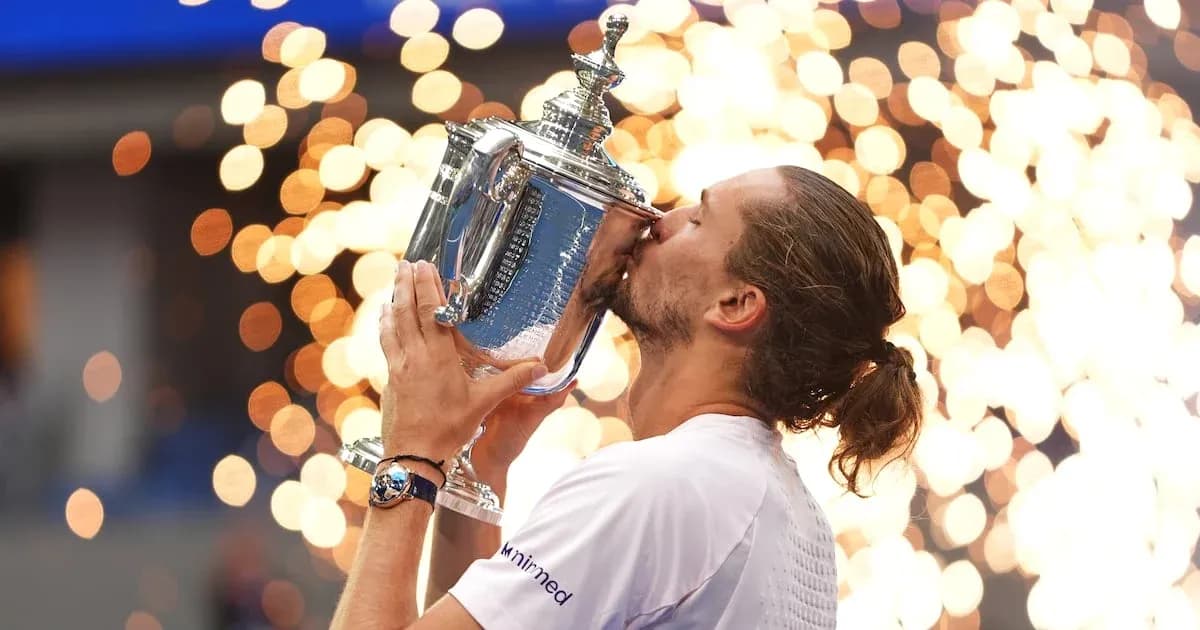
Alexander Zverev walked into Arthur Ashe Stadium on Sunday night as the world No. 1 seed and walked out as a two-time Grand Slam champion, beating Ben Shelton 6-3, 7-6 (2), 5-7, 6-2 in the U.S. Open final. His season of reckoning now includes Roland Garros and New York, and with it, another painful chapter for American men’s tennis.
The wait goes on. Twenty-one years and counting since Andy Roddick in 2003.
Zverev’s year of redemption
This was the title Zverev once let slip through his fingers. In 2020, he led Dominic Thiem by two sets in this same stadium and got within two points of the trophy before unraveling, becoming the first man since 1949 to lose a U.S. Open final from two sets up. That scar sat on his résumé for four long years.
It doesn’t anymore.
He finally cracked the Grand Slam code in June on the clay of Paris, and he arrived in New York this time as a different presence: battle-hardened, world No. 1 seed for the first time at a major, and fresh off a Wimbledon final run where Jannik Sinner stopped him one step short.
When Sinner withdrew from the U.S. Open with a knee injury, Zverev inherited the top seed. He played like he intended to keep it.
Against Shelton, he controlled the opening stages with a cold, almost clinical authority. The American crowd roared for the 23-year-old challenger as he burst out of the tunnel. Once the match began, Zverev muted them with his racket.
Shelton’s dream start derailed
Serving first in his maiden Grand Slam final, Shelton had the script in his hands. He dropped it in the opening game.
He lost the first two points, tightened up, and then gifted Zverev the early break with a double fault. The nerves didn’t ease. The set ended the way it began: another Shelton double fault handing Zverev the set, 6-3, and draining the electricity from a crowd desperate for an American breakthrough.
Shelton, the No. 8 seed, had come through the kind of match that for years had eluded U.S. men. He had toppled defending champion Carlos Alcaraz in a wild, five-set quarterfinal that ended at 3:33 a.m., the latest finish in tournament history. He had ridden that win, that swagger, all the way to Sunday.
But Zverev is a different kind of test. The head-to-head now stands at 6-0 in the German’s favor; Shelton has taken just two sets across those meetings, one of them here.
Silencing a stadium
Zverev did something else, too: he managed the crowd. Not by charming it. By slowing it.
His deliberate routine on serve — the ball bouncing again and again, sometimes 10 times, sometimes closer to 20, never quite the same — stretched the quiet between points. In a stadium built for noise, he created his own pockets of calm.
Fans tried to break through those pauses, cheering when he missed first serves, a breach of tennis etiquette that drew a scolding from the chair umpire. It didn’t rattle him. He had said before the match he relished hostile environments. This one never really became that. He never allowed it to.
The second set tiebreaker showed why.
Shelton had fought his way into position, swinging more freely, the crowd sensing a way back. Then Zverev slammed the door. Shelton pushed Zverev’s first serve long on the opening point, then watched a passing shot flash by him. A 16-shot rally ended with Zverev on top and a 3-0 lead on the board.
The German then turned to his biggest weapon. One serve at 147 mph. Another at 124 mph. Shelton didn’t get either back in play. At 5-2, Shelton finally put a return in the court, only for Zverev to win that point as well and then close the breaker with a 139 mph bomb. A nearly flawless tiebreaker, and a two-set cushion.
A flicker of hope for the home favorite
The match could have faded quickly from there. Shelton refused to let it.
The third set swung his way as he finally began to land the kind of aggressive, fearless tennis that had carried him through the draw. Zverev, who had been so precise, loosened just enough. Shelton clawed his way to 5-7, snatching the set and jolting Ashe back to life.
For a few minutes, it felt like something might be brewing. Shelton chasing history: the first American man to win a Slam since Roddick, the first Black man to lift the U.S. Open men’s trophy since Arthur Ashe in 1968. The first player since 1975 to beat both the No. 1 and No. 2 seeds en route to the title.
He had already knocked out No. 2 Alcaraz. No. 1 Zverev stood in his way.
That was as close as he got.
The champion closes
Zverev reset. The fourth set told the story of a player who has learned how to finish.
He tightened his groundstrokes, found his length again, and turned Shelton’s brief surge into a footnote. The American’s energy dipped, his early double faults echoing in the background of a long, physical evening. Zverev broke, then broke again, and ran away with the set 6-2.
No drama this time. No ghosts from 2020. Just a straight, decisive stride to the line.
Shelton, still only 23, leaves New York with a final, a signature win over Alcaraz, and the certainty that he belongs on this stage. The head-to-head against Zverev remains lopsided, but the gap no longer feels insurmountable. His future chances will come.
For now, the story belongs to Zverev — a season that started with questions about whether he could ever own a Slam now features two in one year, plus a Wimbledon final. He has planted his flag at the top of the men’s game.
The American drought, though, stretches into yet another year. How much longer can a tennis nation of this size keep waiting?