Alexander Zverev Wins Second Grand Slam at U.S. Open
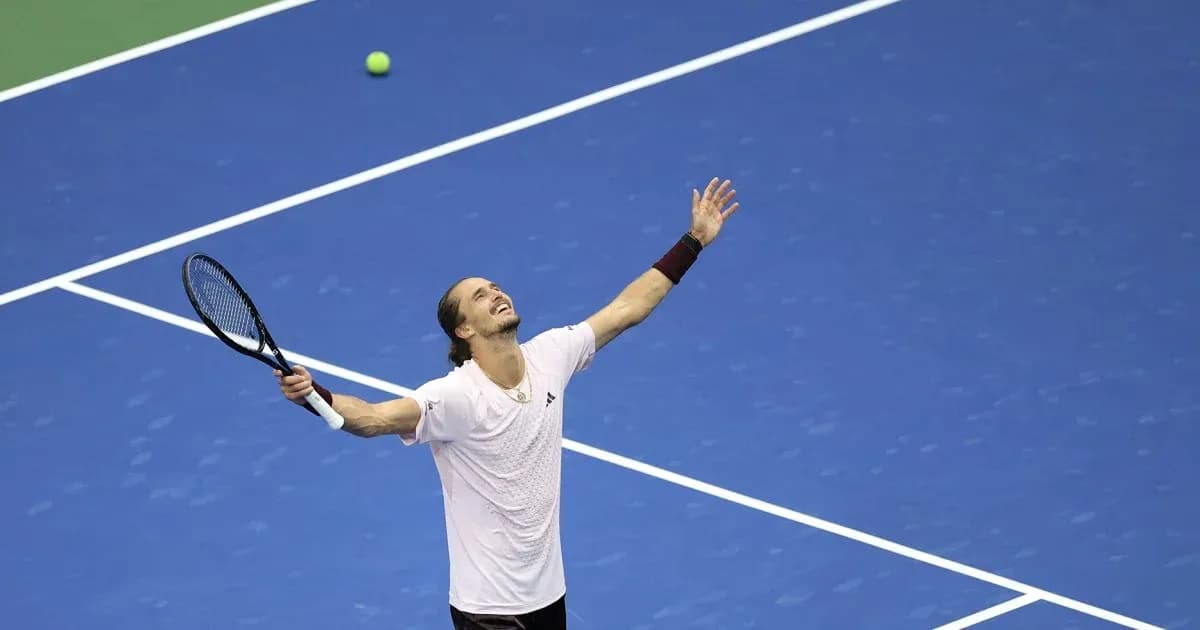
Alexander Zverev walked into Arthur Ashe Stadium on Sunday night as the man in form. He walked out with the U.S. Open trophy, a second Grand Slam title, and a stadium full of American hope left staring at the scoreboard.
The numbers told the story: 6-3, 7-6 (2), 5-7, 6-2 over Ben Shelton. A hard stop to a 21-year wait for a homegrown men’s champion.
On a night built for an American coronation, the German played spoiler with cold precision.
Zverev’s moment, years in the making
When Jimmy Connors handed over the Tiffany & Co. trophy and the $5.5 million winner’s check, Zverev didn’t talk about revenge or redemption. He went straight to the person who carried him long before any trainer or coach.
He spoke about being diagnosed with diabetes at four. About his mother refusing to let that diagnosis define him.
“If he wants to be a tennis player, he’ll be a tennis player,” Zverev recalled her telling doctors. “My mother is the most important and strongest person I know.”
This was his sixth major final. The scars of the previous five — and the collapse in New York four years ago — hung in the air. They never showed in his tennis.
Zverev arrived in Queens with the French Open already in his pocket, his game hardened by clay-court battles and an early-week grind in New York. After two testing opening rounds, he didn’t drop a set on his march to the final. The momentum was real, and on Sunday he played like a man who knew exactly how to finish.
Shelton’s surge, and the wall he hit
Shelton came in as the story. First Grand Slam final. First American man to reach the U.S. Open title match since Andy Roddick in 2003. A shot at becoming only the second Black man to win the tournament after Arthur Ashe himself, on the court that bears Ashe’s name.
The crowd treated him like destiny in motion.
They roared through every warm-up swing. They lived and died on every first serve. Fans had come from across the country — from Florida, from Maryland, from everywhere in between — just to see if this 23-year-old with the cannon serve and college swagger could crack the 20-year drought.
Shelton, though, started tight. Zverev didn’t.
The German picked at his serve, made returns, stretched rallies, and took the first set 6-3 with the composure of a man who has seen this stage, and the next one, and the one after that.
The second set changed the temperature. Shelton finally found his range, began leaning into his returns, and started unloading on forehands that caught Zverev flat-footed. The American’s energy, the fist pumps, the shouts to his box — all of it dragged the stadium into the fight with him.
He forced a tiebreak. The place shook.
Zverev shut it down.
The world No. 4 tightened his patterns, took away Shelton’s rhythm, and ran through the breaker 7-2. Two sets on the board. A long way back for a man in his first major final.
A comeback flickers, then fades
Shelton refused to fold.
Down two sets, he dug in, the way he had in that brutal 4-hour, 28-minute quarterfinal war against two-time champion Carlos Alcaraz — a match that ended at 3:33 a.m. and left both men looking spent, Alcaraz at one point appearing to vomit into a towel. Shelton had then turned around and overpowered fellow American Frances Tiafoe in four sets on Friday night.
Those miles were in his legs, but so was the belief.
In the third set, he rattled Zverev for the first time. The forehand bit harder. The serve found the corners. The German’s grip on the baseline loosened just enough, and Shelton clawed back to take it 7-5. The stadium erupted as if the match had just started.
For a few games, it felt like it had.
Then Zverev slammed the door.
Experience takes over
The fourth set opened with tension. Zverev picked up a time violation and let the chair know exactly what he thought of it. It could have been a turning point. It wasn’t.
He reset, held serve, and then broke to move ahead 3-1. The rallies lengthened, and Shelton’s earlier explosiveness dulled under the weight of the past week. Zverev sensed it. He stepped in, took the ball earlier, and made the American hit one extra shot, then another, then one too many.
At 4-2, he broke again, yanking away any lingering hope and stretching the gap to 5-2. Serving for the title, he didn’t blink. One last hold, one last forehand, and the match was over.
Shelton’s dream run ended with Zverev cruising across the finish line.
Faith, pride, and a new American wave
Shelton, standing on the wrong side of the scoreline, refused to treat the night as a loss in anything but the literal sense.
“My successes are a gift, the failures are a gift, and being here playing in front of you guys is a gift,” he told the crowd, thanking God and framing the moment as another step, not a dead end.
In the stands, his girlfriend Trinity Rodman — fresh from starting in the Washington Spirit’s 3-0 home defeat to the Boston Legacy earlier in the day — wore a Shelton shirt and rode every point with him. Her cross-sport dash from Washington to New York said everything about the pull of this occasion.
For many in Arthur Ashe, the meaning ran deeper than the scoreboard.
Fans spoke about history. About Ashe in 1968. About the long gap since a Black man had stood in this match. About how Shelton’s presence alone, win or lose, felt like a line in the sand.
Tracie Saundera, who hadn’t been born the last time a Black man reached the U.S. Open men’s final in 1972, soaked in the sight.
“He just plays with so much passion and energy,” she said. “He’s so fun to watch play, and he’s young and enthusiastic. ... I’m old. Most of my players are retiring, so it’s good to see some of the young kids coming in and just being powerhouses.”
Junior Pulayya drove up from Florida, drawn by the connection to the University of Florida and by a sense that American men’s tennis was finally waking up.
There had been, he said, a drought of “really solid” American men’s players. Shelton’s run, and the surge of U.S. names into the latter rounds this year, felt like a break in the weather.
“This gets that new generation of kids that follow tennis, that get involved in tennis, that want to get involved in tennis,” he said. “It does so much just for today, but long term for the sport.”
From Maryland, longtime fan Shameka Littles watched Shelton walk onto Ashe as the first Black man in more than half a century to play this final and tried to imagine the weight on his shoulders. She couldn’t.
What she could feel was the shift.
“To have so many of the top seeds, you know, make it to the semifinals, the quarterfinals — that was exciting in and of itself,” she said. “Hopefully, it just kind of gives, you know, a big boost of energy and excitement for each other.”
On Sunday night, the trophy left in Zverev’s hands. The title stayed out of American reach for at least another year. But the noise around Shelton, and the wave of U.S. talent he represents, made one thing clear:
This might not be the last time Arthur Ashe Stadium feels like it’s on the brink of a new era.