Alexander Zverev Triumphs at US Open, Secures Second Grand Slam Title
Alexander Zverev walked into Arthur Ashe Stadium with the look of a man who has seen too much to be rattled by noise. By the end of the night, he had silenced 24,000 people who came to witness an American rebirth and instead watched a German confirm his own renaissance.
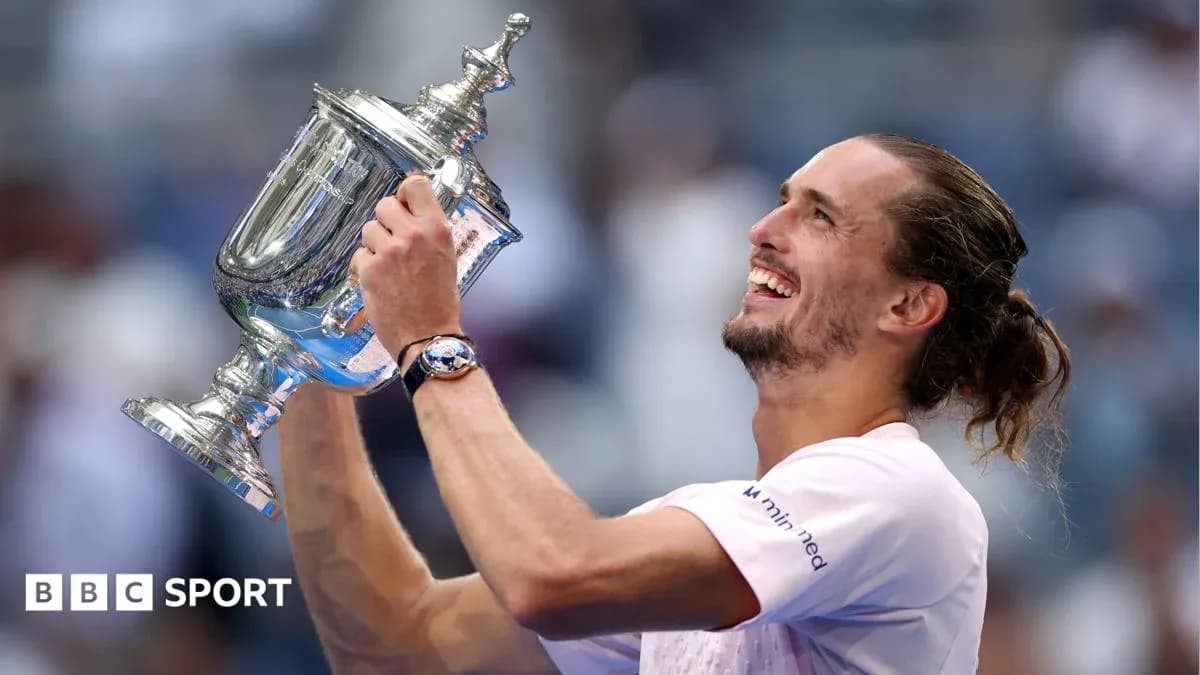
The top seed leaned on his scars and his serve to beat Ben Shelton 6-3 7-6 (7-2) 5-7 6-2, adding the US Open title to the French Open crown he lifted earlier this year. A man once defined by near-misses is now, emphatically, a multiple Grand Slam champion.
The favourite who once wasn’t
At the start of the season, the idea of Zverev winning one major, let alone two, felt like a fading storyline. He was 29, already beaten in three Grand Slam finals, his career threatening to settle into that uneasy space between “very good” and “fulfilled potential.”
That script has been ripped up.
Helped by a landscape reshaped by injury, Zverev has walked through doors others once slammed in his face. Carlos Alcaraz missed Roland Garros and Wimbledon. Jannik Sinner sat out New York. Between them, the pair had swept all the majors in 2024 and 2025. Their absence did not hand Zverev trophies, but it did clear the path. This time, he did not stumble.
His fortnight at Flushing Meadows was far from flawless. He scraped through the early rounds, often finishing in the small hours, looking more vulnerable than invincible. Yet with each match he sharpened. No top-20 opponent stood across the net until Shelton. When the American finally arrived, Zverev was ready.
Shelton’s big stage, Zverev’s big start
Shelton came in as the eighth seed and the embodiment of American hope: huge lefty serve, swagger, shot-making that belongs on highlight reels. He has long been tipped as a future major winner. Sunday night was his first taste of a Grand Slam final, and it showed.
Serving in the opening game, he double-faulted on break point. The roar from the crowd turned to a murmur. Against Zverev, that kind of early gift is often fatal. The German had never dropped a set to Shelton in five previous meetings, and he immediately slipped into a familiar pattern.
He went after Shelton’s backhand, probing it in baseline rallies, then tightening the noose with a heavy first serve whenever danger threatened. Shelton’s second double fault on set point handed Zverev the opener 6-3. The American’s power was there, the explosiveness too, but the control and clarity that finals demand were missing.
The second set followed a similar rhythm, only this time Shelton at least held on to his serve. Zverev carved out just one break point, in the fourth game, and couldn’t convert. No matter. When the tie-break arrived, the German’s experience took over.
He has built a reputation as a strong breaker of deadlocks, and he played this one like a man who had learned from the trauma of the 2020 US Open final, when he let a two-set lead slip. His returns were deep, his errors minimal, his body language unshaken. He ran away with it 7-2, a two-set cushion that felt enormous in the circumstances.
A flicker of American belief
Arthur Ashe finally came alive in the third. Shelton, staring at the brink, decided to swing even harder.
The pressure on Zverev’s serve ramped up. The American began to find his range on the return, stepping in, taking big cuts, refusing to let the German dictate from the baseline. Break points came. Zverev fended off the first two, but the third finally landed, and with it a surge of noise that had been waiting all evening for a reason to erupt.
Shelton rode that wave, attacking with more freedom, feeding off every chant, every flag, every shout of “Let’s go, Ben!” He took the set 7-5, dragging the contest into a fourth and briefly reviving the dream of a first American men’s Grand Slam champion since Andy Roddick in 2003.
For a moment, it felt as if the night might tilt.
Experience bites back
Zverev didn’t let it.
Where earlier versions of him might have tightened, this one reset. He stepped up on return, pinned Shelton back, and struck early in the fourth set. The break came quickly, and with it, the air went out of the stadium.
From there, the German controlled everything that mattered. His first serve reasserted its dominance. The rallies returned to his terms: patient, precise, ruthless when the short ball appeared. Shelton still swung big, still chased the spectacular, but Zverev now had a hand firmly on the trophy.
The final act came with a touch of almost comic understatement. On championship point, Shelton pushed a return long. Zverev paused, unsure. For a second, he didn’t realise it was over. Only when his team gestured from the box did the penny drop. Then came the broad, almost disbelieving smile.
This time, no collapse. No haunting “what if.” Just a champion, again.
A long road, suddenly crowded with trophies
When he addressed his box, led by his father Alexander Sr and brother Mischa, Zverev spoke with the weight of a journey that has often looked like a test of endurance as much as talent.
“We went 30 years without winning a Grand Slam title and now won two in the span of three months,” he said. “I think God has seen how hard we have work, how hard we have suffered and how much pain we went through. I think 2026 is the outcome of all the years that happened before.”
It has taken him a decade on tour, three lost major finals, and a career’s worth of scrutiny to get here. Now, with two Slams in three months and a field in flux, the question no longer hangs over whether Alexander Zverev can win the biggest prizes.
The question is how many more he intends to take.