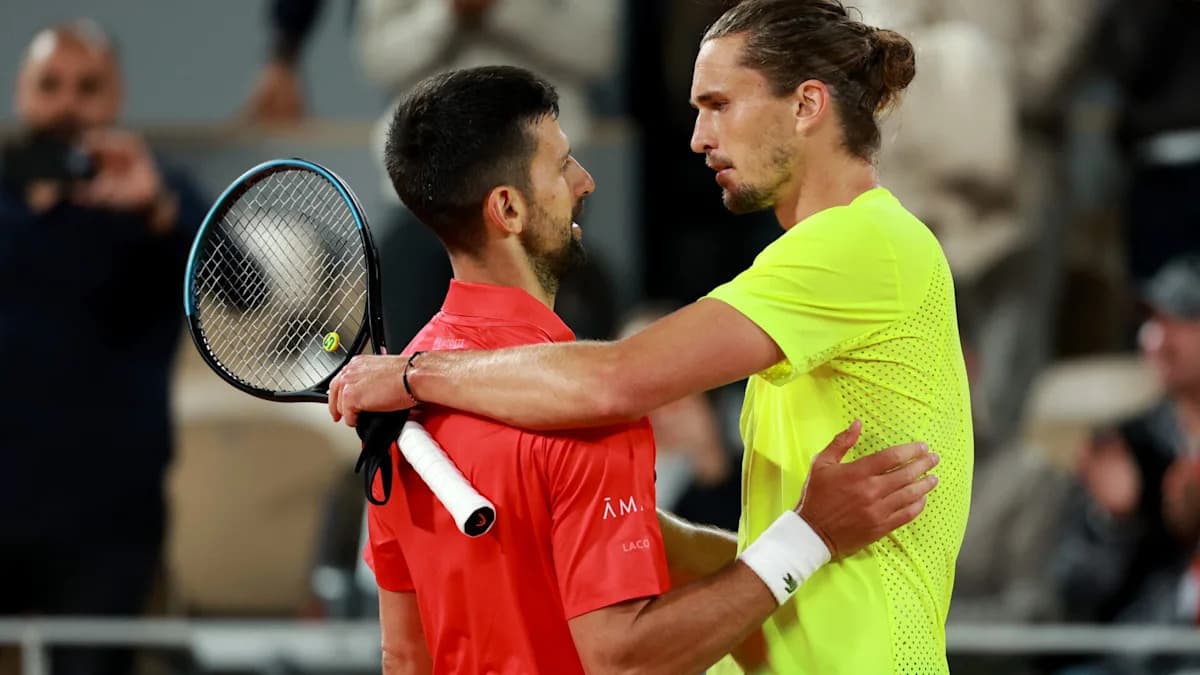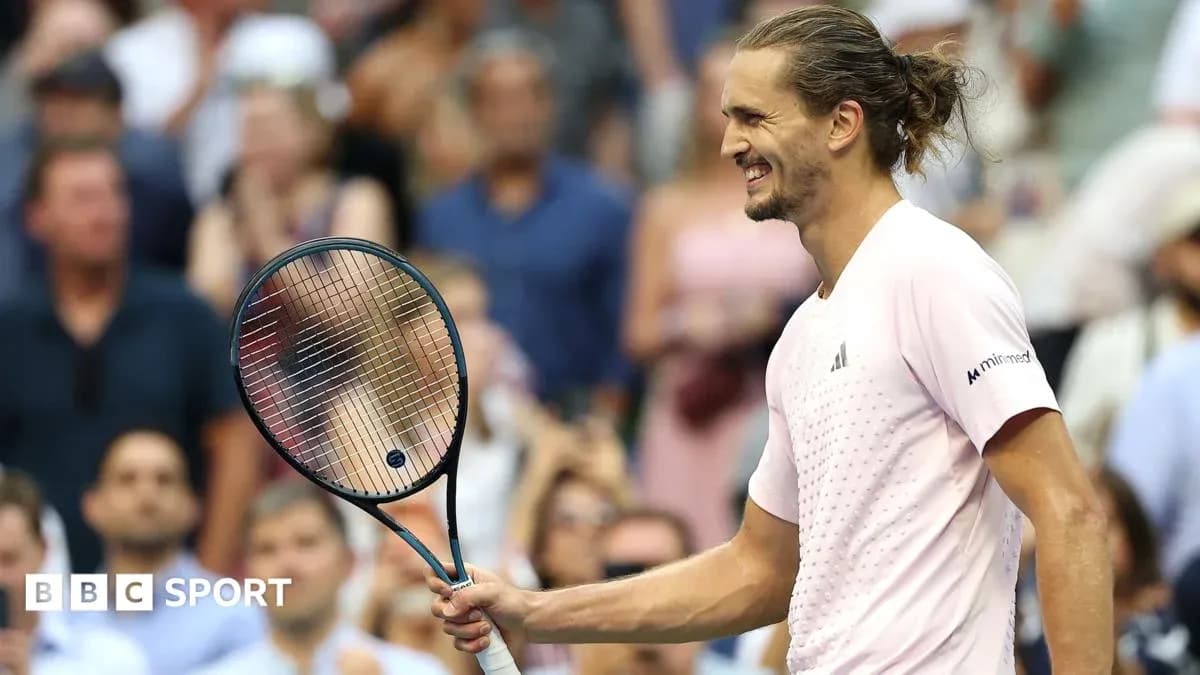
Zverev Advances to US Open Final After Tense Semi-Final Against Khachanov
Alexander Zverev walked off Arthur Ashe Stadium with a straight-sets win, but nothing about this semi-final felt straightforward.
The German beat Karen Khachanov 6-3 7-6 (9-7) 7-6 (8-6), surviving two tense tie-breaks and a barrage of questions on his nerve, his serve and his long, uneven history at the majors. Each time the match tightened, he found another gear. Each time Khachanov sniffed a way back, Zverev slammed the door.
The numbers told the story of risk embraced and rewarded. Zverev hit double the number of double faults – six to Khachanov’s three – yet he blasted 15 aces to the Russian’s six and drove his second serve at an average of 112mph, almost 20mph quicker than his opponent. That aggression cost him at times, but it also hauled him out of trouble when the match hung in the balance.
It dug him out of holes. It set him up for the final.
A Semi-Final on the Edge
The first set belonged to Zverev. He controlled the baseline, protected his serve and struck cleanly enough to keep Khachanov at arm’s length. But the match really began to breathe in the second-set tie-break.
Khachanov, who had been steady if not spectacular, suddenly surged. He led in the breaker, pushed Zverev back, and looked ready to drag the contest into a long night. Yet when the pressure peaked, Zverev’s serve and shot-making rose with it. He clawed back the deficit, saved himself with bold hitting, and edged the tie-break 9-7.
By the third set, the Russian was playing with freedom in the biggest moments, while Zverev looked, briefly, like a man wrestling with the occasion.
At 6-6 in the third-set tie-break, Khachanov again had the upper hand earlier on. He had led 4-2, then 5-2. He was hitting through the court, stepping in, and when he came forward he was almost untouchable, winning 13 of 14 points at the net. From the back, he uncorked a huge forehand into the corner and celebrated with the calm swagger of a man who felt the match turning.
The crowd sensed it. The tie-break, just as in the second set, had brought the contest fully alive.
But Zverev refused to yield. After being forced back by an attempted lob, he ripped a stunning cross-court winner – his 37th of the match – to drag himself closer. Then, with Khachanov two points from forcing a fourth set, the German’s serve and nerve finally crushed the resistance.
Annabel Croft, watching on for BBC Radio 5 Sports Extra 2, could barely believe the timing of Zverev’s final blow.
“Where did that come from?” she said, as his 15th and last ace sealed the match. “I know the way Zverev has been serving has been enormous but what a moment to come out with that.”
Khachanov left the court to warm applause, signing autographs as he exited Flushing Meadows. He had led in both tie-breaks, had the match in his hands more than once, and will still surge back up the rankings after this run to the last four. But he will know he let big opportunities slip.
From Late-Night Doubts to a Major Final
For Zverev, this run has been a steady climb from early-tournament unease to late-stage authority.
“After the second round, at about 3am I was sitting with my team in the locker room and we were laughing at how bad I was playing, and that sense of humour helped me,” he said on court.
He talked about feeling the ball better in practice, about the incremental improvements that turned a shaky start into a title charge. “In practice I started feeling the ball better, and then moving forward I was playing much better tennis. I obviously have improved a bit otherwise I would not be in the US Open final.”
The journey at the majors has not been simple. He has known heartbreak at this level, known what it is to stand on the brink and fall away.
“Sometimes things just go your way, I have had a lot of struggles at the major level and I was so close so many times – and maybe this year God has said this is going to be my year and to enjoy my time on the court. I am enjoying it, I love playing these big finals and I can't wait for Sunday.”
Croft has watched his transformation over the fortnight.
“Zverev has just got better and better the more the tournament has gone on,” she said. “His wobbles were at the beginning of the tournament and since then he has got better. Today every time he faced questions and problems he really stepped up to the plate and served spectacularly.”
The serve that once betrayed him is now his anchor. The double faults are still there, a reminder of the risk he’s willing to take, but the payoff is brutal: pace, precision, and a weapon that can flip a game in a heartbeat.
An American Dream to Spoil
Now comes Sunday, and with it a very different kind of test.
Across the net will be an American – either Frances Tiafoe or Ben Shelton – a home favourite with the crowd at full roar under the New York lights.
“I think it [Sunday] will be incredibly special, these two guys [Frances Tiafoe and Ben Shelton] are crowd favourites and everyone loves them,” Zverev said. “Tonight will be an epic semi-final and I am looking forward to watching it. Hopefully I can not make their American dream come true.”
It will be Zverev against the noise, against the narrative, against a stadium that lives for a home champion. His serve, his nerve and the hard lessons of past majors will all be dragged into the spotlight again.
On this evidence, he will not shy away from any of it.
Hewett and Reid Forced to Fight From Behind Again
Away from the main show courts, on Court 11, another story of resilience was unfolding.
British pair Alfie Hewett and Gordon Reid, chasing a sixth US Open title in men’s wheelchair doubles, found themselves in deep trouble against Martin de la Puente of Spain and Ruben Spaargaren of the Netherlands.
The top seeds lost the first set 6-2, undone by a run of six straight games from De la Puente and Spaargaren. The challengers seized control, their momentum surging as the British duo struggled to find their rhythm.
Early in the second set, the pattern threatened to repeat. Hewett and Reid trailed by a break and looked on the brink of being swept aside.
Then the fightback began.
They broke back at the first opportunity, dragging the set to 3-3 and finally halting the charge from the other side of the net. The contest, which had been tilting heavily away from them, suddenly steadied.
This is familiar territory for the British team. Only yesterday they came from behind to beat defending champions Gustavo Fernandez and Tokito Oda in a huge semi-final. Now, once again, they were being asked to do it the hard way.
The second set hung in the balance. The question was simple, and brutal: could they summon one more comeback to keep their title push alive?