Alexander Zverev Advances to US Open Final with Calm Dominance
By the time tension finally crept into Arthur Ashe Stadium, the men’s semi-final had already felt like a formality.
For more than an hour, Alexander Zverev had treated an old rival like an inconvenient hurdle rather than a genuine threat. He had the first set in his pocket, a break in hand in the second, and Karen Khachanov was staring at a straight-sets exit that looked more like a routine beating than a grand slam semi-final.
Then, at last, the match bit back.
Khachanov clawed his way to a second-set tie-break, refusing to let the occasion drift away. At 5-6, serving to stay in the set, he uncorked a fearless forehand winner to erase Zverev’s first set point. At 6-7, he ripped a screaming backhand passing shot down the line, punctuating it with a roar that finally pierced the quiet murmur of a half-interested crowd.
On another night, against an earlier version of Alexander Zverev, that surge might have cracked something.
Not this one.
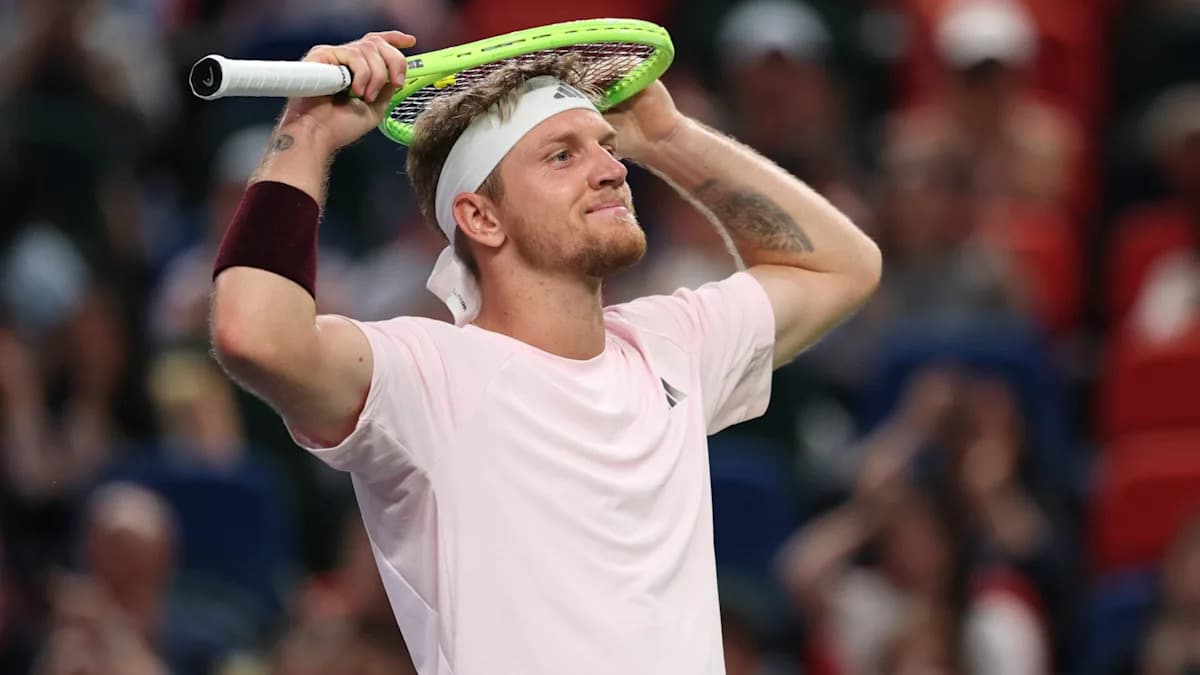
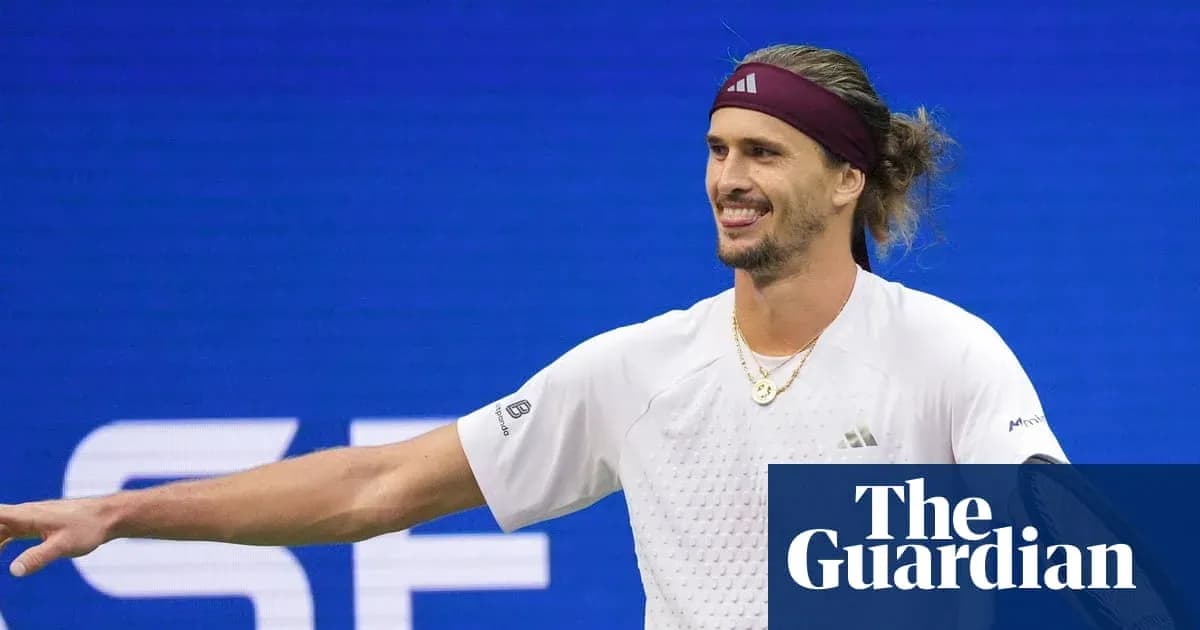
The Olympic champion reset, steadied, and shut the door. He edged that tie-break, then handled another in the third with the same cold clarity, closing out a 6-3, 7-6 (7), 7-6 (6) win to move within one match of a second grand slam title in his last three majors.
Zverev’s new normal
This is not the Zverev of 2020, the one who first reached a major final here and then watched the US Open trophy slip through his fingers after leading Dominic Thiem by two sets and serving for the title in an empty, Covid-era stadium. That night left scars.
The version now striding through the majors plays with the calm of a man who has seen the worst and survived it.
His victory over Khachanov sends him into a third consecutive grand slam final for the first time in his career. The German followed his breakthrough title at Roland Garros with a first Wimbledon final in July; now he returns to the scene of his most painful defeat as a very different proposition, contesting the sixth major final of his career.
The path here has been kind, but Zverev has made it look ruthless. After being dragged into two five-set struggles in the opening rounds, he has not dropped a set since. Against Khachanov, he leaned on the foundations that have underpinned his season: a heavy, reliable first serve and relentless depth off both wings.
Khachanov, ranked No 50 but far better than that number suggests, never quite found a way through. His résumé demands respect: former world No 8, Paris Masters champion in 2018, Olympic silver medallist behind Zverev in Tokyo, and a player who has troubled the German more than most. Zverev led their head-to-head 6-3 going in, but the Russian had beaten him as recently as last year in Canada.
All of that history sat there as a warning. Zverev never let it breathe.
Khachanov’s forehand unravels
For all Khachanov’s effort and pedigree, his forehand betrayed him. Under pressure, the shot leaked errors at the worst possible moments, particularly late in the second and third sets when the match demanded clarity and courage. The backhand, usually his rock, produced flashes of brilliance — that thunderous pass at 6-7 in the second-set breaker chief among them — but it was never enough to tilt the balance.
Zverev, by contrast, managed the big points with a champion’s composure. When the rallies stretched, he outlasted. When the scoreboard tightened, he landed first serves. Every time Khachanov threatened to ignite the contest, Zverev snuffed it out with a clean strike or a measured hold.
The pressure finally told in the tie-breaks. Both were tight, both carried the sense that one loose forehand from Khachanov or one precise serve from Zverev would decide them. The German played those margins better, and that was the match.
A quiet semi-final in a noisy tournament
For all the stakes, this semi-final unfolded in an oddly muted bubble.
Zverev came in as the second seed. Khachanov is a former semi-finalist in New York. Yet this was one of the least-hyped men’s last-four matches at a major in recent years, swallowed by a tournament dominated by off-court debates and the absence of some of the sport’s biggest stars.
At Roland Garros, when Jannik Sinner tumbled out early, Carlos Alcaraz withdrew injured and Novak Djokovic’s late-career struggles continued, the question became simple: could anyone stop Zverev? He answered that with the trophy.
The script has felt similar in New York. His route through the top half of the draw has been conspicuously light on elite opposition. The highest-ranked players he has faced en route to the final are No 22 Luciano Darderi and No 28 Alejandro Tabilo. If he lifts the US Open trophy on Sunday, both of his grand slam titles will have come without facing a top-eight opponent.
That statistic will follow him. It will also miss the point that a player can only beat whoever stands across the net. Zverev has done that, again and again, and he has done it this fortnight without dropping a set since those early scares.
The stands told their own story. In a tournament where the ticket resale market has become a flashpoint — prices soaring to absurd levels for marquee sessions — this match never threatened to be part of the frenzy. On StubHub, seats for this semi-final were going for as little as $21 (£15.50) before the players walked on court. No one was emptying their wallet for this one.
A final he will expect to own
Whoever comes through the other semi-final, Zverev will step into the final as the man to beat, and he knows it.
His combined record against Ben Shelton and Frances Tiafoe is a commanding 15-1. The lone defeat came against Tiafoe nine years ago, long before either man had fully grown into the players they are now. Recent history, and the numbers, lean heavily his way.
There will be questions about the draw. About the absence of the sport’s current giants. About whether a second major without a top-eight scalp carries the same weight.
Zverev will not care.
He has rebuilt himself from that haunted figure of 2020 into a serial finalist, a player who now expects to be here on the final weekend. One more win in New York, and the conversation around him shifts again — from a talent who once let a grand slam slip away on this court to a multiple major champion shaping the landscape in an era searching for its next dominant force.