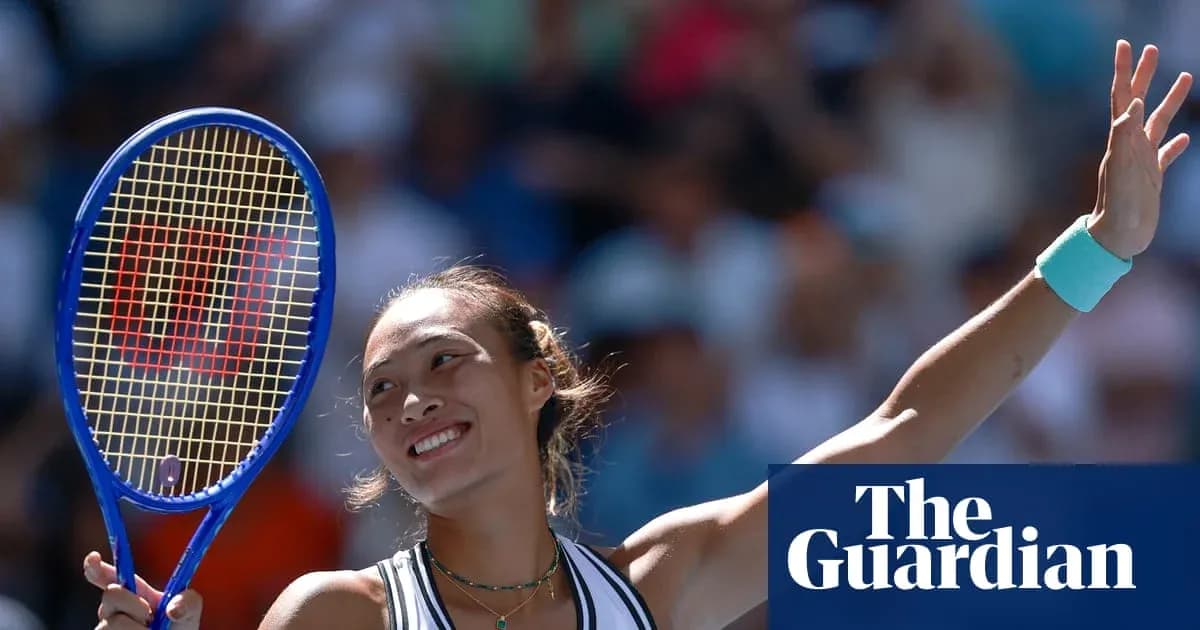
Zheng Qinwen Turns 0-5 Into a Weapon at US Open
There is a new unwritten rule at this US Open: do not, under any circumstances, lead 5-0 against Zheng Qinwen.
Madison Keys found that out in brutal fashion on Friday, watching a deciding set vanish as Zheng tore through seven straight games to win. Two days later, Iga Swiatek – six grand slam titles, fresh off a confidence-boosting run in Toronto – walked into the same trap.
Same scoreline. Same storm. Same result.
Zheng turns 0-5 into a weapon
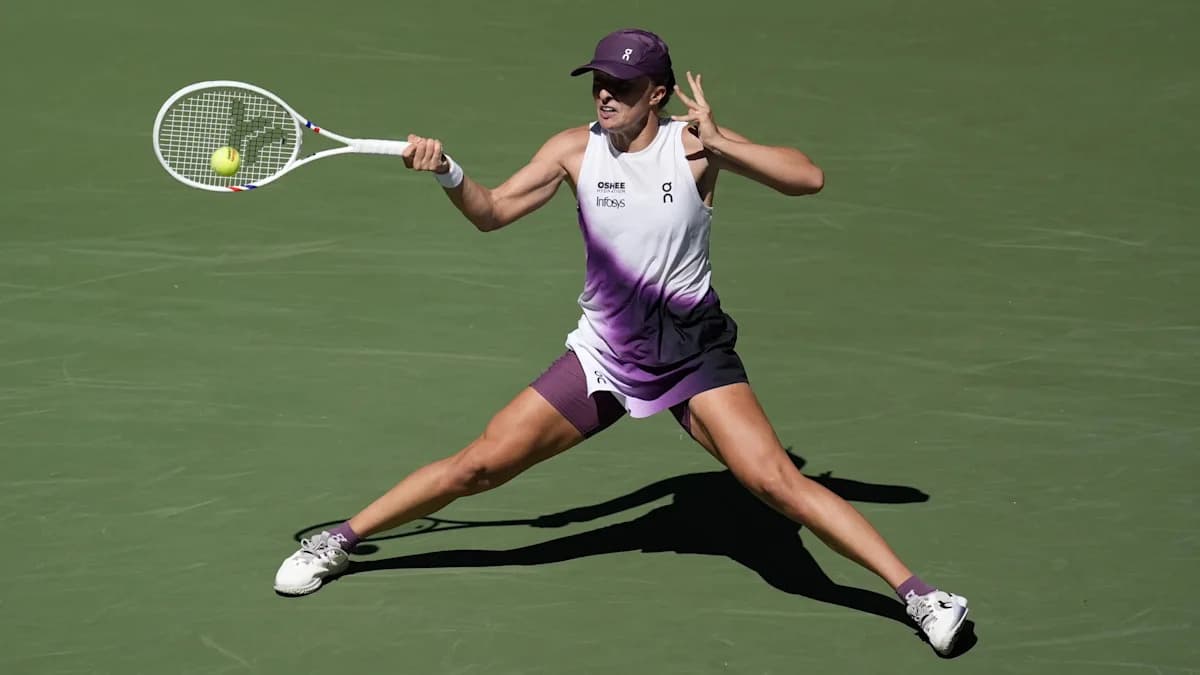
Down 5-0 in the opening set of their fourth‑round clash, Zheng looked on the verge of being swept aside by a player many still see as the standard-bearer of this generation. Swiatek was dictating, the rallies were on her terms, and the scoreboard screamed mismatch.
Then Zheng simply refused to lose another game.
She tightened her margins, found heavier depth, and started to drag Swiatek into longer, more physical exchanges. One hold, one break, and the mood inside the stadium changed. Swiatek’s clean, early-strike tennis began to fray. Zheng’s belief grew with every point.
Seven games in a row later, the set was hers, 7-5.
“In one moment, I even forgot the score in the first set at 4-5,” Zheng said. “That shows how I am focused. I guess, to come back 0-5 [again] is not lucky, that’s [what] I can say.”
This was not a fluke surge. It was a pattern. In back‑to‑back matches, against two major champions, Zheng had turned 0-5 into a launchpad.
Swiatek unravels, Zheng steps through the door
Swiatek arrived in New York as one of the favourites. Her title in Toronto was her first of the season and looked like the start of another hard‑court push. For five games, that version of Swiatek was on court: aggressive, assured, in full control.
Once the first cracks appeared, her game splintered.
Unforced errors began to flow from routine positions. Forehands flew long, backhands dropped short, and the world’s most reliable competitor suddenly could not feel the ball. Zheng, by contrast, cut out the cheap mistakes and forced Swiatek to hit one more shot, again and again.
“I wouldn’t say it had anything to do with mentality. It was more that I started making mistakes from easy balls and Qinwen stopped doing mistakes,” Swiatek said.
The second set never carried the same sense of inevitability for Swiatek. Zheng, now dictating with her first strike and serving with authority, kept the Pole at arm’s length and closed out a 7-5, 6-3 win that ranks among the finest of her career.
From surgery and struggle to seven straight wins
The scale of the turnaround stretches beyond this match, or even this week.
Zheng entered the season as one of the sport’s brightest rising forces. She won Olympic gold in Paris, beating Swiatek in the semi‑finals at Roland Garros shortly after the Pole had claimed a third straight French Open. She reached the 2024 Australian Open final. She climbed to No 4 in the world.
Then her elbow gave way.
Surgery stalled her momentum and shredded her ranking. By June she had slipped to No 160, a number that did not remotely reflect her talent but did capture her lack of rhythm and confidence. Coming into New York, her 2026 record stood at 11-13. Nothing flowed.
She arrived at Flushing Meadows needing to check her ego at the door. Qualifying, not the main draw, was her starting point. Three wins there, four more in the main event, and suddenly Zheng is back in the last eight of a major, with seven victories in New York breathing life into a season that had been drifting.
Her run here is a reminder of how quickly the sport can turn. One tournament, one run of form, and a player who looked lost is again a genuine contender.
Rybakina ruthless, Osaka hobbled
Waiting for Zheng in the quarter‑finals is Elena Rybakina, the second seed, who is now one win away from becoming world No 1 for the first time.
Rybakina dismantled Naomi Osaka 6-1, 6-4 in just 66 minutes on Louis Armstrong Stadium. The numbers told the story: 29 winners, only 17 unforced errors, and a single break point faced – which she saved. Her serve hit its marks, her groundstrokes were laser‑sharp, and Osaka never got the foothold she needed.
Osaka, a two‑time US Open champion, required her very best level to live with Rybakina’s weight of shot. It never came. Hampered by achilles pain and struggling to locate her first serve with any consistency, she spent most of the match scrambling, always a step behind the Kazakh’s tempo.
If Zheng’s comeback win was chaos and emotion, Rybakina’s performance was cold precision. Their quarter‑final promises a clash of surging confidence and relentless ball‑striking.
Andreeva breaks new ground, Blockx joins the last eight
On the other side of the women’s draw, Mirra Andreeva, the fifth seed and reigning French Open champion, continues to push boundaries of her own. The teenager reached her first US Open quarter‑final with a 5-7, 6-4, 6-3 victory over Austria’s Anastasia Potapova, riding out a scrappy opening set before imposing her variety and patience in the baseline exchanges.
In the men’s event, Alexander Blockx took his own significant step. The 28th seed advanced to a grand slam quarter‑final for the first time, beating 24th seed Francisco Cerundolo 6-3, 4-6, 7-5, 7-5, edging the key moments in a tight, physical contest.
But the story of the tournament, for now, belongs to Zheng Qinwen – the player for whom 0-5 is no longer a crisis, but an invitation to turn a match, and perhaps her season, on its head.