Zheng Qinwen Stuns Iga Swiatek to Reach US Open Quarter-finals
Zheng Qinwen dug herself out of another impossible hole in New York – and this time she dragged a former US Open champion down with her.
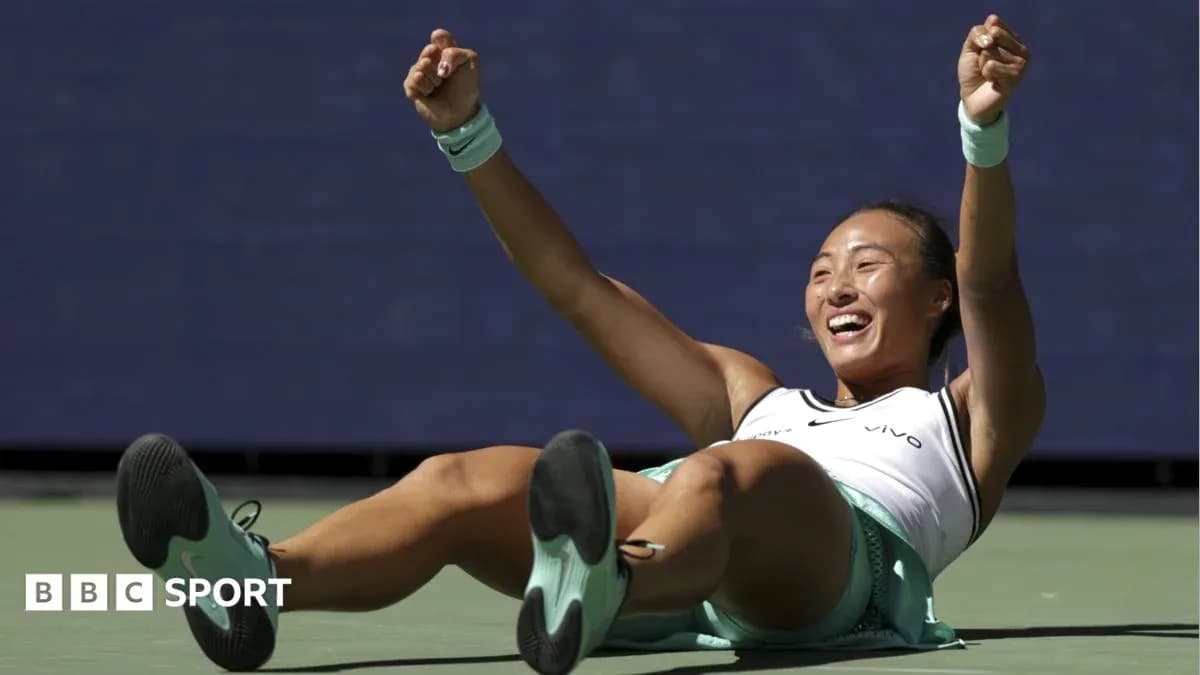
For the second match in a row, the 23-year-old came back from 5-0 down in a set, stunning eighth seed Iga Swiatek 7-5 6-3 on Arthur Ashe Stadium to reach the US Open quarter-finals and continue one of the most compelling runs of the season.
From surgery and slump to Arthur Ashe surge
A year ago, Zheng was an Olympic champion and a former world number four, a rising force with a booming game and a fearsome competitive streak. Then came elbow surgery in July 2025, a long, uncertain recovery, and a sharp slide out of the world’s top 100 as she searched for timing, confidence and wins.
That search has found its answer in New York.
Zheng arrived as a qualifier, forced to grind through three rounds just to reach the main draw. She has now won seven matches in a row at Flushing Meadows, and this latest one – over a player who began the fortnight as one of the form women on tour – will push her back towards the top 50.
Just 48 hours earlier she had trailed Madison Keys 5-0 in the deciding set of their third-round match, only to reel off seven straight games in a breathtaking escape. That kind of comeback is supposed to be a once-in-a-career trick.
Zheng did it again.
Swiatek races, Zheng roars back
Swiatek, 25, walked into this match with the authority of a player who had just won the WTA 1000 title in Toronto, reached the semi-finals in Cincinnati and cruised through the first three rounds in New York without dropping a set. Her game looked sharp, her movement clean, her confidence intact.
That version of Swiatek appeared early. She stormed out to a 5-0 lead in the opening set, reading Zheng’s pace, redirecting with ease, and punishing short balls. On Ashe, it felt like the script was already written.
Zheng tore it up.
From 0-5 down, she began to step inside the baseline, unload on her forehand and target Swiatek’s corners with heavy, fearless hitting. The errors that had flowed from Zheng’s racket dried up. The rallies lengthened. The body language shifted.
She won seven of the next eight games to steal the set 7-5, flipping the match on its head and silencing a crowd that had been bracing for a routine win from the former champion.
The surge didn’t stop there. Across the next two sets of tennis she played in New York – the back half of that opener and the entirety of the second – Zheng won 13 of 16 games against one of the game’s most reliable frontrunners.
A cold-blooded second set
The second set settled into a tight baseline battle. Both players held serve through six games, Swiatek still probing, Zheng refusing to blink.
Then came the seventh game, and with it the shot of the night.
Facing serve, Zheng pounced on a second delivery and ripped a backhand return winner, a flat, searing strike that tore through the court and earned her a crucial break. It was the kind of moment that announces not just belief, but control.
Swiatek called for treatment to her left thigh when leading 2-1 earlier in the set, but Zheng showed no interest in letting the match drift into a physical scrap. She pressed again on return two games later, broke once more, and closed out a 7-5 6-3 victory with the composure of a player who has been winning on this stage for years, not one fighting her way back from surgery and a rankings freefall.
“The more matches I play, the more rhythm I have on court,” Zheng said afterwards, underlining how this qualifying run has sharpened her game rather than drained it. She spoke of feeling “really pumped” when she arrived, eager to test herself in the sport’s biggest stadium. Her tennis is matching that energy.
Olympic echo, Grand Slam statement
This was no bolt from the blue. Zheng’s only previous win in eight meetings with Swiatek came in the semi-finals of the 2024 Olympics, a victory that propelled her towards singles gold in Paris. She knows how to hit through the Pole’s defences when her timing is on.
In New York, that matchup played out on an even grander stage and with higher stakes for Swiatek’s season. The Pole’s Grand Slam year now closes with a quarter-final in Australia as her best result, a fourth-round exit at Roland Garros, a third-round loss as defending champion at Wimbledon and now another fourth-round defeat here.
For the first time since 2021, she will finish a season without a major title – a stark line on the résumé of a player who has set brutal standards for herself over the past few years.
A new qualifier story in New York
Zheng’s run also revives a familiar storyline at Flushing Meadows: the dangerous qualifier tearing through the draw. The last woman to reach this stage from qualifying was Emma Raducanu in 2021, and she left with the trophy.
Zheng is three wins from matching that fairytale, and she is not the only qualifier rewriting expectations in 2026. At Roland Garros, Poland’s Maja Chwalinska arrived ranked 114 in the world and surged all the way to the final, where she finally ran into Russian teenager Mirra Andreeva.
Andreeva is at it again. The French Open champion recovered from a set down against Anastasia Potapova to reach her first US Open quarter-final, underlining a generational shift that is starting to reshape the women’s game.
Osaka or Rybakina next
Zheng will find out later on Monday whether she faces Naomi Osaka or second seed Elena Rybakina in the last eight. Osaka, a former US Open champion trying to re-establish herself at the top of the sport, and Rybakina, one of the most imposing ball-strikers on tour, offer very different challenges.
Zheng will not care.
She has come through qualifying, outlasted Madison Keys in a miracle comeback, and knocked out Iga Swiatek from 5-0 down on the biggest court in tennis. Her elbow has held, her ranking is climbing, and her game is growing sharper with every round.
From outside the top 100 to the heart of the second week in New York, the question now is simple: after surviving all this, who is going to stop her?