.svg&w=384&q=75 "logo")
Williams Sisters Return to Arthur Ashe for Epic Doubles Match
Arthur Ashe Stadium did not so much host a tennis match as stage a homecoming.
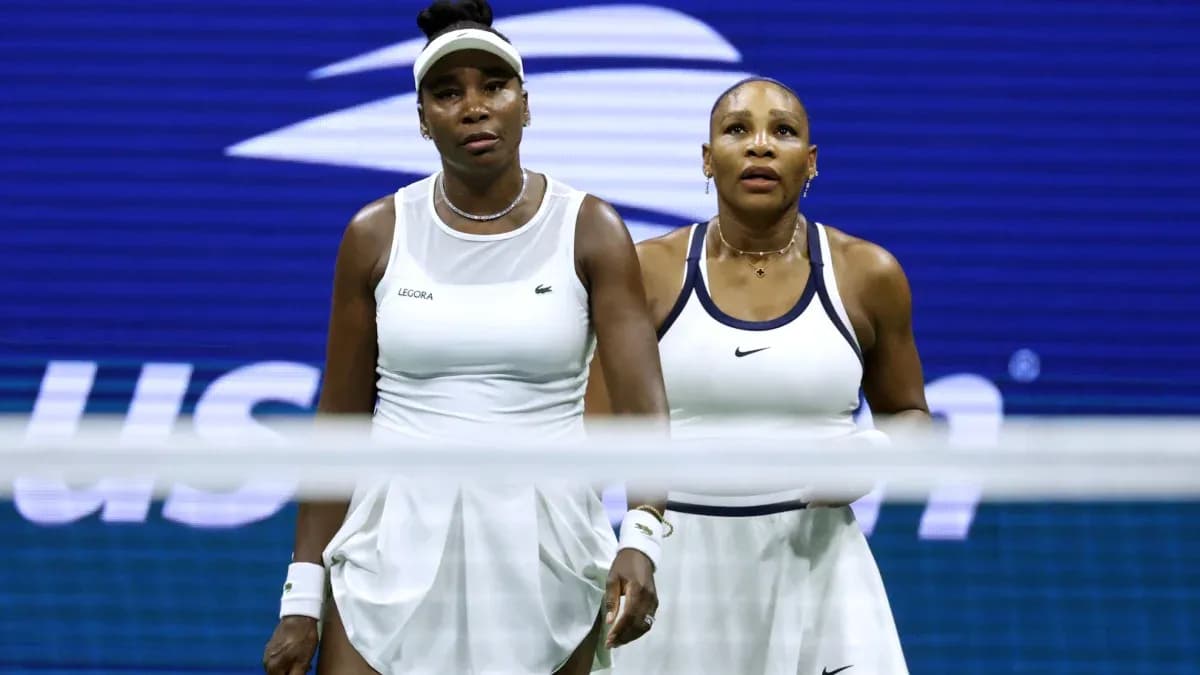
Serena and Venus Williams, 44 and 46, walked back into the US Open doubles draw on Thursday night and turned the biggest court in the sport into a cauldron. They lost, yes – 6-3, 6-7(6), 7-6(7) to the 14th seeds, Hao-Ching Chan of Taiwan and Australia’s 20-year-old Maya Joint – but the scoreline felt like the least interesting part of the story.
A prizefight entrance for tennis royalty
Minutes before the first ball, Arthur Ashe looked closer to Madison Square Garden on fight night than a Grand Slam arena. Smoke rolled across the baseline. Lights cut through the haze. The stadium buzzed in that restless way New York does when it knows something, or someone, special is coming.
Then the Williams sisters walked out.
Half the crowd reached for their phones, desperate to trap the moment behind a screen. The other half simply stood and roared. It was not polite applause for past champions. It was the sound of a city greeting its own.
The theatre didn’t stop there. The pre-match coin toss went to YouTube star MrBeast – Jimmy Donaldson, all 515 million followers of his brand trailing him into tennis’ most traditional space. It was a surreal, very 2020s collision: internet spectacle, sporting royalty, and a Grand Slam night session under the lights.
Chan and Joint crash the party
Once the smoke cleared, the generational clash snapped into focus. On one side, Serena and Venus, winners of the US Open doubles title in 1999 and 2009, 14-time Grand Slam doubles champions, matching in white sneakers, skirts, and tops. On the other, a 32-year-old doubles specialist in Chan and a fearless 20-year-old in Joint, who had already handed Serena a painful singles defeat at Wimbledon earlier this summer.
Chan and Joint were not there to play supporting roles. They took the first set 6-3, quieting the noise just enough to remind everyone that nostalgia doesn’t win service games. Still, when the set ended, Arthur Ashe rose. The sisters walked to their chairs through a standing ovation that felt like a career’s worth of appreciation packed into a changeover.
Arthur Ashe finds its voice
The second set turned into the kind of contest that made the stadium feel alive again. Every Williams hold, every sharp return, dragged the crowd deeper into the night. The tiebreak stretched long and tense, point after point hanging in the air.
Each time the American pair edged closer, Arthur Ashe answered with a roar. Shouts of “Come on, Williams sisters!” cut through the noise so often that officials had to call for silence over the loudspeakers. It barely worked. This was not a crowd interested in restraint.
Serena and Venus squeezed out the set 7-6(6). Fists pumped. They shared the familiar, knowing look that has carried them through decades of finals and comebacks. For a moment, the clock turned back.
A final act thick with tension
By the time the deciding set rolled into its third hour, tension sat heavy in the stadium. Chan and Joint began to edge ahead, and a different sound rippled through the stands – those sharp, involuntary “oh!” reactions as the underdogs refused to wilt.
At 5-5, the arena erupted again. Every rally felt loaded with meaning, every serve from a Williams racket greeted like a small victory. The scoreboard crept to 6-6, and the match walked into its final test: a super tiebreak that would decide everything.
You could almost feel the air tighten.
The points came in jolts, each one greeted with gasps or groans, the noise rising and falling like a tide. Chan and Joint held their nerve just a fraction better, edging the breaker 7-6(7). No wild celebration from the victors, just the satisfaction of having survived a night few will forget.
Respect for a legacy that refuses to fade
When it ended, something rare happened in a sport that moves on quickly. The entire stadium stood. Not for a trophy lift. Not for a farewell speech. Just for two sisters walking off a court they have defined for a generation.
Serena and Venus bumped fists, shared complicit laughter, and slipped away together, their matching whites a reminder that, for all the years and all the titles, the core of their story has always been the same: two siblings, side by side.
This US Open has already seen both in singles action. Venus bowed out last Sunday against fellow American Sofia Kenin. Serena, back in the New York spotlight, has split her time between the court and a growing portfolio off it – fronting campaigns for brands such as Heineken 0.0 and speaking candidly about weight-loss medications and the stigma surrounding them.
Their doubles reunion began again in August in Cincinnati, where they lost their opening match to Marta Kostyuk and Peyton Stearns. On paper, this New York run ends the same way: an early defeat, no title, no deep push.
But the numbers miss the point. On a smoky, loud night at Arthur Ashe, two legends walked back into the arena, pushed a pair of seeded opponents to the brink, and reminded tennis what it feels like when the Williams name appears on a doubles scoreboard.
The question now is not what they were, or even what they are. It’s how much longer they choose to keep writing chapters like this.