The Part-Time Team That Won Three Consecutive Wembley Finals
You might be familiar with Pep Guardiola's Manchester City capturing four League Cups in a row between 2018 and 2021. Yet, a different team achieved three consecutive Wembley final victories before them.
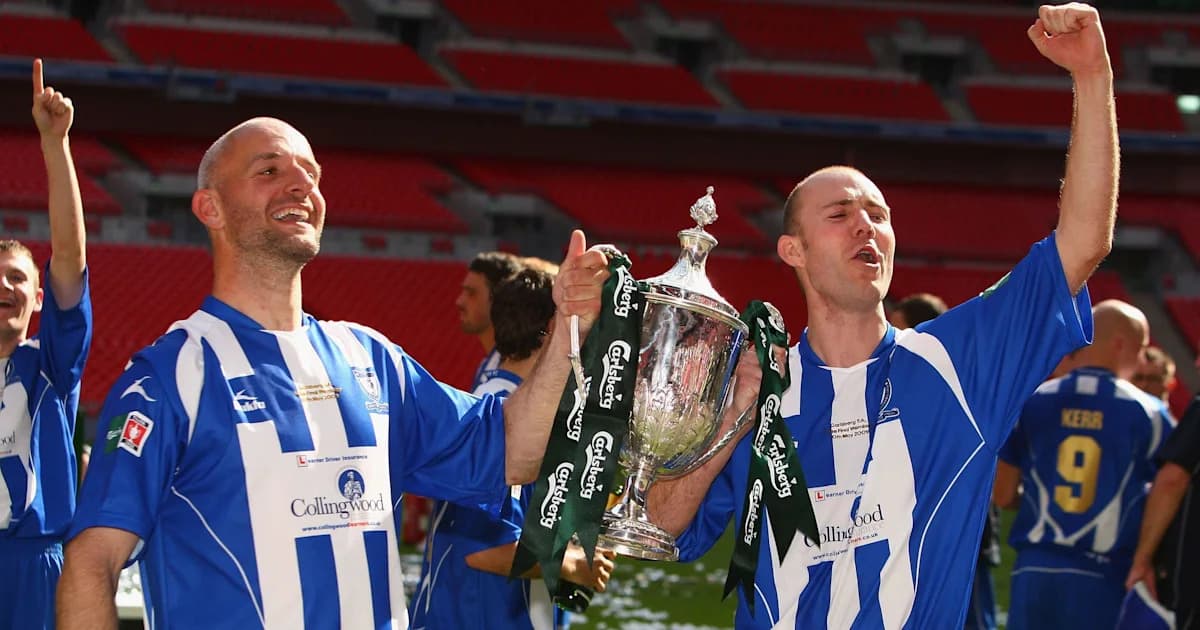
Whitley Bay, a ninth-tier Northern Football League club, claimed the FA Vase title three years running from 2009 to 2011, a feat unparalleled in non-league football. Established in 1974, the FA Vase is a national competition for amateur teams, and Whitley Bay stands out as the only club to have won it four times, including their remarkable hat-trick.
A Quiet Architect Behind the Success
The mastermind was Ian Chandler, an unassuming IT manager from Sunderland who balanced work with managing the club. Having played for Whitley Bay in three spells, Chandler took over as manager in 2004 and led the team for a decade.
He traded boardroom meetings for organizing hotel stays and scouting opponents. After a painful semi-final loss in 2007-08 against Lowestoft Town, Chandler vowed never to give pre-match interviews again, hoping to avoid distractions. This renewed focus helped fuel the team's historic achievements.
"It's the hardest thing to keep a team together - as soon as players get noticed, they get picked up at higher level," Chandler told BBC Sport. "But after we got to the Vase semis, players wanted to stay and prove what they could do. Then the lads wanted to do it again. And again."
Playing Style Inspired by Newcastle's Entertainment Ethos
Despite being a lifelong Sunderland supporter, Chandler modeled his team on Kevin Keegan's Newcastle United, emphasizing entertainment over just winning. He recalled joking about defensive setups: "Two or three at the back? One time we chased a game with two at the back." His philosophy aimed to provide fans with exciting football, contrasting with the more cautious Premier League style.
Building a Cohesive and Talented Squad
Chandler’s appointment was supported by chairman Paul McIlduff, who admired Chandler’s previous heroics, including scoring the winner in the 2002 FA Vase final. Though initially inexperienced in management, Chandler crafted a team praised for its pace, skillful midfielders, and lethal strikers.
"We played good football. We had pace on the wing, fantastic midfielders, and strikers who were deadly," McIlduff said. "When we brought them in, it was about fitting the psychology of the dressing room. No one thought they were better than anyone else; they played for each other."
Stars Like Paul Robinson Shaped the Club
One standout player was nicknamed the "Whitley Bay Maradona"—Paul Robinson. After developing through Newcastle United's academy, Robinson spent years in non-league football, including Whitley Bay from 2007 to 2013. Like many others, he worked alongside Chandler both in football and at software company Sage.
"He was my manager at work and football, I was sick of him," Robinson joked. "But it helped get time off for matches and meant he understood if my mind drifted thinking about scoring goals."
Robinson’s most memorable moment came during the 2010 FA Vase semi-final when his last-minute diving header in heavy rain clinched a 6-5 aggregate win, sparking a pitch invasion.
Non-League Football With a Big Crowd Feel
Robinson reflected on the atmosphere around the club: "Everyone goes to the finals, but the earlier rounds were the bigger games. At home, we'd get 2,000 to 3,000 fans per match. You felt like a real player, reminiscent of '90s FA Cup magic that you don’t expect in non-league." Chandler himself recalled playing in a 2-0 victory over Preston during the 1989-90 FA Cup run, a rare highlight for Whitley Bay.
The club’s reputation grew so much that visiting teams arrived fearing defeat, sometimes showing up in suits and ties treating matches like finals themselves.
Community Spirit Fuels the Club
The team's success uplifted the working-class town of Whitley Bay, near Newcastle, which once thrived as a Victorian-era seaside resort. Local volunteers tirelessly promoted the club, selling tickets door-to-door and setting up stands across nearby towns.
- Jenn Robinson, a volunteer, said shops displayed team colors and local sponsors flooded in.
- Newcastle United helped with ticket sales for finals.
- North Tyneside Council provided security as crowds flocked to Hillheads Park for crucial matches.
Traveling to Wembley wasn't always smooth. Organizers arranged trains straight to the stadium, but sometimes fans ended up at King's Cross and had to scramble for taxis.
Jenn recalled sitting in the royal box during their first Wembley final and being shown Prince William’s seat, which he hadn’t yet occupied.
Memories Etched at Wembley
Chandler’s son Benjamin served as mascot for all three finals. The players experienced a whirlwind of emotions and challenges, from a bus scraping incident to learning how to handle pressure. By their third final, the question wasn’t participation but whether they could complete the unprecedented three-peat.
- 2009: Beat Glossop North End 2-0 with 12,200 fans attending.
- 2010: Dominated Wroxham 6-1; striker Paul Chow scored after just 21 seconds, setting a then-record for fastest goal in a Wembley final.
- 2011: Narrow 3-2 win over Coalville Town, with Chow netting a late winner.
- Nearly 30,000 supporters witnessed the trio of finals combined.
Post-match celebrations evolved from casual pub visits to organized events welcoming families and fans. The 2010 trophy lift held special meaning as former teammate Mark Taylor, diagnosed with motor neurone disease, joined the squad during the festivities.
Life After Glory
The successes changed lives. Media attention followed the team to Chandler’s workplace, even reaching his mother through BBC Radio Newcastle. Chandler mingled with legendary managers like Sven Goran Eriksson and Sir Alex Ferguson at sports awards.
Robinson admitted returning to his IT job felt like a letdown despite initial fanfare.
"One year I got a standing ovation walking into the office, but after that, it was back to normal," he said.
The golden era eventually faded. Chandler stepped down in 2014, and the club hasn’t secured a major trophy since 2011, remaining in the ninth tier. Yet, the memories endure strongly across the football-loving northeast.
"A few weeks ago, at a pub in Durham, someone recognized me as Ian Chandler and began talking about that team," he laughed. "In the northeast, everyone follows football. It was so lovely."