.svg&w=384&q=75 "logo")
WBO President Defends Janibek Alimkhanuly's Mandatory Status Against Sheeraz
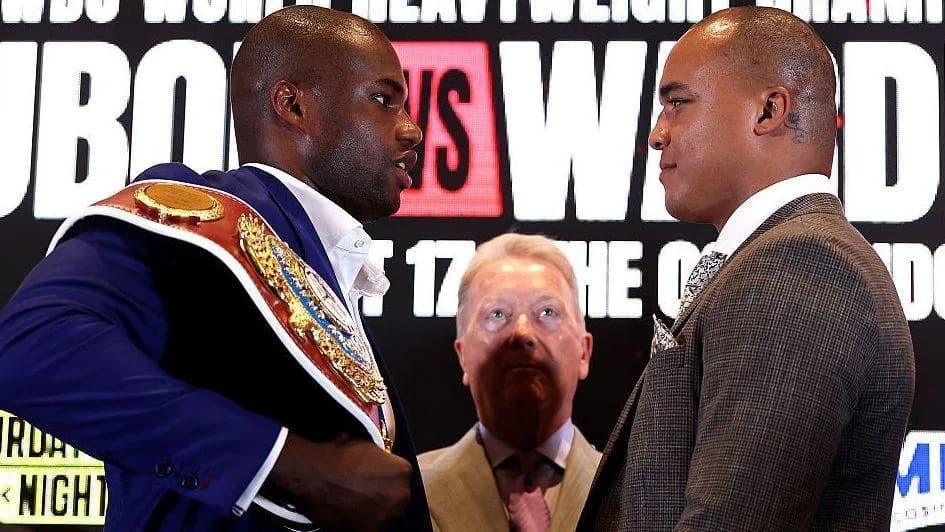
WBO chief Gustavo Olivieri has hit back hard at Hamzah Sheeraz, flatly rejecting the super middleweight champion’s claim that “corruption” lies behind Janibek Alimkhanuly being named his mandatory challenger.
The row cuts straight to the heart of boxing’s credibility: a recent anti-doping case, a fast-tracked contender, and a reigning champion who believes the system is rigged against him.
Sheeraz fumes over Janibek ruling
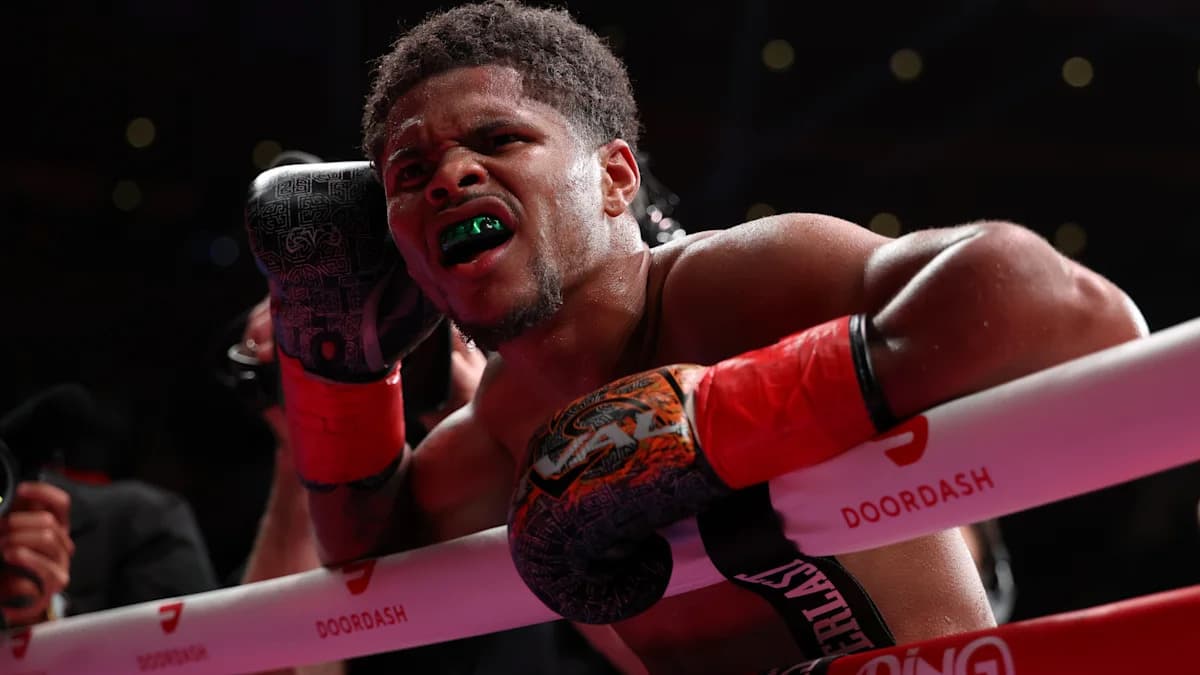
Sheeraz did not tiptoe around his feelings when speaking to Uncrowned’s Ariel Helwani last month. The unbeaten WBO super middleweight titleholder was stunned to learn that Alimkhanuly — who has never boxed at 168 pounds — had been installed as his mandatory challenger.
“I think it’s a joke,” Sheeraz said. “I think what the WBO have done here is disgraceful to the sport of boxing. What they’re essentially doing is rewarding someone who has [tested positive], so to me, it doesn’t make sense.
“What the WBO have done here — to me, it’s corrupt,” he continued. “And I’ll say it as it is, I feel like it’s all based off relationships. These moves being made are all based off personal relationships or whatever it may be, because it’s come out of nowhere and is extremely not right for the sport of boxing.”
At the centre of his anger is Alimkhanuly’s recent doping history.
The former unified middleweight champion failed a VADA anti-doping test for a banned substance just days before a planned three-belt unification with Erislandy Lara in December. The bout was scrapped. Alimkhanuly was suspended. Then, earlier than many expected, that suspension was cut short — and he suddenly emerged as the mandatory challenger for Sheeraz’s belt.
To Sheeraz, that chain of events looked rotten.
Olivieri: ‘Unequivocally’ no corruption
Uncrowned went to the source. WBO president Gustavo Olivieri did not soften his language in response.
“I respectfully but unequivocally disagree with his assertions, particularly any suggestion of ‘corruption,’ improper ‘motives,’ or decisions influenced by ‘personal relationships,’” Olivieri told Uncrowned.
On Tuesday, the organization followed up with a detailed breakdown of its reasoning, laying out why Alimkhanuly, in its view, was not only eligible but the most deserving candidate to be named mandatory at 168.
Olivieri’s first line of defense: context.
“First, Zhanibek never stepped inside the ring in connection with the anti-doping matter,” he said. “The bout did not proceed. That fact materially distinguishes his case from other circumstances, including Ryan Garcia vs. Devin Haney, where the contest actually occurred and the anti-doping findings arose in connection with a completed championship bout. These are fundamentally different factual circumstances and should not be treated as interchangeable cases.”
No fight, no result, no overturned outcome — that is how the WBO is framing it.
The second pillar of the WBO’s argument is Alimkhanuly’s disciplinary profile and cooperation.
“Second, Zhanibek was a first-time offender. During the disciplinary proceedings, he presented mitigating circumstances for the WBO’s consideration, including supporting medical evidence. The WBO nevertheless imposed disciplinary measures that were broader than the suspension imposed by the licensing commission governing his most recent bout in Kazakhstan.”
Alimkhanuly received a six-month suspension from the Kazakhstan Professional Boxing Federation (KPBF). The WBO went further, initially handing down a suspension twice that length. When it announced that punishment, the sanctioning body explicitly reserved the right to modify it after reviewing the full case.
That is exactly what it later did, shortening the ban “following the WBO’s review of the complete record, including Zhanibek’s cooperation and compliance with the relevant conditions.”
From the WBO’s standpoint, the matter is closed. The doping case is over, the punishment served, the slate — in regulatory terms — wiped clean.
The precedent the WBO leans on
The other charge from Sheeraz is that the decision “came out of nowhere.” Olivieri insists it did not.
The WBO points to a long-standing policy: recent WBO champions are often given preferential treatment when they move up or down in weight, including being installed as mandatory challengers even before they have fought in the new division.
One of the clearest examples Olivieri highlighted is Keyshawn Davis.
Davis was stripped of his WBO lightweight title in June 2025. He then went to super lightweight, boxed twice in non-title fights, and jumped again to welterweight. Without a single bout at 147 pounds on his record, he was ranked No. 1 at welterweight and later named mandatory challenger for Devin Haney.
In other words, the WBO argues that Alimkhanuly’s path is not an outlier but part of a consistent pattern. Davis, in particular, shows that even fighters “not in good standing” in the eyes of some observers can still benefit from that policy if they are recent champions.
Why Janibek over Jacob Bank?
The final piece of the WBO’s case is competitive merit.
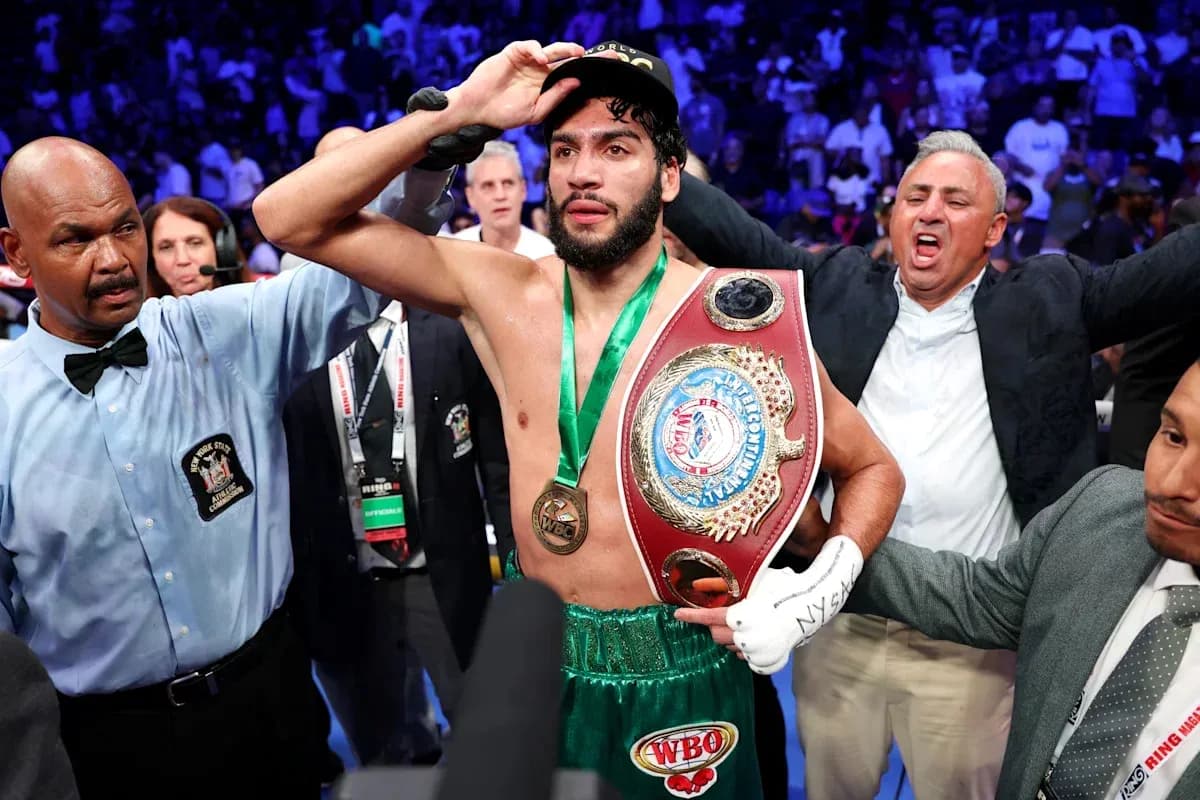
Alimkhanuly’s professional record stands at 17-0 with 12 knockouts. At middleweight, he held unified WBO and IBF titles. Olivieri believes that résumé carries more weight than the spotless but lighter ledger of Jacob Bank, who is 20-0 with 11 knockouts.
Olivieri’s stance is blunt: Bank’s record and level of opposition do not compare to what Alimkhanuly has already achieved at 160 pounds. On that basis, the Kazakh southpaw, in the WBO’s view, is the stronger and more proven contender to be mandatory at 168.
The president closed his argument by stressing that once Alimkhanuly’s suspension ended, his doping case no longer factored into eligibility. From that moment, the WBO treated him like any other cleared fighter — one who, as a recent unified champion, fit neatly into its established precedent for fast-tracking former titleholders in new divisions.
So the lines are drawn. Sheeraz sees a system rewarding a fighter who “tested positive” and calls it corrupt. Olivieri sees a completed disciplinary process, a long-running policy, and a unified champion stepping into a new weight class.
The next move will not come in a boardroom. It will come when, or if, Sheeraz and Alimkhanuly finally share a ring and turn a political storm into a fight that might define both their careers.