.svg&w=384&q=75 "logo")
How to Watch the US Open 2026: TV Options and Free Streaming
The US Open has hit its stride. Round one is in the books, the early nerves are gone, and Day 5 brings a slate that looks more like a second-week lineup than a settling-in exercise.
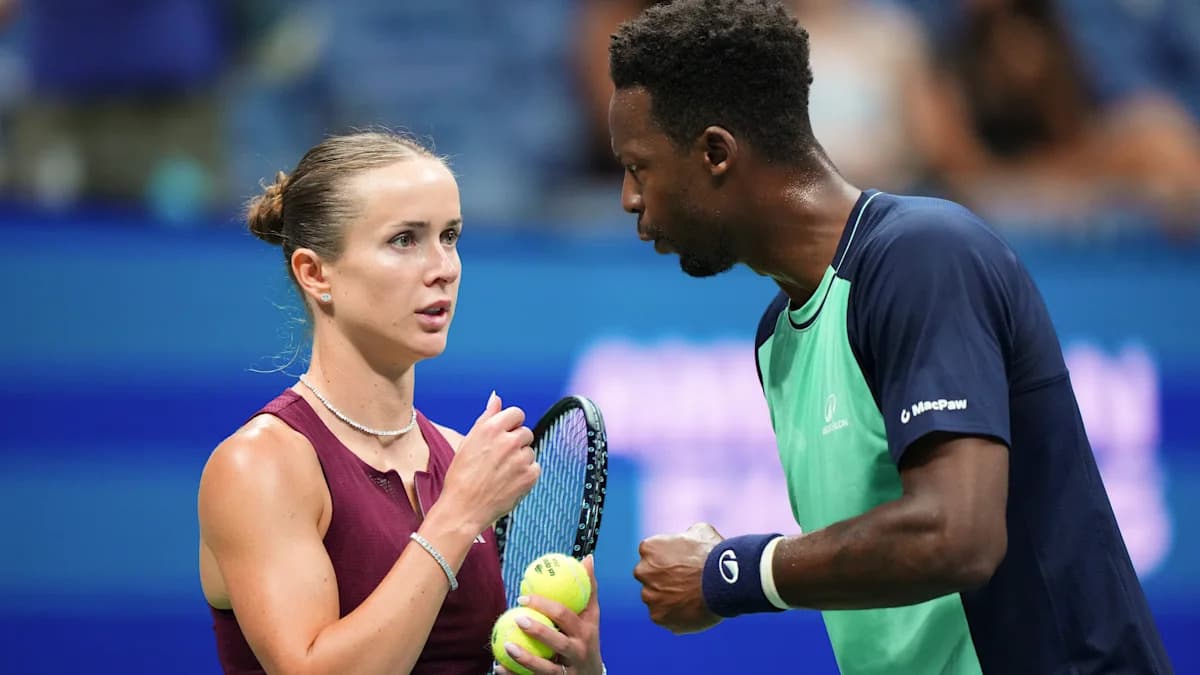
Alexander Zverev against Quentin Halys. Coco Gauff under the lights facing Paula Badosa. Naomi Osaka back on a Grand Slam stage. Félix Auger-Aliassime, Taylor Fritz, Gael Monfils – all on court, all with something to prove.
And you can watch every point, even without a cable subscription.
Where the US Open Lives on TV
In the United States, the US Open is stitched into one network: ESPN. The broadcaster controls the rights, with matches spread across ESPN, ESPN2, the ESPN app, and select windows on ABC. Miss those channels and you miss the tournament.
For cord-cutters, the route is straightforward. You need a live TV streaming package that carries ESPN and ABC, or you go directly to ESPN’s own streaming offering.
Here’s how the major players line up:
- DirecTV: The base package starts at $59.99 for the first month and includes ABC and ESPN+.
- ESPN Unlimited: ESPN’s own streaming product, with live sports and archived programming, from $29.99 per month.
- Fubo: A sports-heavy option. Its Sports plan carries ABC, ESPN, and ESPN2 at $65.99 per month, with a quarterly billing option available.
- Sling: The Essentials plan brings in ESPN and ESPN2 for $19.99 per month. There’s also a Sling TV Day Pass at $4.99 if you only want to drop in for a day of tennis.
- YouTube TV: Its Sports Plan includes ABC, ESPN, and ESPN2 for $64.99 per month.
Pick any of those, and you’re inside the US Open gates.
How to Watch the US Open for Free
There is a way to watch without paying – at least for a short stretch.
In the US, several live TV services still offer free trials. DirecTV, FuboTV, and YouTube TV are the most realistic routes. Time your trial with the days you care about most and you can ride through a key chunk of the tournament without a bill.
Outside that, the most intriguing free option sits thousands of miles away.
In Australia, 9Now is streaming the 2026 US Open for free. If you’re not in Australia, you can’t access it directly because of geo-restrictions. That’s where a virtual private network (VPN) comes into play.
Using a VPN to Access 9Now’s Free Stream
A VPN lets you connect to a server in another country and appear as if you’re there. For tennis fans, that means you can “move” to Australia from your living room and unlock 9Now’s coverage.
The process is simple:
- Subscribe to a streaming-friendly VPN service such as ExpressVPN.
- Download the VPN app on your device – TV, laptop, tablet, or phone.
- Connect to a server located in Australia.
- Head to 9Now and start streaming the US Open.
Most of the better VPNs are paid services, but many offer free trials or money-back guarantees. Use that window well, and you can watch the tournament without paying beyond the VPN test period.
Fine-Tuning the Viewing Experience
Once you’re set up, one small tweak can change how the tennis looks on your screen.
Many modern TVs have motion-smoothing options designed to make fast action look clearer. Turn that setting on for live sport and rallies can appear crisper, especially at night when stadium lighting and camera angles can exaggerate blur.
Just remember to switch it off when you go back to movies or TV dramas. Leave it on and everything starts to look like a low-budget soap opera.
Today’s US Open Schedule: September 2
Play begins at 11 a.m. ET, and the order of play offers a strong mix of star power and storylines. These are the standout singles matches on today’s card:
Women’s Singles – Round Two
- 11:30 a.m. ET Naomi Osaka vs. Kateřina Siniaková
- 12:40 p.m. ET Alex Eala vs. Oleksandra Oliynykova
- 7 p.m. ET Coco Gauff vs. Paula Badosa
Men’s Singles – Round Two
- 11 a.m. ET Félix Auger-Aliassime vs. Karen Khachanov
- 1 p.m. ET Taylor Fritz vs. Mattia Bellucci
- 7 p.m. ET Learner Tien vs. Gael Monfils
- 8:10 p.m. ET Alexander Zverev vs. Quentin Halys
Around those headline ties, qualifying matches and mixed doubles continue to fill the courts, giving the grounds that familiar New York hum: constant noise, constant tennis.
Tournament Length and Key Dates
The 2026 US Open stretches across three weeks in late summer, anchored at the USTA Billie Jean King National Tennis Center in Queens, New York.
This year’s dates:
- Overall tournament: Sunday, August 23 – Sunday, September 13
Within that window, the schedule breaks down as follows:
- Qualifying events: August 24 – August 27
- Men’s and women’s singles main draw: August 30 – September 13
- Mixed doubles: August 24 – 26
- Men’s and women’s doubles: September 3 – 12
- Junior events: September 3 – 12
- Wheelchair events: September 8 – 12
The business end of the tournament arrives in the final days:
- Women’s Doubles Final: Friday, September 11
- Women’s Singles Final & Men’s Doubles Final: Saturday, September 12
- Men’s Singles Final: Sunday, September 13
First played in 1881, the US Open is the second-oldest event in the Grand Slam calendar, behind only Wimbledon. The history is heavy, but the pace in New York is always modern, loud, and unforgiving.
Who’s in the 2026 US Open Field?
This year’s draw is stacked with pedigree. Seventeen former Grand Slam singles champions are in the field, ten of them with past US Open titles on their résumés.
On the men’s side, there is one notable absence. Jannik Sinner has been ruled out through injury, reshaping the top of the seedings. In his absence, Alexander Zverev comes in as the No. 1 seed, Carlos Alcaraz sits at No. 2, and Félix Auger-Aliassime rounds out the top three.
The women’s draw is fronted by three powerful names:
- Aryna Sabalenka – No. 1 seed
- Elena Rybakina – No. 2
- Jessica Pegula – No. 3, leading the American charge
The United States sends the largest contingent to the main draw, with 28 players. Beyond Pegula, the home hopes are spread across a deep group: Coco Gauff, Amanda Anisimova, Ben Shelton, Taylor Fritz, and the evergreen Venus Williams among the most prominent.
With that mix of established champions, rising stars, and a New York crowd that rarely sits quietly, the question now isn’t whether the 2026 US Open will deliver drama.
It’s who will still be standing when the noise finally dies on September 13.