US Open Night Sessions Raise Concerns Over Player Wellbeing
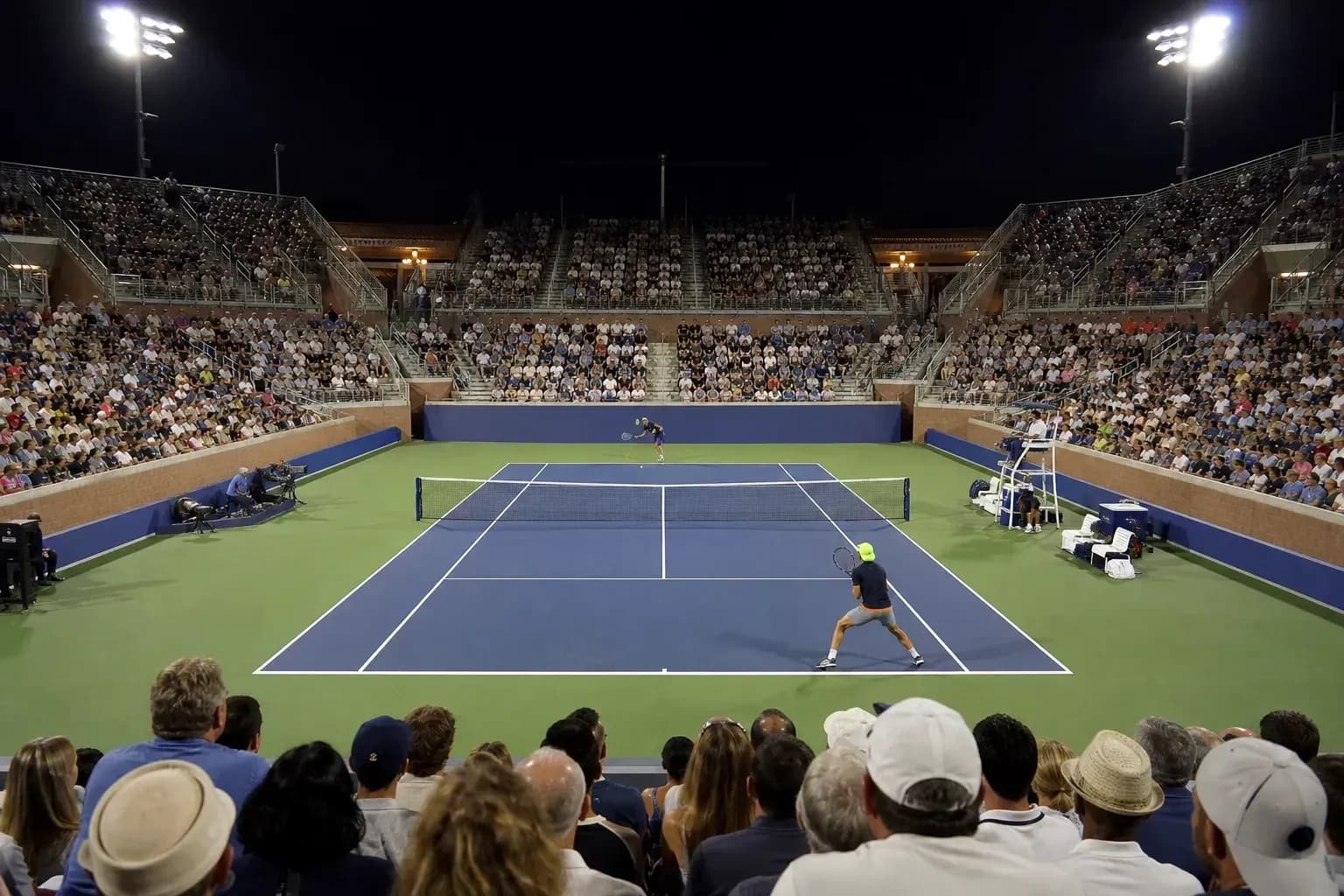
The US Open has always sold itself as tennis’ great night show. Lately, it has started to look more like an endurance test.
The quarterfinal in which Ben Shelton stunned defending champion Carlos Alcaraz did not finish until 3:33 a.m. on Wednesday, the latest conclusion in the tournament’s history. By then, the stadium lights were blazing over rows of empty seats, and the players were walking off court closer to breakfast than bedtime.
That was not an isolated oddity. In the first week alone, three matches dragged past 2:00 a.m., with two more creeping well beyond midnight. The latest start of all? A match involving Venus Williams that did not begin until 12:13 a.m.
For a sport obsessed with marginal gains and recovery windows, those numbers have become a flashpoint.
Venus Williams: “Less Than Ideal”
Venus Williams, 46 and still pushing her body through the grind, did not sugarcoat it after her first-round loss to Sofia Kenin.
A match starting after midnight, she said, was “less than ideal,” and she pointed out that she could not think of other major sports where athletes are routinely asked to begin competition so late at night. For a player who has seen every era of the modern game, her message was simple: the schedule can be better.
Her comments cut through because they came from someone who has lived the full arc of the tour. If a legend is questioning the basic structure of the day, tournament organizers have to listen.
Pegula: It’s Bigger Than Just Players
American Jessica Pegula, the world No. 3, widened the lens. For her, the issue is not only about sore legs and disrupted sleep.
She highlighted the ripple effect: fans trying to get home in the early hours, broadcasters juggling unpredictable finish times, tournament staff and media working through the night. Matches wrapping up at 2:00 a.m. might make for quirky headlines, but they make little sense as a regular feature of a global showcase.
Pegula floated a simple adjustment: start the evening session an hour earlier. It sounds obvious. It is also complicated.
Organizers Caught Between Spectacle and Reality
Tournament officials know they have a problem. A US Open representative described Tuesday as one of the most unusual days in the event’s history and accepted that the schedule must be reassessed.
The challenge sits in the specifics. Moving the evening session before 7:00 p.m. runs straight into New York’s daily rhythm. Fans need time to leave work, navigate the city, and reach Flushing Meadows. Organizers also have to manage the flow of spectators between day and night sessions, avoiding bottlenecks and empty stands.
The US Open has built a brand around packed night crowds, prime-time television windows, and marathon epics under the lights. Any change threatens that formula. Yet the current reality is a tournament that sometimes ends its show in the middle of the night, long after much of its audience has gone to bed.
Best-of-Five Under the Microscope
One of the more radical ideas on the table is trimming men’s early-round matches from best-of-five sets to best-of-three. Shorter matches would, in theory, reduce the risk of schedules collapsing into the small hours.
That strikes at the heart of tennis tradition. American Frances Tiafoe has come out in favor of keeping the full five-set format, underlining how many of the sport’s greatest contests have been forged in those long, seesaw battles. To him, and to many purists, five sets are part of what makes the men’s Grand Slam game unique.
So the debate is no longer just about start times. It is about what the US Open wants to be: a late-night spectacle at any cost, or a modern major that protects its players, respects its fans, and still finds a way to deliver those unforgettable, draining epics.
Right now, the sun is coming up too often before that question is answered.