.svg&w=384&q=75 "logo")
Uncle Dennis and the Raptors' Stand Against NBA Rules
Too many stars have an Uncle Dennis.
Not necessarily named Dennis, of course. But a relative, a childhood friend, someone from the inner circle who’s handed the keys to the business side of a multimillion-dollar career and promptly drives it into a wall.
In Kawhi Leonard’s case, Uncle Dennis was real. Dennis Robertson wasn’t just family; he was gatekeeper, fixer and power broker. Around the NBA, he built a reputation as a relentless hustler, a man who pushed every boundary he could find.
On Wednesday, the league finally pushed back.
After a year-long investigation, the NBA dropped a hammer on the L.A. Clippers for circumventing salary-cap rules, banning Robertson from any dealings with teams, players or league employees for five years. The message was blunt: the league’s Collective Bargaining Agreement is not a suggestion, and no entourage is bigger than the rules.
The Summer of Uncle Dennis
The story traces back to 2019, when Leonard hit free agency on the heels of a Finals MVP run and a championship parade through Toronto. He was the most coveted player on the market, a superstar in his prime, and Robertson treated that leverage like a blank cheque.
Behind the scenes, according to the findings of law firm Wachtell, Lipton, Rosen & Katz, Robertson approached the Raptors, Lakers and Clippers with “numerous requests for benefits that were prohibited” under the CBA. The wish list was brazen: equity in teams, housing, private transportation, and streams of off-court income through endorsement deals tied to club business partners.
Toronto listened. Then drew a hard line.
At the very top of Maple Leaf Sports & Entertainment, the call went to Larry Tanenbaum and Rogers Communications executive chair Edward Rogers. They were prepared to make Leonard extraordinarily rich within the rules. They refused to play the side game.
The Raptors said no to Uncle Dennis.
The Clippers did not.
Ballmer’s Yes, and the Cost
Steve Ballmer, the former Microsoft chief executive and by far the wealthiest owner in the NBA, leaned into the chase. The league’s investigation concluded that Ballmer and the Clippers helped deliver what Robertson wanted: a massive off-court money pipeline for Leonard.
Robertson targeted US$10-million in endorsement income on top of Leonard’s basketball contract, which will pay him US$50.3-million next season. The Clippers’ ecosystem obliged.
Leonard ultimately made tens of millions from four companies that did business with the franchise. Three of those companies, investigators found, paid him US$18-million for virtually nothing. The report spells it out: Leonard’s only confirmed activity under any of the agreements was a single visit to a military base and signing some memorabilia.
The NBA called it what it was: a deliberate effort to skirt the salary cap by shifting compensation off the books and into the sponsorship shadows.
The penalties were severe. The Clippers lost five first-round draft picks, the lifeblood of any franchise trying to build or rebuild. They were fined US$30-million. Ballmer was suspended from all league activities for one year for “knowingly seeking to help Mr. Leonard obtain off-court income opportunities.”
For a man worth tens of billions, the fine stings less than the public rebuke and the draft haul stripped away. For the Clippers, the damage will echo for years.
Raptors’ Stance, Raptors’ Reward
While the Clippers dig out from under those sanctions, Toronto stands in a very different light.
The same report that detailed the Clippers’ rule-bending also confirmed what had long circulated quietly among executives and agents: the Raptors walked away from Robertson’s demands. They didn’t lose their nerve. They kept their principles.
Inside NBA circles, that matters. Players talk. Agents talk even more. A franchise that refuses to twist the rules for one star but still treats its players well earns a different kind of respect.
Now, that stance has looped back in an unexpected way.
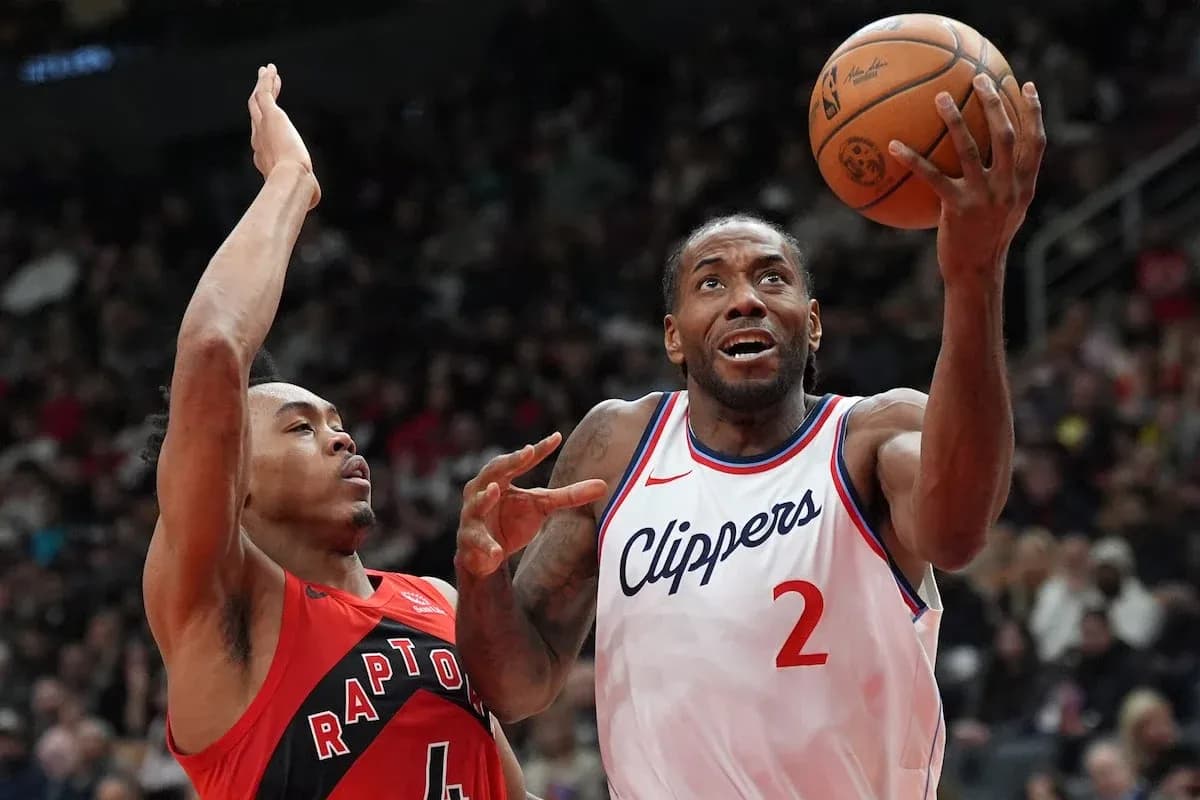
Leonard is returning to Toronto, set to suit up for the Raptors again in the final year of a US$149.5-million, three-year contract, once a trade with the Clippers — agreed in principle in June — is officially processed. For a club that has historically struggled to lure marquee free agents, bringing back a two-time Finals MVP is a powerful statement about culture and credibility.
For Tanenbaum, chair emeritus of MLSE and a man who has long preached winning “the right way,” Leonard’s homecoming is a measure of vindication. The organization refused to compromise its standards for Uncle Dennis. It still got the player back.
For Edward Rogers, Leonard’s return arrives at a crucial corporate moment. Rogers is trying to sell institutional investors on a minority stake in its sports assets, valuing them at $25-billion, to raise capital and trim debt. Few marketing tools are more potent than an NBA superstar fronting the pitch.
Leonard’s face, and that iconic, bouncing, series-winning shot over the Philadelphia 76ers, will be plastered across presentations to some of the world’s biggest fund managers. The timing could hardly be better for a telecom giant looking to dress up its balance sheet.
Leonard Owns It, and Moves On
Robertson’s influence on Leonard’s life runs deeper than contract clauses and side deals. He became a mentor after Leonard’s father was murdered at the family car wash when Kawhi was 16. The trust that followed is human, not transactional.
But trust has consequences.
As part of the sanctions, Leonard will pay the league US$700,000 to cover travel, tickets and gifts he received and never paid for. It’s a small fraction of what changed hands around him, but a formal acknowledgement that the benefits were improper.
Through a statement issued by his new agent, Leonard didn’t duck responsibility.
He said he accepted “full responsibility for lapses in judgment by people within my inner circle and regret the distraction this situation has caused the fans and my family.” It was a rare public window into a player who usually says as little as possible.
Leonard has kept a low profile for most of his career, especially during his first stint in Toronto. This summer has been different. He has been visible with the Raptors, standing shoulder to shoulder with Tanenbaum, grinning, at a news conference that brought Kyle Lowry back for a day so the point guard could retire as a Raptor.
“As I return to Toronto, I am focused on what I can control, closing this chapter, and moving forward with a clean slate,” Leonard said.
A Parting Gift and a New Stage
For Tanenbaum, expected to sell his stake in MLSE to Rogers for $4.35-billion this fall, Leonard’s return doubles as a parting gift. He exits with the franchise relevant again, anchored by the same superstar who delivered the greatest moment in club history and now arrives as the face of a new era.
For Rogers, it’s business and basketball aligning. A resurgent Raptors brand, led by a global star, strengthens the case to investors that these sports properties are worth top dollar.
For the Raptors, it’s something simpler: a chance to prove that doing things by the book doesn’t have to mean finishing in the middle of it.
The Clippers bet on shortcuts and paid a heavy price. Toronto drew a line, held it, and still ended up with Kawhi Leonard back in their locker room.
What they do with that second chance will say as much about the franchise as the first banner hanging in the rafters.