.svg&w=384&q=75 "logo")

Argentina's Emotional Home Stand Begins Post-Messi Era
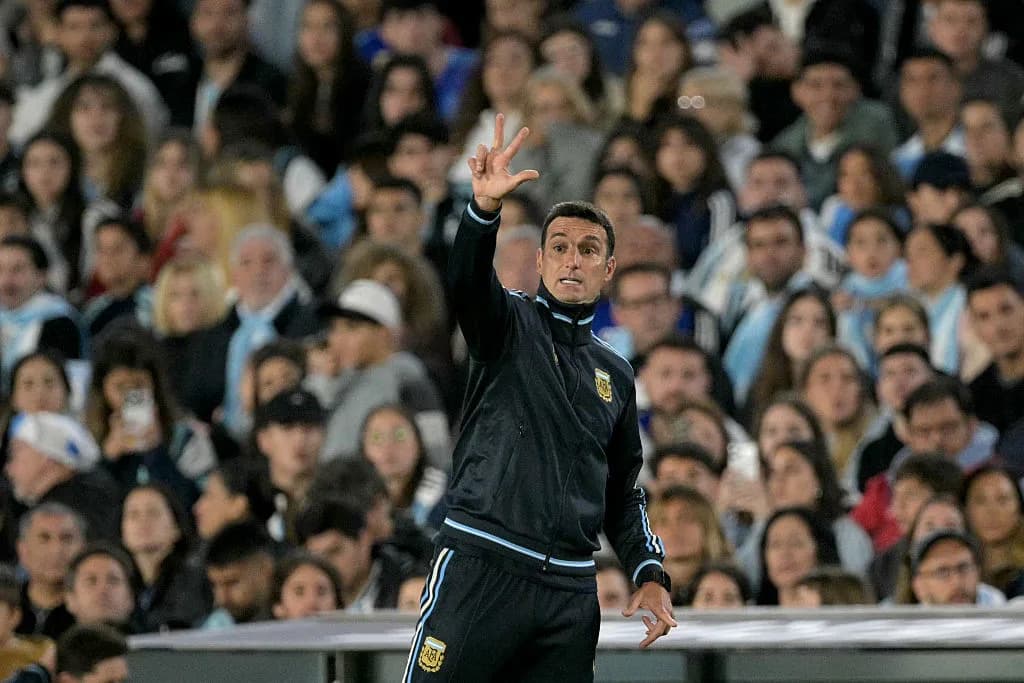
Argentina are preparing to bring the national team back to their own people. Not for one night, but for an entire international window.
The Argentine Football Association (AFA) are working on a three-match home series between 21 September and 6 October, according to ESPN Argentina, with Lionel Scaloni’s side expected to spend the whole FIFA window on home soil.
The curtain-raiser is being lined up for El Monumental, a stage built for big returns and heavy noise. The opponent is yet to be locked in, but the idea is clear: a South American rival or a CONCACAF side, a game with enough edge to feel like more than a testimonial, but not so loaded that it derails experimentation.
After Buenos Aires, the team is set to head into the interior. Cordoba and Rosario have emerged as the leading candidates to host the remaining two fixtures, a deliberate move to spread the national team’s “homecoming” beyond the capital and into provinces that live and breathe the Albiceleste but see them too rarely.
Asia tour scrapped after Messi’s international retirement
This was not the original script.
ESPN journalist Diego Monroig reported on Sportscenter that Argentina now have “a 90 percent chance” of playing the entire window at home after overseas plans fell apart. The AFA had been working on an Asian tour, with a match in China described as “almost confirmed.”
Then Lionel Messi walked away from international football.
His decision to end his Argentina career closed the door on that tour and forced a rapid rewrite of the calendar. The commercial appeal of a Messi-led Argentina in Asia had underpinned the plan. Without him, the federation pivoted, and the focus turned inward: give Scaloni time, give the fans a proper goodbye to the old era and a first look at the new one.
World Cup qualifying puzzle: co-hosts and the Albiceleste’s stance
While friendly dates are being shuffled, a bigger strategic conversation is taking place in the background.
CONMEBOL are in talks with FIFA to settle how many World Cup places South America will actually have for the next tournament. The key question is simple, the implications anything but: will the automatic berths granted to co-hosts Argentina, Uruguay and Paraguay be taken out of the continent’s traditional 5.5 spots, or added on top?
If they are deducted, the remaining nations will be fighting over a reduced pool of places. If they are added, South America’s path to the finals opens wider than ever.
Argentina, though, are not waiting for the verdict to shape their attitude. Despite holding a guaranteed place as co-hosts, the Albiceleste have formally asked to play the full qualification campaign. They do not want to drift through three years of friendlies while the rest of the continent battles for its ticket.
Competitive rhythm, hostile away grounds, high-stakes nights in Montevideo, Santiago, Lima: Scaloni’s staff want all of it, even with the safety net already in place.
Scaloni’s reset after World Cup heartbreak
The three-match autumn block now takes on a deeper meaning.
It is not just a home series. It is the first real tactical laboratory of the post-Messi cycle, coming after July’s narrow 1–0 World Cup final defeat to Spain. That loss closed one chapter without erasing the standards that defined it.
Scaloni must now redraw his blueprint. The structure that once tilted instinctively toward Messi’s left foot needs a new centre of gravity. Roles change. Hierarchies shift. Some veterans will be asked to lead in ways they never had to before. Younger players will be pushed from promising cameos into full responsibility.
A relentless schedule looms. Another FIFA window arrives quickly between 9 and 17 November, compressing the adjustment period. There is little room for sentiment, but there is time, if used well, to build something coherent before the 2027 calendar brings fresh tournaments and heavier pressure.
So these three home dates are not just a thank-you tour, nor a soft landing after a final lost by a single goal. They are the opening moves in Argentina’s attempt to prove that the identity forged with one generational talent can survive, and even evolve, without him.