Tennis Grand Slam Title Race: The Struggle for Major Success
The road to a Grand Slam title has never been just about clean ball-striking and gym-honed physiques. It’s about walking into the biggest arena in tennis, feeling the weight of the world’s gaze – and still believing, deep down, that no one out there can touch you.
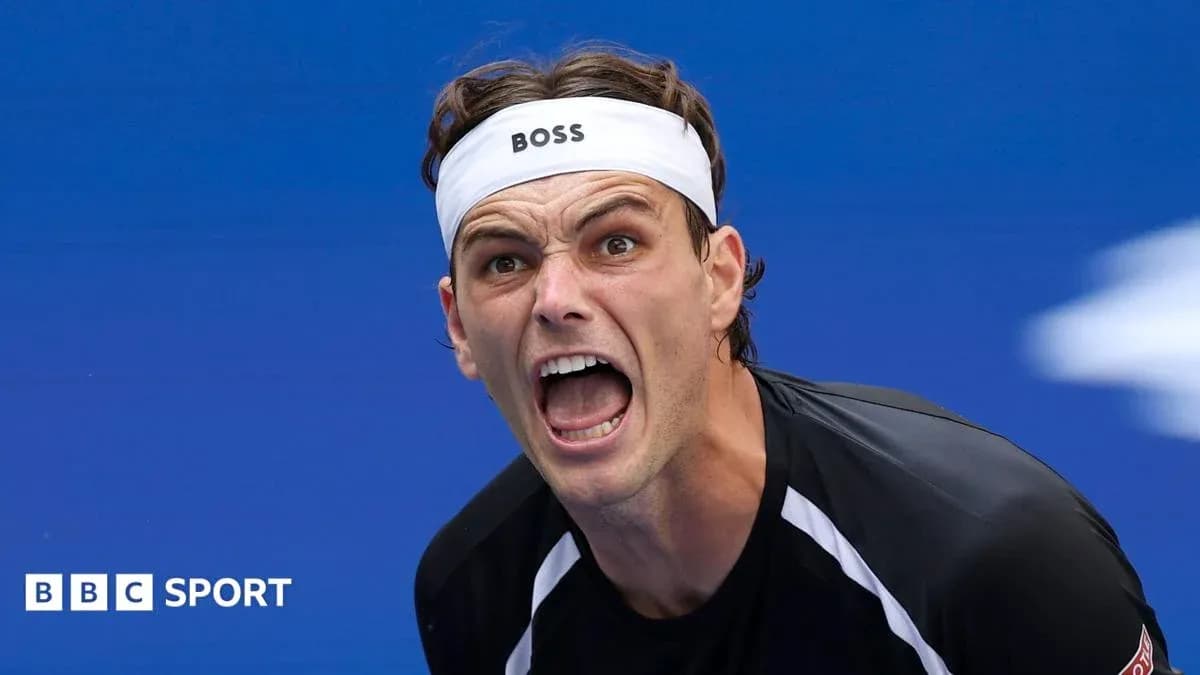
Unshakeable conviction. Or, as Taylor Fritz calls it, “delusion”.
The American, now 28 and ranked 10 in the world, is part of a generation of contenders still staring at an empty space on the mantelpiece where a major trophy ought to sit. He is also one of those who will look back at this US Open and feel he let a golden chance slip.
With Jannik Sinner out injured and Carlos Alcaraz only just returning from a long lay-off, Flushing Meadows looked wide open for the chasing pack. This was supposed to be the fortnight when the rest of the top seeds cashed in.
Instead, the draw shredded them.
By the fourth round, six of the top 10 had gone. Fritz was among the early casualties, throwing away a two-set lead against Argentina’s Francisco Cerundolo in the third round. Daniil Medvedev, the 2021 champion, followed them out on Sunday, his fourth-round defeat leaving just three top-10 men standing: top seed Alexander Zverev, defending champion Alcaraz and eighth seed Ben Shelton.
“It shows you how even the circuit is, how tight every match is, how difficult it is to win matches,” said 24th seed Cerundolo. “Anything can happen right now.”
That volatility collides with a hard truth: Sinner and Alcaraz still rule the sport’s summit. Between them, they have collected 10 of the past 11 men’s Grand Slam singles titles. Their grip tightens the pressure on everyone else.
Fritz admitted earlier this year, in an interview with the Guardian, that he expects to feel “emptiness” at the end of his career if he never wins a major. That is the scale of the psychological toll. Zverev, now 29, knows it intimately. Before his breakthrough at Roland Garros this year, the German revealed he “could not sleep” and was “not eating” during previous Slam fortnights because of nerves.
Once he finally broke through in Paris, the tension eased. He rode that freedom all the way to the Wimbledon final, where Sinner stopped him, and he has kept himself alive in New York despite looking short of his best. Yet as he grinds through his half of the draw, the shadow of Alcaraz grows longer with every round.
Pat Cash, the former Wimbledon champion, did not sugar-coat it on BBC Radio 5 Live. “The two-horse race between Sinner and Alcaraz is not healthy for the tour,” he said. “With every win, Alcaraz is becoming more of a favourite. Four months off, no matches and he could win the US Open.”
Pressure alone, though, does not explain why the seeds have fallen like confetti.
There is another, harsher reading: that outside of Sinner and Alcaraz, this top 10 is softer than previous eras. The season’s demands have also bitten hard at the final major of the year. Bodies are fraying, minds are tired.
Fourth seed Novak Djokovic, still chasing history at 37, saw his ageing body betray him in a stunning first-round exit. Third seed Felix Auger-Aliassime blamed dizziness for his second-round defeat. Fifth seed Flavio Cobolli spoke of having no energy in his third-round loss, pointing to a heavy match schedule and the draining New York heat.
Cincinnati champion Arthur Fils ran into a resurgent Stefanos Tsitsipas in a brutal opening-round draw and went out swinging. Teenager Rafael Jodar, already past 50 matches in his first full season on tour, looked spent as he departed in round one.
“The season is long. I think all the guys who performed well in the preparation tournaments have it more difficult here,” said Belgium’s Alexander Blockx, who knocked out French Open finalist Cobolli. “We’re all human. We’re not robots. Every week is difficult. Especially at a Grand Slam where it gets even more physical. Mentally you have to really stay in it.”
The strain is not confined to the men. At the top of the women’s game, four players are locked in a fight for the number one ranking, and the margins are just as thin.
Aryna Sabalenka has sat on the throne for the past two years, but a recent dip in form has left her position under real threat. Elena Rybakina will overtake her if she reaches the semi-finals in New York. Jessica Pegula and Coco Gauff lurk just behind, ready to leapfrog both if they lift the trophy.
“Looking at the difference between the points in the top 10 compared to the men, you can see how the depth is pretty crazy,” said Pegula. “Everyone has been very consistent and makes it hard to a certain extent [to win a Slam]. But then you know there’s not one or two super dominant players where you feel like they have to lose in order for you to have a chance.”
On one side of the sport, two young stars threaten to turn every major into their private duel. On the other, a crowded field claws for every inch of ranking ground. Somewhere in the middle stand players like Fritz, Zverev, Pegula and Gauff, chasing that elusive blend of form, fitness and – yes – delusion that turns talent into history.