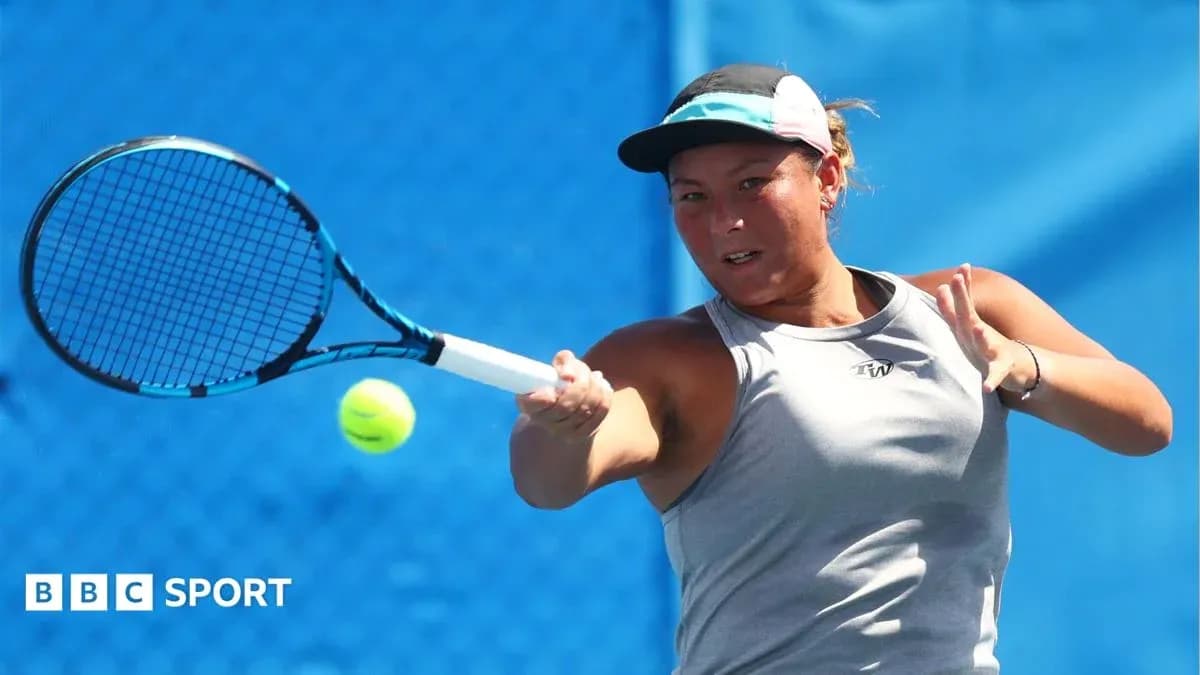
Tara Moore Loses £15m Legal Battle with WTA
Tara Moore’s £15m legal fight with the Women’s Tennis Association is over – and she has lost.
A United States District Court in New York has dismissed the British doubles specialist’s bid for at least $20m in damages, closing the latest and most ambitious chapter in a saga that has already ended her career at the top level.
A four-year ban, and a system she calls “broken”
Moore, 34, tested positive for the anabolic agents nandrolone and boldenone at the WTA 250 event in Bogota in April 2022. At the time, she was Britain’s leading women’s doubles player and had just climbed to a career‑high world ranking of 77.
An independent tribunal later accepted that contaminated meat in Colombia was the source of the substances and found Moore bore “no fault or negligence”. On the face of it, that should have cleared her path back to the tour.
Instead, the case escalated.
The International Tennis Integrity Agency (ITIA) appealed. The Court of Arbitration for Sport (Cas) sided with the ITIA last year and imposed a four‑year suspension, ruling Moore out of competition until 2028.
For a player in her mid‑thirties, it was effectively a sporting life sentence.
Speaking to BBC Sport after the latest ruling, Moore described the whole process as a “nightmare” and said it “just shows how broken the anti-doping system is in tennis”.
The claim: WTA failed to warn of “known and specific danger”
Moore’s response was to go after the WTA itself.
She launched proceedings with the American Arbitration Association, arguing the WTA had failed in its duty of care by not warning players about the risk of eating contaminated meat at the Bogota tournament.
Her claim was stark: the WTA’s “failure to warn against eating meat in Colombia was a direct cause of her positive test result and the harm that followed”.
In her motion, Moore said she was seeking “no less than $20m in compensatory damages”, accusing the governing body of having “stayed silent in the face of a known and specific danger and then shifted the blame for its own negligence” onto her.
The arbitrator rejected her case and backed the Cas decision. Moore then took the fight into the US court system, filing a motion at the United States District Court in New York in an attempt to overturn the arbitration outcome. She claimed she had been denied a fair hearing.
On Friday, district judge Andrew Carter drew a firm line under that effort, ruling that Moore’s challenge was “not justified” on a legal basis and directing the court to “close this matter”.
Career in limbo, questions left hanging
The ruling leaves Moore still banned until 2028, with no legal route left in this particular battle and her reputation caught between two conflicting truths: one tribunal accepted she bore no fault, another body imposed the maximum sanction, and the courts have now refused to lay any blame at the WTA’s door.
The WTA and ITIA have been approached for comment.
For Moore, whose peak years in doubles should have been now, the fight has moved from the baseline to the courtroom and back again, only to end with a judge’s short order in New York.
The ban will expire. The questions about how tennis polices contamination, and how much protection its players can expect, will not.